
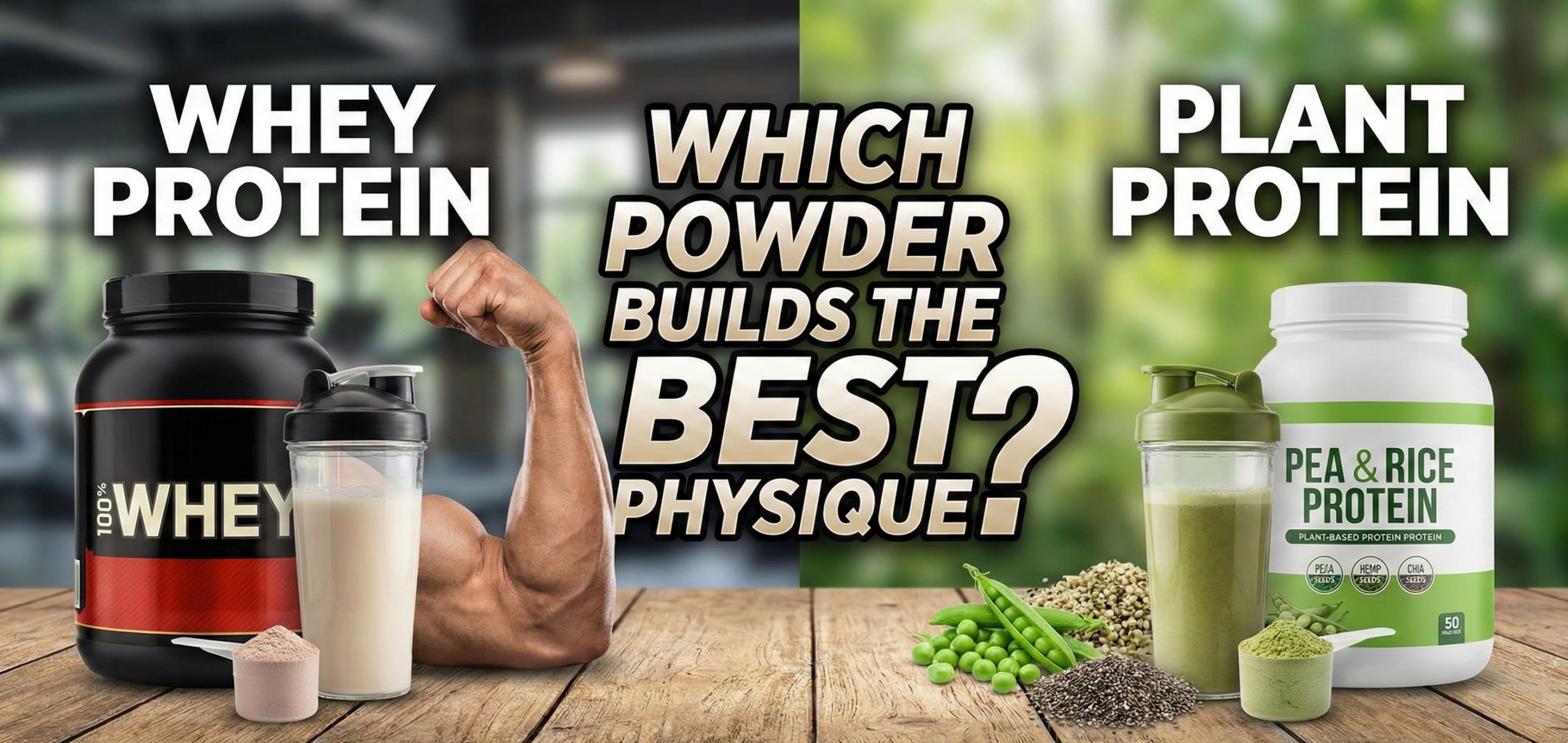
Whey Protein vs. Plant Protein: Which Powder Builds the Best Physique?
For decades, the shaker bottle rattling in the gym locker room meant one thing: whey protein. It was the gold standard, the undisputed king of muscle building, derived directly from the dairy industry. But in recent years, a challenger has risen. Walk down the supplement aisle today, and you are just as likely to see canisters boasting “Pea Protein,” “Rice Blend,” or “Vegan All-in-One” as you are to see the traditional milky tubs.
The debate of whey protein vs plant protein has moved far beyond ethics and squarely into the realm of hard science. Athletes, bodybuilders, and busy professionals are asking: Does plant protein actually build muscle as effectively? Is whey causing my acne? Which one burns fat faster? Does soy raise estrogen levels? Are plant proteins contaminated with heavy metals?
Whether you are trying to bulk up, slim down, or simply navigate the ultimate self-care checklist for busy professionals, your choice of protein powder matters. In this comprehensive guide, we strip away the marketing hype to deliver the science, the numbers, and the definitive guidance.
At a Glance: The Full Comparison Matrix
Before diving into the biochemistry, here is the high-level breakdown across every major dimension that matters to someone choosing a protein powder.
| Feature | Whey Protein | Plant Protein (Blend) |
|---|---|---|
| Source | Cow’s milk (dairy by-product) | Peas, rice, hemp, soy, pumpkin |
| Amino Acid Profile | Complete – high in all EAAs | Often incomplete unless blended |
| Leucine Content | ~10–11% of amino acids | ~7–8% (pea); ~8% (soy) |
| BCAA Content per 25g | ~5.5g | ~4–5g (blend-dependent) |
| Absorption Rate | Very fast (30–90 min) | Moderate to slow (2–4 hrs) |
| DIAAS Score | 1.09 (excellent) | 0.6–1.0 (varies by source) |
| Digestive Comfort | Risk of lactose bloating | Generally gut-friendly |
| Fiber Content | Near zero | 1–3g per serving (varies) |
| Cholesterol | ~5–25mg per serving | Zero |
| Texture | Smooth and creamy | Can be gritty (improving) |
| Allergens | Dairy / lactose | Soy (sometimes), tree nuts |
| Average Cost per Serving | $0.80 – $1.50 | $1.20 – $2.20 |
| Heavy Metal Risk | Lower | Moderate (check 3rd-party tested) |
| Environmental Impact | High (water, land use) | Significantly lower |
| Vegan/Lactose-Free | No | Yes |
| Muscle Building Efficacy | Gold standard | Equivalent with adequate dose |
The Different Types of Whey Protein Explained
Not all whey protein is created equal. The label on your tub tells a meaningful story about how the protein was processed, how much lactose it contains, and how bioavailable it is. Understanding these distinctions saves you money and prevents digestive discomfort.
Whey Concentrate
Protein content 70–80%. Contains more lactose and fat than other forms. Best taste and cheapest price. Ideal for those without dairy sensitivity.
Whey Isolate
Protein content 90%+. Filtered to remove most lactose and fat. Faster absorbing. Better for lactose-intolerant individuals. Typically $0.20–$0.40 more per serving.
Whey Hydrolysate
Pre-digested via enzymatic hydrolysis. Fastest absorption rate. Most expensive. Bitter taste. Primary use case: clinical nutrition and rapid post-exercise recovery windows.
Casein Protein
Also from milk but digests over 5–7 hours. Ideal before sleep to support overnight muscle protein synthesis. Less useful immediately post-workout due to slow release.
Whey Concentrate vs. Whey Isolate: Which Should You Buy?
For most people training with normal digestive health, whey concentrate offers the best cost-to-performance ratio. The extra lactose and fat contribute to its superior taste profile and its slightly slower digestion rate is not a meaningful disadvantage outside of extreme competitive contexts.
Whey isolate is the better choice if you experience bloating, gas, or skin flare-ups from concentrate—symptoms that often trace directly to lactose content. Athletes tracking macros very precisely also prefer isolate for its cleaner protein-to-calorie ratio and negligible fat and carbohydrate content.
The BCAA benchmark: A standard 25g serving of quality whey provides approximately 5.5g of branched-chain amino acids (BCAAs) including roughly 2.5g of leucine—the critical threshold for maximally stimulating muscle protein synthesis in a single dose.

The Muscle Standard: Optimum Nutrition Gold Standard Whey
The world’s best-selling whey protein. Packed with 24g of protein and 5.5g of BCAAs per serving for rapid recovery.
Check Price on AmazonThe Different Types of Plant Protein Explained
The plant protein market has exploded, and the variety of sources is now extensive. Each plant source has distinct amino acid characteristics, texture profiles, and ideal use cases. Understanding the differences helps you identify which product is most likely to serve your specific goals.
Soy Protein
The only single-source plant protein that is genuinely complete with a DIAAS score approaching whey. High in leucine. Concerns about phytoestrogens are largely overstated by research (detailed below).
Pea Protein
Derived from yellow split peas. High in lysine, low in methionine. Excellent leucine content (~7g/100g). Naturally cholesterol-free. Slightly earthy flavor. Pairs perfectly with rice protein.
Brown Rice Protein
High in methionine (what pea lacks), low in lysine. Excellent complementary profile to pea protein. Slightly gritty texture. Hypoallergenic. Common in blended formulas.
Hemp Protein
Contains all essential amino acids plus omega-3 and omega-6 fatty acids. Lower protein content per serving (~15g/30g scoop vs 25g for whey). Rich in fiber. Earthy, nutty flavor. Excellent whole-food protein source.
Pumpkin Seed Protein
High in zinc, magnesium, and iron. Notably high in tryptophan. Lower overall amino acid score than pea or soy. Found primarily in premium blended formulas as a supporting protein source.
Fava Bean & Sunflower
Newer entrants to the market. Fava bean protein has impressive amino acid density. Sunflower protein contributes a clean neutral flavor. Increasingly common in next-generation plant blends.
Why Plant Protein Blends Beat Single Sources
The amino acid complementarity principle is the foundation of effective plant protein formulation. No single plant source delivers a perfect essential amino acid profile, but strategic combinations do. The classic pairing is pea and rice—pea protein is high in lysine but low in methionine and cysteine; rice protein is the inverse. Together, they create a complete profile that has been shown in peer-reviewed research to stimulate muscle protein synthesis at rates comparable to whey when consumed in equivalent doses.
Modern plant blends frequently add a third source—hemp, pumpkin seed, or quinoa—to further optimize the micronutrient and amino acid coverage. When you are shopping for a plant-based protein, a blend of three or more sources is a better investment than any single-source product.
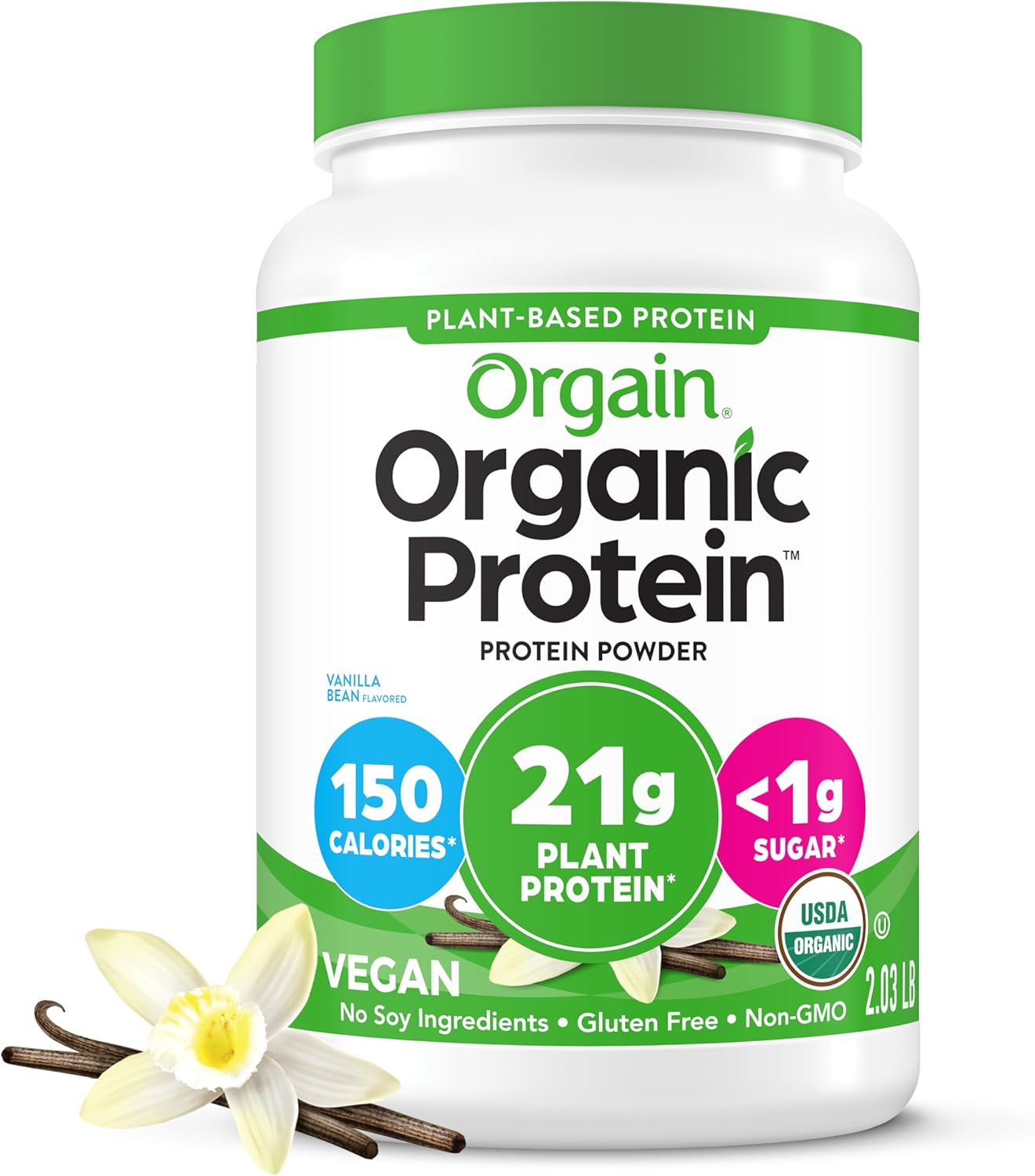
The Best Tasting Plant Blend: Orgain Organic Protein
A creamy blend of pea, brown rice, and chia seeds. Zero grit, 21g of protein, and completely dairy-free.
Check Price on AmazonRound 1: Muscle Building and Hypertrophy
This is the central question: does plant protein build muscle as effectively as whey? The short answer is yes—with caveats. The long answer involves leucine thresholds, DIAAS scores, and serving size adjustments.
Understanding the Leucine Threshold
To trigger muscle protein synthesis—the biological process of repairing and growing muscle tissue—your body requires specific amino acids. The most critical trigger is leucine. Current research suggests the leucine threshold for maximal muscle protein synthesis stimulation is approximately 2–3g per dose.
Whey protein reaches this threshold easily in a standard 25g serving, delivering roughly 2.5g of leucine. Many plant proteins, particularly single-source options, require a larger serving to reach the same threshold—typically 30–35g of a quality pea-rice blend to match the leucine content of 25g of whey.
What the Research Actually Shows
Multiple randomized controlled trials comparing plant protein and whey for muscle hypertrophy have reached the same conclusion: when total protein intake is matched and leucine content is equalized through dosing adjustments, plant protein produces statistically equivalent gains in lean mass. The key word is matched. Studies that simply compare standard serving sizes—where whey delivers more leucine per gram—predictably favor whey. Studies that adjust doses to equalize leucine show no significant difference.
“Your muscles cannot distinguish between a leucine molecule derived from a cow’s milk and one extracted from a yellow split pea. Stimulus is stimulus.”
The DIAAS Score: The Most Accurate Measure of Protein Quality
The Digestible Indispensable Amino Acid Score (DIAAS) is the gold-standard measure of protein quality, replacing the older PDCAAS metric. It accounts for both amino acid content and the digestibility of each amino acid in the human small intestine—a critical distinction, since amino acids you cannot absorb do not contribute to muscle protein synthesis.
| Protein Source | DIAAS Score | Rating |
|---|---|---|
| Whey Concentrate | 1.09 | Excellent |
| Whey Isolate | 1.25 | Exceptional |
| Soy Protein Isolate | 0.97 | Very Good |
| Pea Protein | 0.82 | Good |
| Pea + Rice Blend | 0.90–1.00 | Good–Very Good |
| Brown Rice Protein | 0.59 | Fair (needs blending) |
| Hemp Protein | 0.63 | Fair (needs blending) |
The practical implication: whey has the edge in raw protein quality, but the gap between a quality pea-rice blend and whey isolate is not so large that it cannot be bridged by consuming a slightly larger serving. If you are training seriously and debating Pilates versus yoga for weight loss and muscle retention, plant protein absolutely supports your goals provided you use a high-quality blend.
Round 2: Digestion, Skin, and Allergies
You cannot build muscle if your protein shake makes you miserable for the next two hours. This is the category where plant protein frequently wins.
The Lactose Problem with Whey
Whey is a by-product of cheese production. Even “whey isolate,” which filters out the vast majority of lactose, can still trigger bloating, gas, and digestive distress in those with sensitivity. Lactose intolerance affects an estimated 65% of the global adult population to varying degrees—it is far more common than most supplement marketing acknowledges.
Beyond digestive comfort, dairy is a well-established trigger for acne in many adults. The mechanism involves whey increasing insulin-like growth factor 1 (IGF-1), which stimulates sebum production and can promote acne-causing bacteria. If you are diligently following the essential 4-step skincare routine checklist but still breaking out, your post-workout whey shake may be the overlooked culprit.
The Digestive Advantages of Plant Protein
Plant proteins are naturally lactose-free. Pea protein, in particular, is notable for its gentle digestive profile—it is commonly recommended for people with sensitive stomachs, IBS, or Crohn’s disease who struggle with dairy-based supplements. Plant proteins also often contain prebiotic fiber that supports a healthy gut microbiome, providing digestive benefits that whey simply cannot match.
One exception: Soy protein contains compounds called oligosaccharides that can cause gas and bloating in some individuals. If you experience digestive discomfort with soy-based plant proteins, try a pea-rice blend instead—these are generally the most broadly well-tolerated plant protein options.
Allergen Profiles
Whey is a dairy product and unsuitable for anyone with a milk protein allergy (distinct from lactose intolerance—a more serious immune response). Soy is one of the eight major food allergens. For those navigating multiple food allergies or sensitivities, a pea-rice-hemp blend is typically the safest protein supplement option, as none of these crops are classified as major allergens.
When using a high-powered blender to smooth out even the chalkiest plant protein powder, check out our list of top 5 kitchen gadgets for recommendations that make every shake silky regardless of protein source.
Round 3: Weight Loss and Satiety
When analyzing whey protein vs plant protein for weight loss, the mechanisms differ in ways that favor different use cases.
Whey’s Thermic and Anabolic Effects
Whey protein is insulinogenic—it spikes insulin more than plant protein does. Post-workout, this is beneficial because insulin drives amino acids and glucose into muscle cells, accelerating recovery. Whey’s rapid absorption also maximizes the post-exercise anabolic window. However, consuming whey in a sedentary context—such as between meals at a desk—can inhibit fat oxidation due to the accompanying insulin response. Whey is best positioned as a post-exercise supplement, not a casual snack replacement.
Plant Protein’s Satiety Advantage
Plant proteins digest more slowly. This extended gastric emptying time, combined with the fiber content present in most plant protein powders, produces a more sustained satiety signal compared to the rapid-absorption profile of whey. For weight management goals, a plant protein shake between meals may provide better appetite suppression than an equivalent serving of whey. If you are looking for a satisfying pre-dinner option before preparing one of our quick and healthy weeknight dinners, a thick plant-based shake may prevent the pre-dinner snacking that derails caloric targets.
Caloric Density Comparison
Gram for gram of protein delivered, whey concentrate tends to be slightly lower in calories than plant protein blends due to the additional fats and fibers present in plant sources. For athletes counting every calorie, this matters. For general health and fitness, the difference is minimal and should not be the primary decision factor.
Round 4: Heart Health and Cholesterol
The cardiovascular dimension of the protein debate is often underappreciated, particularly for adults past their mid-thirties who should be monitoring blood lipid panels as part of routine health maintenance.
Whey and Cholesterol
As an animal-derived product, whey protein concentrate contains dietary cholesterol—typically 5–25mg per serving depending on the product and how much fat has been filtered. The relationship between dietary cholesterol and blood cholesterol is complex and highly individual, but for anyone with existing elevated LDL levels or a family history of cardiovascular disease, this is a relevant consideration.
Plant Protein’s Cardiovascular Benefits
Plant protein is completely cholesterol-free. Beyond the absence of dietary cholesterol, certain plant protein sources—notably soy and pea protein—have been shown in clinical research to actively lower LDL cholesterol levels. The FDA has recognized soy protein’s cholesterol-lowering properties and permits health claims on products containing soy. For anyone managing cardiovascular risk, this represents a meaningful advantage of plant protein that extends well beyond the gym.
Round 5: Sustainability and Ethics
The environmental footprint of your protein supplement is not a trivial consideration. Food production is one of the largest contributors to greenhouse gas emissions, water use, and land degradation globally. Where you source your dietary protein has material environmental consequences.
Producing 1 kg of whey protein requires substantially more water, land, and generates more greenhouse gas emissions than producing 1 kg of pea or hemp protein. Dairy farming contributes to methane emissions, water pollution through runoff, and significant land use for both grazing and feed crop production.
Pea protein, in particular, offers an environmental profile that is dramatically better than dairy. Peas are nitrogen-fixing legumes that actually improve soil quality rather than depleting it. Hemp requires minimal water and no pesticides. Rice protein, while water-intensive in crop production, is still significantly more sustainable per gram of protein than whey.
If you are exploring plant-based living—perhaps you have already read our breakdown of soy vs oat vs almond milk—switching your protein powder is one of the highest-impact individual changes you can make to reduce your dietary carbon footprint without compromising your training results.
Protein Timing: When to Take Your Powder
The question of when to consume protein is nearly as important as which type to choose. The timing of protein intake relative to training and sleep has measurable effects on muscle protein synthesis, recovery, and overall body composition outcomes.
The Post-Workout Window
The concept of the “anabolic window”—a brief period immediately after exercise during which protein consumption is uniquely beneficial—has been refined by recent research. While the window is now understood to be longer and more flexible than once believed (likely 4–5 hours rather than 30 minutes), consuming a rapidly absorbed protein source within 2 hours of training does appear to optimize muscle protein synthesis rates. This is whey’s strongest use case. Its rapid absorption profile is genuinely advantageous in this context.
The Pre-Sleep Protein Strategy
One of the most underutilized protein timing strategies is pre-sleep protein consumption. Research from multiple groups has demonstrated that consuming 30–40g of a slow-digesting protein 30 minutes before sleep significantly increases overnight muscle protein synthesis rates without interfering with fat metabolism or morning appetite. Casein is the most studied protein for this purpose due to its slow 5–7 hour digestion rate. For those avoiding dairy, a combination of plant proteins with naturally slow absorption—hemp and pumpkin seed—can approximate this effect.
Protein Needs by Life Stage: Women, Men, Seniors & Athletes
Protein requirements, and the optimal protein source, shift meaningfully across different life stages and physiological contexts. Generic “one size fits all” protein recommendations miss important nuances.
Protein for Women
Women’s protein needs are proportionally similar to men’s when expressed relative to body weight (0.7–1g per pound of lean body mass for active individuals), but the context differs. Women are more likely to avoid whey due to acne concerns, dairy sensitivity, or ethical preferences—making plant protein a particularly natural fit. Women also tend to have lower total caloric intakes, making protein density per calorie more important; whey concentrate’s lean protein-to-calorie ratio can be advantageous here. For women managing hormonal acne specifically, switching from whey to plant protein is consistently one of the first interventions recommended by dermatologists and sports nutritionists alike.
Protein for Seniors and Aging Adults
After approximately age 40, muscle protein synthesis becomes less sensitive to dietary protein stimulation—a phenomenon called anabolic resistance. This means older adults require higher protein doses per meal to achieve the same muscle protein synthesis response that younger adults achieve at lower doses. Research suggests adults over 60 need approximately 1.2–1.6g of protein per kilogram of body weight daily, significantly higher than general population recommendations.
For seniors, whey protein’s high leucine content and rapid absorption profile give it a meaningful practical advantage in triggering muscle protein synthesis above the threshold of anabolic resistance. However, the cardiovascular and digestive benefits of plant protein remain compelling for older adults managing multiple health parameters. The optimal approach for seniors is often a blend: leucine-fortified plant protein, or alternating between plant protein for everyday use and whey post-exercise.
Protein for Serious Athletes and Bodybuilders
At the elite competitive level, the marginal differences between protein sources become more relevant. Competitive bodybuilders and strength athletes typically require 1.6–2.2g of protein per kilogram of body weight daily, distributed across 4–6 meals. At these volumes, the difference in DIAAS scores between whey and plant protein has real accumulated impact on muscle protein accretion over a training cycle. Most evidence-based recommendations for competitive athletes suggest that whey remains the marginally superior choice for post-exercise supplementation due to its unparalleled leucine delivery and absorption kinetics. Plant protein can supplement this effectively across the remainder of daily protein intake.
The Soy Protein and Hormone Question
No topic in the plant protein space generates more anxiety—and more misinformation—than soy protein and its supposed estrogen-mimicking effects. The concern stems from soy’s isoflavone content: phytoestrogens that bind weakly to estrogen receptors. The scientific reality is more nuanced than either the alarmist or the dismissive position suggests.
What the Research Actually Shows
Dozens of clinical studies have examined the hormonal effects of soy protein consumption in men. The majority have found no significant effect on testosterone levels or other male sex hormones at typical dietary intake levels. The few case reports of gynecomastia or hormonal disruption associated with soy involved individuals consuming extremely high quantities—far beyond any normal supplementation context.
For women, soy’s phytoestrogens are a more complex story. Post-menopausal women may experience modest beneficial effects on bone density and cardiovascular markers from soy isoflavone consumption. Pre-menopausal women with estrogen-sensitive conditions such as certain breast cancer subtypes should discuss soy consumption with their oncologist.
Bottom line on soy: Normal supplementation with soy protein (1–2 servings daily) does not cause hormonal disruption in healthy men or women. If you have specific hormone-sensitive health conditions, consult your physician. For everyone else, soy protein is a safe, complete, and effective protein source.
Heavy Metals in Protein Powder: The Safety Question
This is a topic the supplement industry would prefer consumers not discuss, but it is genuinely important for anyone consuming protein powder regularly over long periods. Both plant and animal protein supplements can contain heavy metal contamination—but the risk profile differs significantly between sources.
Why Plant Proteins Are at Higher Risk
Plants bioaccumulate heavy metals from soil. Crops grown in contaminated agricultural land can concentrate arsenic, lead, cadmium, and mercury in ways that persist through protein extraction and processing. Consumer advocacy testing of protein supplements has found measurable levels of heavy metals in a significant proportion of plant-based protein products—particularly those using rice protein, which tends to accumulate arsenic due to rice’s unique cultivation method in flooded paddies.
How to Protect Yourself
Third-Party Testing: The Only Guarantee
The supplement industry is not regulated with the same rigor as pharmaceuticals. The only reliable protection against heavy metal contamination and label inaccuracy is independent third-party testing certification. Look for these certifications on any protein powder you purchase regularly:
- NSF Certified for Sport – Tests for banned substances, heavy metals, and label accuracy.
- Informed Sport / Informed Choice – Independent batch testing, widely used by professional athletes.
- USP Verified – United States Pharmacopeia verification of ingredient quality and label accuracy.
- Clean Label Project – Specifically tests for heavy metals and contaminants. Their “Purity Award” is particularly relevant for plant proteins.
If a product does not carry third-party certification, that is not an automatic disqualifier—but it does mean you are trusting the manufacturer’s self-reporting. Premium products from reputable brands typically invest in third-party certification as a quality signal to consumers.
How to Read a Protein Powder Label Like an Expert
The protein supplement industry is rife with misleading marketing practices. Understanding what to look for—and what to avoid—on a nutrition label protects you from overpaying for inferior products and ensures you are getting what you pay for.
Cooking and Baking with Protein Powder
Protein powder’s utility extends far beyond the shaker bottle. Incorporating protein powder into everyday cooking is one of the most practical ways to hit daily protein targets without adding multiple shakes to your routine—particularly valuable for those who find liquid protein supplements unsatisfying as meal additions.
Whey Protein in Cooking
Whey protein performs well in cold applications—protein yogurt bowls, overnight oats, smoothies, no-bake protein balls, and protein icing. However, whey is notoriously poor in high-heat applications. Above approximately 70°C, whey proteins denature and contract, producing a rubbery, dry texture in baked goods. Whey-based protein pancakes and muffins often suffer from this issue when recipes use too high a proportion of whey to flour.
Plant Protein in Cooking
Plant proteins—particularly pea protein—are significantly more heat-stable than whey, making them the superior choice for baked protein goods. Pea and rice protein-based protein pancakes, waffles, muffins, and protein bread maintain better texture and moisture through baking. The earthy flavor profile of some plant proteins can be masked effectively by spices (cinnamon, vanilla, cacao) in sweet baked applications, and by savory seasonings in applications like protein pasta sauce additions or protein-enriched soups.
Practical High-Protein Recipe Additions
- Oatmeal: Stir 1 scoop into cooked oatmeal after removing from heat. Both whey and plant work well here.
- Smoothies: Both types blend smoothly. Add a tablespoon of nut butter with plant protein to improve texture and mask earthiness.
- Yogurt: Mix into Greek yogurt for a high-protein, thick snack. Whey typically blends more smoothly.
- Pancakes & waffles: Replace 20–30% of flour with plant protein for best results. Avoid high whey ratios.
- Protein balls and bars: Both types work well in no-bake applications. Whey produces a slightly stickier, firmer texture; plant protein is drier and may need more binding agent.
- Savory applications: Unflavored plant protein can be added to soups, pasta sauces, and hummus to boost protein content without significantly altering flavor.
Pros, Cons & Final Verdict
Whey
- ✓ Highest bioavailability of any protein source
- ✓ Superior leucine content for muscle triggering
- ✓ Best taste and texture profile
- ✓ Lower cost per gram of protein
- ✓ Fastest absorption – ideal post-workout
- ✗ Contains lactose and dietary cholesterol
- ✗ Common cause of acne and bloating
- ✗ Not suitable for vegans or dairy allergies
- ✗ Higher environmental footprint
- ✗ Poor performance in high-heat cooking
Plant Blend
- ✓ Zero cholesterol; may lower LDL
- ✓ Gut-friendly, lactose-free
- ✓ Ideal for acne-prone individuals
- ✓ Better satiety for weight management
- ✓ Vegan, ethical, sustainable
- ✓ Heat-stable for baking and cooking
- ✗ Higher cost per serving
- ✗ Requires larger doses to match leucine
- ✗ Texture can be gritty (single-source)
- ✗ Higher heavy metal contamination risk
- ✗ Soy concerns for hormone-sensitive conditions
Which One Is Right for You?
Choose Whey If You…
- →Are a young athlete maximizing hypertrophy
- →Have no dairy sensitivity or acne concerns
- →Want maximum protein quality per dollar
- →Prioritize post-workout rapid absorption
- →Are an older adult needing high leucine per dose
- →Compete at a level where marginal gains matter
Choose Plant Protein If You…
- →Experience bloating, gas, or acne from dairy
- →Follow a vegan or dairy-free lifestyle
- →Are managing cholesterol or cardiovascular health
- →Want a versatile cooking and baking protein
- →Value sustainability and lower environmental impact
- →Prefer slower-digesting protein for satiety
The battle of whey protein vs vegetable protein does not have a single universal winner—it has a winner for you. Modern plant blends are 95–100% as effective as whey for muscle building at appropriate doses. The choice increasingly comes down to digestive tolerance, lifestyle values, health markers, and personal preference rather than any meaningful performance gap between the two categories. Choosing a protein aligned with your whole-health picture—much like managing your mental wellbeing with tools like those covered in our review of Headspace vs Calm vs Insight Timer—compounds into better long-term adherence and results.

Don’t Forget the Essentials: BlenderBottle Classic V2
Whether you choose whey or plant, a good shaker transforms clumpy powder into a smooth shake in seconds. The wire whisk ball remains the benchmark.
Check Price on AmazonFrequently Asked Questions
Is plant protein as good as whey for building muscle?
Yes, provided you use a quality blend (pea and rice minimum) and consume a slightly larger serving—typically 30g of a good plant blend versus 25g of whey—to equalize leucine content. Multiple peer-reviewed studies comparing matched-leucine doses show statistically equivalent muscle gains. The performance gap between quality plant protein and whey is minimal for most training goals.
Which is better for weight loss: whey or plant protein?
Both support weight loss effectively when part of a caloric deficit. Plant protein has a slight satiety advantage due to its fiber content and slower absorption rate, making it useful as a meal supplement. Whey is superior post-workout due to its insulin-stimulating properties that drive nutrients into recovering muscle. The best choice is the one you will consume consistently and the one that controls hunger most effectively for your individual appetite patterns.
Does whey protein cause acne?
For many people, yes. Whey stimulates IGF-1 production, which increases sebum production and can promote acne-causing bacterial activity. This effect is well-documented and most common in people already prone to hormonal acne. Switching from whey to a plant-based protein powder—particularly a pea-rice blend—consistently resolves acne flare-ups in a significant proportion of affected individuals within 6–8 weeks.
What is the difference between whey concentrate, isolate, and hydrolysate?
Concentrate is 70–80% protein, contains more lactose and fat, and has the best taste and lowest cost. Isolate is 90%+ protein with most lactose filtered out—better for lactose sensitivity and macro tracking. Hydrolysate is pre-digested for the fastest possible absorption, at a significant cost premium and with a notably bitter taste. For most people, isolate offers the best balance of purity, digestive comfort, and cost.
Does soy protein raise estrogen or lower testosterone?
No, at normal supplementation levels. Multiple clinical studies have found no significant effect of soy protein on testosterone, estrogen, or other sex hormones in healthy men and women at typical intake levels (1–2 servings per day). The phytoestrogens in soy bind to estrogen receptors very weakly—far too weakly to produce hormonal effects at normal dietary doses. Extreme soy consumption (many servings daily over extended periods) has been associated with individual case reports of hormonal effects, but this is not relevant to typical supplementation.
Are there heavy metals in protein powder?
Some products contain measurable levels of heavy metals including arsenic (particularly rice protein), lead, and cadmium. The risk is higher in plant proteins than whey. To protect yourself, look for products with third-party testing certification from NSF, Informed Sport, USP, or the Clean Label Project. These organizations independently test for heavy metals and contaminants, providing the only reliable consumer protection in an otherwise self-regulated industry.
Is plant protein good for cholesterol?
Yes. Plant protein contains zero cholesterol and several sources—notably soy and pea protein—have been shown in clinical studies to actively reduce LDL (bad) cholesterol levels. The FDA has recognized soy protein’s cholesterol-lowering properties and permits health claims on qualifying soy-containing products. For anyone managing cardiovascular health, plant protein has a meaningful advantage over dairy-derived whey.
Can I mix plant protein with milk?
Absolutely. Mixing plant protein with dairy milk, oat milk, or almond milk improves texture significantly and boosts the overall protein content of the shake. Oat milk is particularly effective at masking the earthy flavor of pea protein due to its natural sweetness and creamy consistency.
Is plant protein complete?
Soy protein is a genuinely complete protein with a DIAAS score approaching 1.0. Pea protein is technically complete but low in methionine—making it functionally incomplete as a standalone source. Rice protein is high in methionine but low in lysine. This is why pea-rice blends create a complete profile superior to either alone. Always choose a multi-source plant protein blend rather than a single-source product for sustained daily use.
Why is whey protein cheaper than plant protein?
Whey is a by-product of the vast global cheese and dairy manufacturing industry, meaning the raw material is enormously abundant and relatively cheap to process into supplement-grade powder. Plant protein requires dedicated crop cultivation, harvesting, and extraction infrastructure with no by-product economy of scale. Additionally, plant blends require sourcing and processing multiple crop types. These supply chain differences translate directly into the $0.40–$0.70 per serving premium that quality plant proteins command over equivalent whey products.
How much protein do I actually need per day?
For sedentary adults, the minimum is approximately 0.8g per kilogram of body weight daily—but this is the floor for preventing deficiency, not an optimization target. For anyone engaged in regular strength training, the evidence-based optimal range is 1.6–2.2g per kilogram of body weight per day. For older adults (over 60) managing muscle loss, 1.2–1.6g per kg is recommended. Protein powder supplements are most useful for filling the gap between dietary protein from whole foods and these optimal targets—not for replacing whole-food protein sources entirely.
The Final Scoop
Whether you choose the dairy route or the garden route, the most important factor is consistency. Protein powder is a supplement—its job is to make hitting your daily protein targets more convenient, not to replace the foundational importance of whole-food nutrition, progressive training, adequate sleep, and long-term behavioral consistency. Neither whey nor plant protein is a magic bullet.
What the evidence tells us clearly is this: the gap between high-quality whey and a well-formulated plant protein blend is smaller than supplement marketing on both sides would have you believe. Modern plant blends have closed the gap on amino acid completeness, taste, and digestibility. Whey retains a genuine edge in cost, taste, and acute post-exercise protein quality. Both work. Both have trade-offs. The best protein powder is the one that fits your body, your values, and your daily routine—and the one you will open every single day.
Fuel Your Gains Today
Browse the top-rated protein powders and find your perfect match.
Shop All Protein Powders on Amazon