
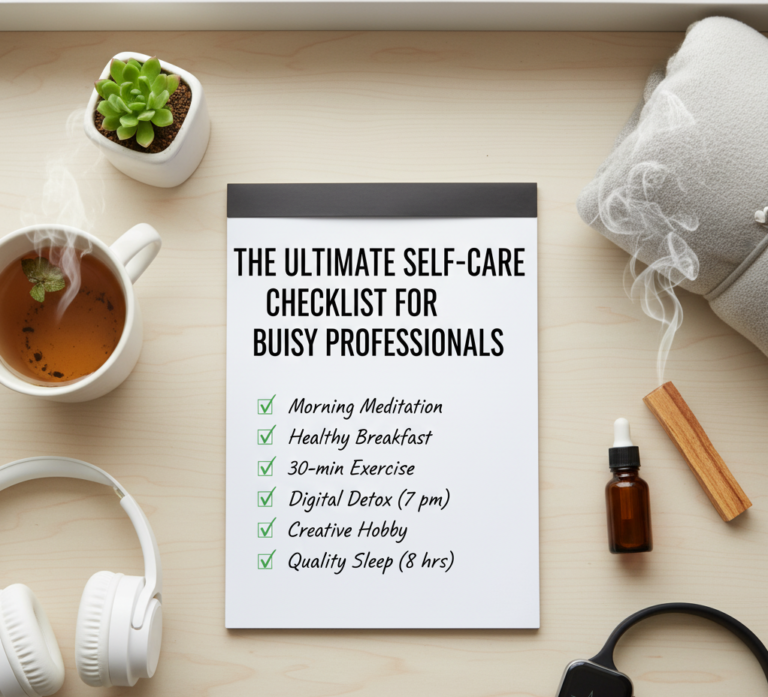
The Ultimate Self-Care Checklist for Busy Professionals: Maintenance, Not Reward
For the busy professional, self-care is not about bubble baths and indulgence—it is about preventative maintenance. It is a non-negotiable habit that preserves the resource that makes success possible: you. You cannot operate a high-performance career on an empty tank.
The most effective people treat self-care as a necessary business function. It is a core discipline, like time-blocking and financial planning. This comprehensive checklist breaks down self-care into five essential pillars, integrating physical, mental, and financial habits to ensure your longevity and peak performance.
The Science Behind Professional Burnout: Why Self-Care Is Performance Science
Before building a self-care system, it is worth understanding precisely what happens to a human body and brain under sustained high-performance conditions without adequate recovery. Burnout is not a character weakness or a sign of poor time management—it is a physiological and neurological condition with measurable biological markers and predictable consequences for cognitive function, physical health, and career trajectory.
The World Health Organization formally classifies burnout as an occupational phenomenon characterized by three dimensions: feelings of energy depletion or exhaustion, increased mental distance from one’s job, and reduced professional efficacy. It develops through a predictable progression: initial enthusiasm and high engagement, followed by stagnation when results do not match effort, followed by frustration, then apathy, and finally the full burnout state where even basic professional functioning requires disproportionate effort.
The physiological mechanism is cortisol dysregulation. Chronic workplace stress maintains elevated cortisol levels that, over months and years, suppress immune function, impair memory consolidation during sleep, reduce gray matter density in the prefrontal cortex (the brain region responsible for decision-making and emotional regulation), and elevate baseline inflammation markers associated with cardiovascular disease, metabolic dysfunction, and accelerated aging. The cognitive decline from sustained burnout is measurable on standardized tests: working memory, processing speed, and executive function all degrade under chronic stress in ways that directly impair the professional performance that the excessive work was supposed to produce.
The self-care practices in this guide are not lifestyle preferences—they are the specific interventions that physiological research consistently identifies as reversing these effects. Sleep quality, physical movement, stress boundary management, nutritional consistency, and social connection each address specific physiological pathways that chronic professional stress damages. Understanding this science replaces the “I should probably take care of myself” guilt with the “this is directly improving my cognitive output” clarity that motivates sustainable practice.
Pillar 1: Physical Maintenance (The Body as a Machine)
This pillar focuses on the foundational inputs—what you put into your body and how you set it up for the day. Without physical energy, all productivity hacks fail.
Checklist: Foundational Health
- Master Sleep Hygiene: Commit to a 7-8 hour sleep average. Use the insights from your morning routine checklists to design a consistent wake-up time, which anchors your entire sleep cycle.
- Fuel Efficiently: Eliminate decision fatigue around food. Plan meals using quick and healthy weeknight dinner ideas, and rely on efficient tools from the top 5 kitchen gadgets guide.
- Hydration Check: Drink 16oz of water immediately upon waking and maintain water consumption throughout the day to support cognitive function.
- Ergonomics Audit: Optimize your workspace. Ensure your chair, monitor, and keyboard (especially if you’re working on a budget laptop) are set up to prevent strain, a crucial step guided by essential home office gadgets.
Sleep: The Non-Negotiable Cognitive Performance Tool
Of all physical self-care practices, sleep quality has the most direct and best-documented impact on professional performance. A single night of fewer than six hours of sleep produces cognitive impairment equivalent to 24 hours of sleep deprivation—affecting reaction time, decision quality, emotional regulation, and creative problem-solving in measurable ways. Chronically sleeping six hours when your biology requires seven or eight produces a cumulative deficit that cannot be fully recovered through weekend catch-up, despite the popular belief otherwise.
Sleep hygiene is the set of behavioral and environmental conditions that consistently produce high-quality sleep. The evidence-based core practices: consistent sleep and wake times seven days per week (the most important single variable), a bedroom temperature between 65–68°F (the physiologically optimal range for sleep onset and maintenance), elimination of blue light exposure from screens for 60–90 minutes before bed (blue light suppresses melatonin production, delaying sleep onset), and a 15-minute wind-down ritual that signals to your nervous system that high-alert mode is ending.
The professional who treats their pre-sleep 60 minutes as protected time—no work emails, no stimulating content, no difficult conversations—and who maintains consistent sleep timing even on weekends will experience measurably different cognitive performance compared to one who sacrifices sleep for additional work hours. The mathematics are unambiguous: an extra two hours of work on five hours of sleep produces lower-quality output than eight hours of sleep followed by standard work hours.
Movement: The Prescription-Strength Stress Intervention
Physical exercise is the most thoroughly validated non-pharmacological intervention for stress reduction, cognitive enhancement, and mood stabilization available. A single 20-minute moderate-intensity exercise session produces measurable increases in BDNF (brain-derived neurotrophic factor—a protein that supports the growth and maintenance of neurons), reduces cortisol levels, and improves focus and working memory for two to four hours post-exercise. Regular exercise over months restructures the brain’s stress response system to be less reactive, meaning the same workplace stressor produces less psychological distress in a fit individual than in a sedentary one.
For the professional whose schedule feels impossible to expand, the key insight is that exercise does not require large time blocks. Three 20-minute sessions per week produce the majority of the cognitive and stress-reduction benefits of longer workouts. A 20-minute walk at lunch, a brief yoga session at the end of the workday, or a short high-intensity interval training session three mornings per week are sufficient to access most of the physiological benefits of regular exercise. The consistency of the habit matters more than the duration of individual sessions.
Nutrition: Removing the Cognitive Performance Tax of Poor Eating
The relationship between nutrition and cognitive performance is direct and practically significant for professionals. Glucose is the brain’s primary fuel source; unstable blood glucose levels—produced by high-glycemic diets heavy in refined carbohydrates—create the energy crashes and difficulty concentrating that many professionals attribute to workload rather than dietary cause. Stabilizing blood glucose through protein-anchored meals, reduced refined sugar intake, and consistent meal timing produces more consistent energy and focus across the workday.
Meal preparation is the most effective dietary self-care tool for busy professionals—it removes the daily decision burden that makes poor food choices the path of least resistance. Spending 60–90 minutes on Sunday preparing proteins, grains, and vegetables for the week produces better nutritional outcomes than any amount of willpower at 7pm when hunger and decision fatigue are at their peaks. The investment of one Sunday afternoon pays daily dividends in better energy, reduced food spending, and eliminated daily “what should I eat” decision cycles.
Pillar 2: Mental & Digital Boundaries (The Focus Shield)
Mental self-care is protecting your attention. In the digital age, this means rigorously managing your inputs and preventing digital chaos from derailing your focus.
Checklist: Attention Protection
- Scheduled Digital Detox: Implement the strategies for reducing screen time every day. Block off periods where your phone is in a separate room.
- Notification Lockdown: Immediately implement the changes from 7 smartphone settings you need to change immediately to stop external pings from dictating your attention.
- Process Automation: Reduce cognitive load by automating mundane tasks. Use one of the 10 best productivity apps to manage your task list, and secure sensitive information using one of the 5 free password managers.
- Mindfulness Moment: Block 5-10 minutes daily for meditation or simple stillness to clear attention residue.
The Attention Economy and Why Your Focus Is Under Assault
The modern digital environment is not neutral—it is adversarial. The apps, platforms, and devices that fill a professional’s daily life are designed by teams of engineers and behavioral scientists whose specific objective is to maximize the time you spend engaged with their products. Notification systems, infinite scroll feeds, variable reward mechanisms (the same psychological pattern that drives slot machine gambling), and algorithmically curated content are all optimized to capture and hold attention. Understanding this dynamic is essential for taking back control.
The cognitive cost of this attention capture is compounding. Every interruption—a notification, a Slack message, an email alert—does not simply consume the seconds required to respond; it triggers an “attention residue” effect where part of your cognitive resources remains allocated to the interrupted task for 15–23 minutes after resuming work. In a workday with 50 interruptions, the attention residue from each accumulates into a state of perpetual cognitive fragmentation where deep, focused work becomes physiologically difficult to achieve.
The solution is environmental design rather than willpower. Turning off all non-essential notifications (most professionals are surprised to find they can function without any app notifications except calls and essential messages), putting the phone in another room during deep work blocks, using website blockers during focus periods, and establishing communication norms that normalize delayed responses are all environmental changes that reduce interruptions without requiring continuous acts of willpower to resist.
Mindfulness: The Practical Case for a Non-Mystical Practice
Mindfulness meditation has the most extensive clinical research base of any stress-management intervention, with hundreds of controlled trials documenting its effects on cortisol reduction, attention improvement, emotional regulation, and subjective wellbeing. For the skeptical professional who finds the spiritual framing of meditation unappealing, the clinical framing is sufficient: mindfulness is a cognitive training practice that strengthens the brain’s ability to regulate attention and emotional responses.
A practical entry point requires no app, no cushion, and no prior experience: sit comfortably for five minutes with eyes closed, focus attention on the physical sensation of breathing, and when your attention drifts to thoughts (which it will, immediately and repeatedly), simply notice that it has drifted and return it to the breath. The return is the exercise—not maintaining perfect focus, which is impossible, but repeatedly exercising the noticing-and-returning mechanism. This builds the same neural pathways that meditation research documents as responsible for improved attention regulation and stress resilience.
Pillar 3: Structural Integrity (Scheduling Your Success)
Chaos is exhausting. The greatest mental self-care is a predictable, manageable schedule. Structural self-care is about proactively building your day rather than reacting to it.
Checklist: Time Management
- Block the Downtime: Apply the principles of time-blocking to schedule non-work activities (like dinner, exercise, and hobbies) first.
- Proactive Starting: Identify the source of task paralysis and use the techniques from 7 ways to beat procrastination to overcome the inertia of difficult projects.
- The Shutdown Ritual: Schedule a 15-minute end-of-day block to clear your physical workspace and define the Most Important Task (MIT) for the next day. This prevents work stress from leaking into your personal time.
- Tech Planning: Ensure your digital tools support your focus by using a reliable PC build, as noted in the ultimate checklist for building your first PC.
The Shutdown Ritual: Engineering the Work-Life Transition
The absence of a clear work-end boundary is one of the most structurally damaging patterns in modern professional life, particularly for those who work from home. Without a physical commute to serve as a decompression buffer, the transition from “working” to “not working” requires an intentional ritual to be effective. The shutdown ritual serves this function: it signals to your nervous system that the alert, problem-solving mode of the workday is ending, allowing the parasympathetic relaxation response to activate.
An effective shutdown ritual takes 10–15 minutes and covers four elements: a task capture (reviewing your task list and capturing any open loops—unfinished items, commitments made during the day—so they do not occupy working memory during evening hours), a next-day plan (identifying the single most important task for tomorrow morning, so the morning begins with direction rather than decision-making), a physical transition (clearing the desk, closing laptop, sometimes changing clothes), and a verbal or written declaration that work is complete for the day. The verbal or written component is important: it provides a conscious signal to the brain that the workday is over in a way that simply closing applications does not.
The Weekly Review: Self-Care for Your Calendar
The weekly review is the structural self-care practice that prevents the calendar from becoming a passive record of other people’s priorities. Scheduling 30–45 minutes at the end of each week—Friday afternoon or Sunday evening works well for most professionals—to review the past week and plan the next one creates the kind of intentional relationship with your time that prevents the “I don’t know where the week went” experience that characterizes reactive rather than proactive professional life.
A productive weekly review covers: what was accomplished (creating a record of actual output that counteracts the negativity bias of remembering only what was left undone), what needs to carry forward to the next week, what new commitments have been made, and what the priorities for the next week are. Crucially, it also reviews self-care commitments: Did you exercise the planned number of times? Did you maintain your sleep schedule? Did you have lunch without a screen? The weekly review holds your self-care practice accountable in the same way it holds work commitments accountable.
The Weekly Self-Care Schedule: A Template for Sustainable Practice
The most common failure mode in self-care is treating it as an add-on to an already full schedule—something that happens “if there’s time.” Time never appears spontaneously; it must be protected. The schedule below is a template for integrating self-care practices into a standard professional week in a way that is sustainable without being rigid.
The schedule is deliberately light—each day’s practices take 30–45 minutes in total, distributed across natural breaks in the day. The goal is sustainability over optimization. A self-care practice maintained at 70% consistency for a year produces far better outcomes than a perfect protocol maintained for three weeks before being abandoned.
Pillar 4: Financial Wellness (The Stress Buffer)
Financial anxiety is a primary driver of chronic stress. Proactive self-care requires removing this burden by mastering your money, demonstrating the true habits of people who are good with money.
Checklist: Financial Peace
- Budget Check-In: Dedicate a scheduled block to reviewing your finances weekly, using the framework of the zero-based budget checklist.
- Debt Management: Proactively take a small step daily to manage debt or improve your standing, guided by how to improve your credit score fast.
- Investment Education: Block time to read essential books (like the top 10 books on personal finance) or research the types of investment accounts explained. Knowledge eliminates financial fear.
- Reward Optimization: Ensure your spending works for you by utilizing the benefits of the best travel rewards credit cards to fund future restorative travel.
The Financial-Mental Health Connection: Why Money Stress Is Physical
Financial stress is not merely psychological discomfort—it is a physiological stressor that activates the same cortisol pathways as physical threats. Research consistently finds that financial insecurity is one of the strongest predictors of poor sleep quality, elevated blood pressure, impaired immune function, and depression. The mechanism is persistent low-grade threat activation: when financial uncertainty is constant, the nervous system never fully deactivates the stress response, producing the chronic cortisol elevation that drives the health consequences described earlier in this guide.
The good news is that the relationship is bidirectional: improving financial situation reduces physiological stress measurably and quickly. Building a $1,000 emergency fund—even if debt remains—produces a documented reduction in financial anxiety because it creates a buffer between a normal life and a financial crisis. Each subsequent financial improvement (debt paid down, savings increased, budget stabilized) produces another step down the anxiety curve. Financial self-care and physical self-care are not separate domains; they are deeply interconnected systems.
Financial Boundaries: Saying No as a Form of Self-Care
Spending decisions are, at their core, attention and energy allocation decisions. Every unnecessary financial commitment—a subscription not used, a social obligation that generates expense without genuine enjoyment, an impulse purchase that produces brief satisfaction followed by buyer’s remorse—is a small drain on the financial and emotional resources that compound into meaningful wellbeing over time.
Practicing financial boundaries means applying the same intentionality to spending decisions that high-performing professionals apply to their calendars. Just as “protecting your time” means declining meeting requests that do not serve clear goals, “protecting your financial energy” means declining spending commitments that do not align with your genuine values and priorities. The social pressure to spend—on group gifts, on dining out when home cooking would suffice, on keeping up with peers’ lifestyle spending—is real and persistent. Identifying which spending genuinely improves your life versus which spending happens from social pressure or habit is the foundational financial self-care practice.
Pillar 5: Aesthetic & Experience (Small Luxuries and Future Rewards)
This pillar is about investing in the small rituals and the big dreams that make life enjoyable. It’s the reward for maintaining the discipline in Pillars 1-4.
Checklist: Quality of Life
- Aesthetic Ritual: Commit to a small ritual that makes you feel maintained, like following the essential 4-step skincare routine checklist every night.
- Mindful Consumption: When traveling, focus on the experience, not the consumption. Plan efficiently using the trip planning checklist and embrace minimalism with the ultimate packing list.
- Minimalist Gear: Keep your surroundings clutter-free. Apply the carry-on mentality (only the essential items for your carry-on) to your home and office.
- Future Anchor: Research future restorative trips to destinations like the cheapest European cities. Blocking time for planning keeps the motivation alive.
The Psychology of Small Rituals: Why Micro-Pleasures Matter
Behavioral psychology research on positive emotion and resilience consistently demonstrates that the frequency of positive experiences matters more than their intensity for sustained wellbeing. A person who experiences ten small pleasures daily is typically happier and more resilient than one who experiences one large pleasure weekly—even if the objective “pleasure units” are equivalent. This finding has direct implications for self-care design: building small, reliable positive rituals into the day produces more psychological benefit than reserving self-care for occasional large treats.
A small ritual has specific characteristics that make it self-care rather than mere activity: it is consistently performed, it involves sensory engagement, it is bounded in time, and it carries personal meaning. A morning skincare routine, a specific coffee preparation method, a brief walk at the same time each day, a page or two of a book before sleep—none of these are elaborate or expensive, but each provides a reliable moment of intentional sensory engagement and personal focus that anchors the day in something that is entirely yours.
The skincare ritual is a particularly effective self-care practice for busy professionals because it accomplishes multiple objectives simultaneously: it maintains physical skin health (the skin barrier is the body’s primary external immune defense and benefits from consistent care), it serves as a tactile, sensory transition ritual for both morning and evening, and it provides two brief daily periods of focus on the self that are completely separate from work productivity. The four-step approach recommended in the essential 4-step skincare routine—cleanse, tone, moisturize, protect—takes under five minutes while delivering these benefits.
Restorative Travel: The Science of Vacation’s Return on Investment
The restorative power of travel—genuinely disconnected vacation in a new environment—is well-documented in organizational psychology research. Complete psychological detachment from work (not checking email, not thinking about ongoing projects) during vacation produces measurably lower cortisol levels, improved cognitive performance upon return, and increased creative problem-solving ability that persists for several weeks after the trip. Partially disconnected vacations—where work email is checked “just once a day”—produce significantly diminished restorative effects compared to complete disconnection.
The implication: vacation planning is not a self-indulgence but a performance investment. A fully disconnected week-long vacation, planned with the 7-step trip planning checklist to minimize logistics stress before and during, produces cognitive returns that justify the time and financial cost in purely output terms—independent of the intrinsic value of the experience itself.
If You Are Already Burned Out: The Recovery Protocol
The five pillars above are a maintenance system—they are most effective when implemented before burnout occurs. But many professionals reading this guide are not in a maintenance situation; they are in a recovery situation. If you recognize the symptoms of advanced burnout—persistent exhaustion that sleep does not resolve, emotional detachment from work you previously found meaningful, a sense of inefficacy regardless of effort, and physical symptoms like frequent illness or chronic tension headaches—the approach must be different.
Burnout recovery requires, first and most critically, a reduction in the stressors producing it. Adding self-care practices on top of an unchanged workload that caused the burnout is insufficient—it is the equivalent of adding better insulation to a house while leaving the heating system broken. The structural causes of the burnout—unsustainable hours, unclear boundaries, toxic dynamics, misaligned role expectations—must be addressed, not managed around.
The recovery sequence that organizational psychology research supports: first, create recovery space through either reduced hours, leave, or removal from the most draining responsibilities for a defined period. Second, during that space, prioritize passive recovery (sleep, nature, low-stimulation activities, physical movement) before attempting active rebuilding. Third, once basic energy is restored, address the structural causes—this may involve conversations with management, role renegotiation, job change evaluation, or professional support. Fourth, rebuild the maintenance practices of this guide incrementally rather than all at once.
The Quarterly Self-Care Audit: Measuring What You Manage
Self-care, like any other professional practice, benefits from periodic evaluation. A quarterly audit of your five-pillar self-care system identifies what is working, what has been deprioritized, and what needs adjustment as your life circumstances evolve.
| Pillar | Green (Thriving) | Yellow (Maintenance needed) | Red (Urgent attention) |
|---|---|---|---|
| Physical | 7–8 hrs sleep, 3+ movement sessions/wk, energy consistent | 6–7 hrs sleep, 1–2 movement sessions/wk | <6 hrs sleep, no regular movement, chronic fatigue |
| Mental / Digital | Notifications controlled, daily focus blocks, regular mindfulness | Occasional notification creep, inconsistent focus blocks | Constant interruptions, inability to focus, digital overwhelm |
| Structural | Clear shutdown ritual, weekly review consistent, calendar reflects priorities | Occasional missed shutdown, sporadic reviews | No clear work boundary, reactive scheduling, perpetual catch-up mode |
| Financial | Budget current, emergency fund funded, investments automated | Budget outdated, emergency fund incomplete | High-interest debt accumulating, no budget, financial anxiety constant |
| Aesthetic / Experience | Daily rituals maintained, travel planned, moments of genuine joy daily | Rituals inconsistent, no near-term joy anchors | No rituals, no joy moments, life feels purely functional |
Use this audit quarterly—not to produce guilt about red areas, but to provide information for re-allocation. A red score in any pillar is a signal to reduce commitments in that area and rebuild the practice, not to add more activities on top of the existing overload.
Adapting Self-Care to Your Professional Context
The five-pillar framework applies universally, but the specific practices within each pillar require adaptation to your professional context. A remote worker, a frequent traveler, and an office-based professional have different structural challenges and opportunities.
Self-Care for Remote Workers
Remote work removes the commute buffer that previously separated work and personal life, creating the risk of both the work day expanding indefinitely and the home becoming psychologically associated with work stress. The most important remote-specific self-care adaptations: a dedicated workspace physically separate from relaxation spaces (even a specific chair at a desk rather than the couch establishes a spatial boundary), a morning “fake commute”—a brief walk before starting work that serves the decompression and transition function the commute previously provided—and the shutdown ritual described in Pillar 3 given heightened importance without a physical departure to signal the workday’s end.
Self-Care for High-Travel Professionals
Frequent travel disrupts sleep circadian rhythms, nutrition quality, exercise consistency, and social connection—four of the five most physiologically important self-care domains. Travel-specific adaptations: treating the jet lag recovery protocol as a professional obligation rather than an inconvenience (strategic light exposure, meal timing, and short-duration melatonin use at appropriate times minimizes circadian disruption significantly), maintaining a hotel workout routine that requires no equipment and 20 minutes, keeping a travel-friendly meal supplement or protein source available for airport transit when healthy food options are absent or inaccessible.
Self-Care During High-Intensity Sprints
Every professional career contains periodic high-intensity sprints—product launches, tax season, academic deadlines, major presentations—where the normal self-care routine is temporarily compressed. The key principle for these periods: identify the minimum viable self-care floor that you will maintain regardless of workload pressure. This floor typically includes non-negotiable sleep minimum (six hours even in the worst sprint), one brief physical movement daily (a 10-minute walk is sufficient to provide cognitive benefits), and consistent nutrition (prepared food, not skipped meals). Maintaining even this reduced floor prevents the accumulated physiological debt that makes post-sprint recovery prolonged and difficult.
Essential Gear for Deep, Restorative Self-Care
The best self-care gear minimizes stress during work and maximizes the quality of rest after work. These products are high-ROI investments in your longevity.

For the busy professional whose mind is constantly racing, a weighted blanket provides deep pressure stimulation, simulating a hug. This lowers cortisol (stress hormones) and increases serotonin, maximizing the restorative power of sleep. This tool is essential for protecting your body’s repair cycle—the foundational step missed by many, making it critical for success in your morning routine.
Check Price on Amazon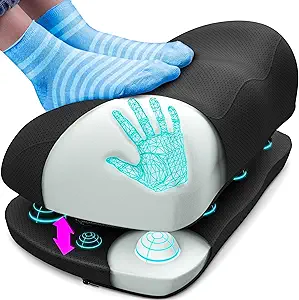
Structural self-care is often ignored. Hours spent working on your PC build or in your home office can lead to chronic back and leg strain. An adjustable footrest maintains proper posture, improves circulation, and minimizes fatigue, ensuring that work doesn’t compromise your physical health—a non-negotiable component of longevity.
Check Price on AmazonFinal Verdict: Self-Care is Your Strategy
Self-care is not passive; it is an active strategy. By implementing this five-pillar checklist—anchoring your health, defending your time, and fortifying your finances—you build a resilient foundation that can withstand the demands of a professional life.
Start with one step today, such as scheduling a 15-minute “digital detox” block, and feel the immediate improvement in your focus and energy.