
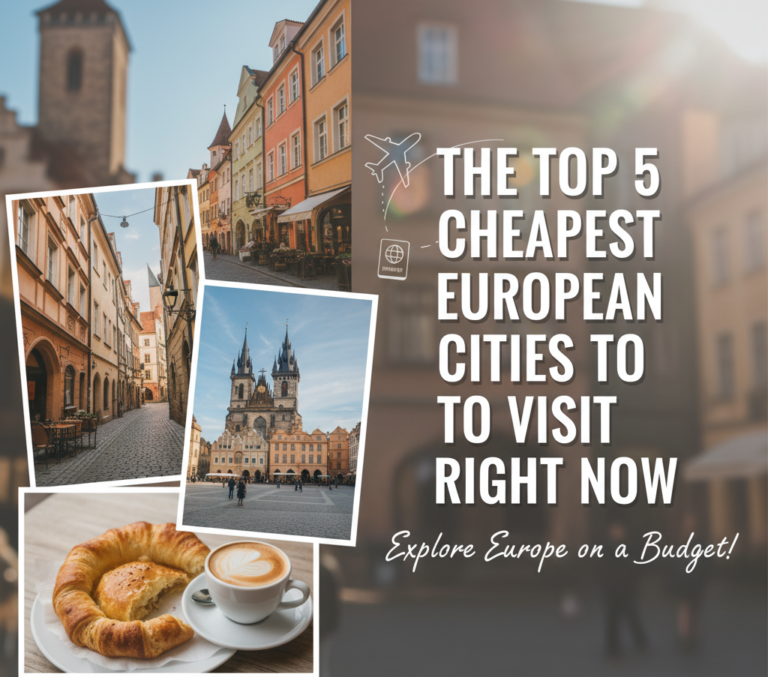
The Top 5 Cheapest European Cities to Visit Right Now: Luxury on a Budget
The myth that “Europe is expensive” stops millions of people from seeing the world. While Paris, London, and Zurich can certainly drain a bank account in days, there is a “Second Europe”—a collection of stunning, historic, and culturally rich cities where your dollar stretches further than you ever imagined.
Travel shouldn’t be about debt; it should be about value. By choosing the right destination, you can experience Michelin-quality food, ancient history, and vibrant nightlife for a fraction of the cost of a domestic trip. Whether you are a digital nomad looking to work from a budget laptop in a cafe, or a traveler maximizing your travel rewards points, these five cities offer the ultimate return on investment.
Why Eastern and Southern Europe Costs Less: The Economics Explained
Before diving into individual city guides, it is worth understanding why these destinations are so affordable. The answer is not simply that they are “underdeveloped.” In fact, most of the cities on this list have world-class infrastructure, fast internet, excellent healthcare, and vibrant cultural scenes. The price difference comes down to several economic fundamentals.
First, currency advantage plays a massive role. Countries like Poland, Hungary, and Bulgaria have their own currencies—the Złoty, Forint, and Lev respectively—that trade at favorable rates against the US Dollar and British Pound. When you exchange your money, you are essentially getting a discount on everything from coffee to hotel rooms before you even arrive. This structural currency gap can make the effective cost of living 40–60% lower than in Western Europe without any sacrifice in quality.
Second, lower wage structures in these economies translate directly into lower service prices. A restaurant meal involves rent, ingredient costs, and labor. When average wages are lower, those operating costs are lower, and that saving passes to the consumer. This is why you can sit in a beautifully decorated café in Kraków’s Old Town, sipping excellent espresso, and pay a fraction of what you would in Amsterdam.
Third, competition between accommodations is fierce. Platforms like Booking.com, Hostelworld, and Airbnb have created enormous inventory in these cities, driving prices down further. A private apartment in Budapest with a full kitchen and stunning Danube views can cost less per night than a cramped single room in a budget London hotel.
Understanding these mechanics helps you plan smarter. Rather than simply booking wherever looks pretty on Instagram, you can target destinations where the structural economics work in your favor.
Best Time to Visit: Seasonal Pricing and Weather Windows
Timing your trip is one of the most powerful tools in the budget traveler’s arsenal. Every destination on this list has a clear pricing pattern tied to tourism seasons, and knowing this pattern can cut your costs by 20–40% on accommodation alone.
🗓 The Budget Traveler’s Seasonal Calendar
Shoulder Season (April–May & September–October) is widely considered the sweet spot. Crowds thin out, prices drop, and the weather across most of Europe remains mild and pleasant. This is the window that experienced budget travelers specifically target.
Low Season (November–March) offers the absolute lowest prices but comes with colder weather and shorter daylight hours. For city-focused trips where you are spending time in museums, cafés, and restaurants rather than outdoor sightseeing, this can actually be an excellent time to visit.
Peak Season (June–August) brings the highest prices, the longest queues, and the hottest temperatures. Unless you have a specific reason to visit during summer—like a local festival—it is the season most experienced travelers try to avoid.
For Kraków, the ideal window is late April through early June. The city bursts into bloom, the outdoor market squares fill with life, and you can secure excellent accommodation at 30–40% less than peak July rates. Budapest in September is particularly magical—the summer heat breaks, the thermal baths are less crowded, and the city’s famous ruin bars host some of their best events.
Sofia in May is a revelation. The city hosts several music festivals, the weather is warm but not brutal, and Vitosha Mountain offers excellent hiking conditions. Lisbon is best visited in April or October—spring wildflowers cover the Atlantic coast, and the September tourist surge has faded by mid-October. Finally, Athens in October is perhaps the best-kept secret in European budget travel: the light is golden, temperatures hover around a perfect 20°C, and the Acropolis is walkable without the summer crowds.
1. Financial Preparation: The “Pre-Trip” Strategy
Before you book a ticket, you need a plan. The cheapest city in the world won’t save you if your financial habits are messy.
- The Savings Sprint: Use the months before your trip to aggressively save. Follow the zero-based budget checklist to allocate every spare dollar to your “Europe Fund.”
- Credit Health: Ensure you have a solid financial foundation. Work on improving your credit score fast so you can qualify for premium travel cards that offer no foreign transaction fees.
- Investment Mindset: Treat travel as an experience dividend. Ensure your long-term wealth is automated via the 4 types of investment accounts so you can travel guilt-free.
How to Find the Cheapest Flights to Europe
Your biggest single expense is almost always the transatlantic or intercontinental flight. Mastering this cost is essential. There is no single magic formula, but experienced travelers follow a consistent set of principles that reliably produce better prices.
Use Price Comparison Tools Strategically
Tools like Google Flights, Skyscanner, and Kayak all use the same underlying airline data but present and filter it differently. Google Flights is particularly powerful because of its calendar view, which lets you see the cheapest days to fly across an entire month at a glance. Skyscanner’s “Everywhere” search lets you type your departure city and simply ask where is cheapest to fly—invaluable if your destination is flexible.
The key insight most travelers miss: prices are dynamic. An alert set for a specific route will often show a 15–25% price swing over two to three weeks. Set a price alert, be patient, and strike when the window opens.
The Budget Airline Network in Europe
Once you land in Europe, getting between cities can cost almost nothing. Ryanair, Wizz Air, and easyJet operate dense networks across the continent with fares that regularly sit below €20 for one-way tickets when booked in advance. This means you can realistically create a multi-city itinerary—flying into Kraków, then to Budapest, then to Sofia—for less than the cost of a single train ticket between major Western European cities.
The trade-off is strict baggage rules. Budget airlines make much of their revenue from add-on fees. Always read the baggage policy before booking and factor it into your comparison. A flight that appears cheapest can quickly become the most expensive once you add a checked bag. Traveling with only carry-on luggage—using a compact, airline-compliant backpack—is the single most effective way to guarantee you pay only the base fare.
Flying into a secondary hub and taking ground transport to your destination is often cheaper than flying direct. Flying into Vienna or Warsaw and taking a 3-hour train to Budapest or Kraków respectively frequently costs half the price of a direct flight, and gives you a bonus transit experience.
Using Points and Miles for Free or Discounted Flights
The highest-leverage move in travel budgeting is flying on points. American, Delta, United, Chase Ultimate Rewards, and American Express Membership Rewards all have European transfer partners that allow you to redeem accumulated points for business or economy class flights at a tiny fraction of the cash price. A transatlantic business class ticket that costs $4,000 can be redeemed for 60,000–70,000 points—points that can be accumulated through everyday spending on the right travel credit card.
Even if you are only redeeming for economy class, a well-timed award booking can cut your flight cost by 60–80%. The key is to start accumulating points well before your trip date and to understand which programs have the best rates to your specific destination.
1. Kraków, Poland (The Cultural Capital)
Kraków is often cited as the best value city in Europe. It survived WWII largely intact, leaving a stunning medieval old town (Rynek Główny) that rivals Prague or Vienna—but at half the price.
Why It’s Affordable
The Polish Złoty (PLN) is favorable against the Dollar and Euro. You can find hearty meals for $6–$8 and pints of beer for $2. Accommodation is plentiful, ranging from high-end hostels to affordable luxury apartments perfect for following your morning routine checklist in peace.
What to See and Do in Kraków
Beyond the Main Market Square, Kraków rewards slow exploration. The Wawel Royal Castle dominates the city from its limestone hill, offering a sweeping panorama of the Vistula River and surrounding rooftops. Entry to the castle grounds is free; specific exhibitions require a small ticket. The Jewish Quarter of Kazimierz has been transformed into one of the most vibrant neighborhoods in Central Europe, with courtyard cafés, independent bookshops, and gallery spaces that stay open into the early hours.
A half-day trip to the Wieliczka Salt Mine—a UNESCO World Heritage Site—is an absolute must. The underground salt cathedral and vast carved chambers are unlike anything else in Europe, and the tour costs approximately $20 per person including transportation from the city center.
Where to Eat Without Spending Much
Zapiekanka stands (open-faced toasted baguettes) are the definitive Kraków street food experience and cost well under $3. For a sit-down meal, the bar mleczny (milk bar) tradition—subsidized cafeteria-style restaurants serving traditional Polish food—offers three-course lunches for $5–$7. Pierogi (filled dumplings), żurek (sour rye soup), and bigos (hunter’s stew) are staples that taste expensive but cost almost nothing.
2. Budapest, Hungary (The Paris of the East)
Budapest offers imperial grandeur on a backpacker’s budget. Famous for its thermal baths and “ruin bars” (bars built in abandoned buildings), it is a city of incredible contrast and energy.
The Lifestyle Hack
Dining out here is incredibly cheap, but if you want to save even more, book an Airbnb with a kitchen. You can shop at the Great Market Hall and cook quick and healthy dinners using fresh local ingredients for pennies.
The Architecture and History Experience
Budapest is one of the most architecturally spectacular cities in Europe—and much of it is completely free to experience. The two sides of the city, Buda and Pest, each have a distinct personality. Buda, on the western bank of the Danube, is dominated by Buda Castle, the Fisherman’s Bastion, and the medieval street network of the Castle District. Pest, the commercial and cultural heart, is a grid of grand 19th-century boulevards, ornate covered markets, and Art Nouveau facades.
The thermal bath culture is both a practical experience and a cultural one. Széchenyi, the largest thermal bath in Europe, costs approximately $18–$22 for a full-day admission and operates year-round, including in winter when the outdoor pools steaming in the cold air create one of the most memorable scenes in travel photography. The Gellért Bath is slightly more expensive but offers extraordinary Art Nouveau interiors.
Transportation Within Budapest
Budapest has an excellent public transport network—metro, trams, and buses—that covers the entire city. A 24-hour unlimited travel card costs approximately $6, making it unnecessary to take taxis for most sightseeing days. The vintage tram line 2 along the Danube embankment is often listed as one of the most scenic urban tram rides in the world and is included in the standard transit pass.
3. Sofia, Bulgaria (The Digital Nomad Haven)
Sofia is frequently ranked as the absolute cheapest capital in the European Union. It is gritty, authentic, and increasingly hip. It sits at the foot of Vitosha Mountain, offering hiking access directly from the city.
Why It Wins
For digital nomads, this is paradise. Internet speeds are among the fastest in the world. You can set up your mobile office setup in a trendy cafe for the price of a single coffee. Just ensure you have the best productivity apps installed to manage your time while exploring.
Sofia’s Hidden Cultural Wealth
Sofia is severely underrated as a cultural destination. The city is home to an extraordinary concentration of religious architecture spanning multiple faiths and centuries. The Alexander Nevsky Cathedral—one of the largest Eastern Orthodox cathedrals in the world—is free to enter and breathtaking in scale. The adjacent crypt functions as one of the finest icon museums in the Balkans. Just steps away, the ancient Sveta Sofia church dates back to the 6th century, making it older than most of the famous cathedrals in Western Europe.
The Banya Bashi Mosque, an active 16th-century Ottoman mosque, stands next to the city’s central mineral bath complex, now converted into a history museum. Walking between these sites in a single morning is a compressed tour through layers of history that most visitors completely miss.
Day Trips from Sofia
The Rila Monastery, a UNESCO World Heritage Site, is accessible as a day trip by public bus for under $10 round-trip. It sits in a mountain valley at 1,150 meters elevation and is one of the most stunning monastic complexes anywhere in Europe. Painted exterior frescoes, ornate wooden ceilings, and a tranquil courtyard fountain make it worth the journey even if you only have a single day spare. The town of Plovdiv—Bulgaria’s second city and a former European Capital of Culture—is 90 minutes away by intercity bus at minimal cost, offering a beautifully preserved Old Town and thriving arts scene.
4. Lisbon, Portugal (Western Europe’s Best Value)
While prices have risen, Lisbon remains significantly cheaper than London, Paris, or Rome. It offers a mild climate, incredible seafood, and a laid-back vibe that encourages slowing down.
The Sun Protection Factor
Lisbon is sunny. Don’t let a sunburn ruin your trip. Ensure you pack the products from your essential skincare routine, as buying specialized cosmetics abroad can be pricey.
Navigating Lisbon Like a Local
The city’s famous trams are historic icons, but the tourist-heavy Tram 28E has become notorious for pickpockets and overcrowding during peak hours. Experienced visitors use the city’s metro system for most transit and reserve the trams for specific scenic routes in the early morning or late evening. The Viva Viagem rechargeable card covers the metro, buses, trams, and even the local rail network to Sintra and Cascais—making it the single most cost-efficient transport purchase in the city.
Alfama, Lisbon’s oldest district, climbs steeply from the waterfront in a maze of medieval alleyways. The miradouros (viewpoints) scattered throughout the neighborhood are free and offer postcard-perfect views across the terracotta rooftops to the Tagus River. Arriving at Miradouro da Graça for sunset is a quintessential Lisbon experience that costs nothing.
Eating and Drinking on a Budget in Lisbon
The prato do dia (dish of the day) is your greatest ally in Lisbon’s restaurants. Most traditional tasca-style eateries offer a daily lunch special including a main course, bread, a drink, and sometimes a starter for €8–€12. This is universally the best-value eating strategy in the city. Bacalhau (salt cod), prepared in supposedly over 365 different ways across Portugal, is the defining national dish—hearty, cheap, and endlessly varied.
For the absolute cheapest authentic eating, seek out the city’s covered markets: Mercado de Campo de Ourique and Mercado da Ribeira both have fresh food halls with daily specials. A bifanas (pork sandwich) from a street counter near the waterfront will cost you €2–€3 and will be better than most expensive restaurant sandwiches you have ever eaten.
5. Athens, Greece (History on a Dime)
Skip the expensive islands (Santorini/Mykonos) and stay in Athens. The city is a living museum. The food scene—specifically street food like Gyros—is unbelievably cheap and delicious.
Smart Packing Required
Athens is hot and involves a lot of walking on uneven ancient stones. You need to pack strategically. Consult our ultimate packing list for a 10-day trip to ensure you have breathable fabrics and comfortable shoes.
Getting the Most Out of the Acropolis
The Acropolis itself requires a paid ticket, but a combined ticket includes access to seven other major archaeological sites around the city center—the Ancient Agora, the Roman Agora, Kerameikos, the Temple of Olympian Zeus, and more—at a single bundled price that represents exceptional value. Visiting in the late afternoon, when the tour groups have largely departed and the light turns golden, is both cheaper in feel and better for photography.
The Acropolis Museum at the base of the hill is one of the finest archaeological museums in Europe. It displays many of the original sculptures in context, with the building itself designed so that visitors can look through glass floors at ongoing excavations below their feet. Entry is affordable and the building’s architecture is worth the visit independently.
Beyond the Acropolis: Athens’ Neighborhood Culture
Monastiraki and Psiri neighborhoods offer the best street food concentration in the city. Gyros (pork or chicken wrapped in pita with tzatziki) remain around €2.50–€3.50 and are a complete meal in themselves. The flea market in Monastiraki Square is atmospheric and free to wander regardless of whether you buy anything. Exarcheia, the city’s anarchist-bohemian neighborhood, has the cheapest bars and cafés in the city alongside an endlessly interesting street art scene.
Cape Sounion, home to the ancient Temple of Poseidon perched on a clifftop overlooking the Aegean Sea, is reachable by public bus for approximately €6 round trip. It is one of the most dramatic archaeological sites in the Mediterranean world and remains comparatively uncrowded compared to the Acropolis.
Quick Comparison: All 5 Cities at a Glance
| City | Currency | Daily Budget (USD) | Best For | Best Season |
|---|---|---|---|---|
| Kraków | Polish Złoty (PLN) | $45–$60 | History, culture, food | Apr–Jun |
| Budapest | Hungarian Forint (HUF) | $50–$70 | Architecture, spa, nightlife | Sep–Oct |
| Sofia | Bulgarian Lev (BGN) | $35–$50 | Digital nomads, hiking | May–Jun |
| Lisbon | Euro (EUR) | $70–$90 | Food, coast, architecture | Apr, Oct |
| Athens | Euro (EUR) | $60–$80 | History, street food | Oct |
Where to Stay: The Complete Accommodation Guide for Budget Europe
Accommodation is typically the second-largest travel expense after flights, and it is also the category with the widest range of options and trade-offs. Understanding the accommodation landscape across these five cities will help you make informed choices that match your comfort level, budget, and travel style.
Hostels: Reinvented for the Modern Traveler
The stereotype of the dingy, 20-bed dormitory hostel is largely outdated in the cities on this list. A new generation of “boutique hostels” or “design hostels” has emerged across Eastern Europe that offer private rooms at prices below traditional budget hotels, alongside shared social spaces—rooftop terraces, fully-equipped communal kitchens, in-house bars, and organized city tours—that hotels simply cannot match. In Kraków and Budapest especially, boutique hostels regularly win design and hospitality awards.
If you are comfortable with shared dormitory sleeping (which modern hostels handle with privacy curtains, individual lockers, and reading lights), the savings are dramatic. A bed in a well-rated dormitory in Sofia or Kraków can cost $12–$18 per night, cutting accommodation costs to nearly nothing. Factor in that most good hostels include free breakfast, and the effective daily saving compared to even a mid-range hotel can exceed $60.
Apartments via Booking Platforms
For travelers staying five nights or longer, a self-catering apartment represents exceptional value in these cities. A one-bedroom apartment in central Budapest, Kraków, or Sofia with a full kitchen typically costs $40–$60 per night for two people—less than many hostel private rooms—and provides the ability to cook meals, do laundry, and live as a local rather than a tourist.
The kitchen access is particularly valuable. Cooking even four or five of your daily meals at home rather than in restaurants can save $20–$30 per day per person. Over a two-week trip for two people, that translates to $280–$840 in meal savings alone—enough to fund flights to another destination.
Couchsurfing and House Swapping
For those willing to embrace a slightly more spontaneous travel style, accommodation exchange platforms represent the ultimate zero-cost option. These communities connect travelers with locals who offer a spare room or couch in exchange for conversation and cultural exchange. Beyond the cost saving, staying with a local resident provides an inside view of the city that no guidebook or hotel concierge can replicate. You get real restaurant recommendations, neighborhood insight, and often a built-in guide for the first day.
Currency, Banking, and Money Management Abroad
One of the most overlooked sources of budget travel losses is currency exchange fees. Most people pay 3–5% on every transaction when traveling abroad—either through ATM fees, credit card foreign transaction fees, or poor exchange rates at airport currency exchange booths. Over a two-week trip spending $1,200, that 5% costs you $60. It is money given away for nothing.
The Best Cards for International Spending
Travel-optimized cards eliminate or minimize foreign transaction fees. Cards from issuers like Charles Schwab, Wise (formerly TransferWise), and Revolut offer zero foreign transaction fees and, in some cases, reimburse international ATM fees entirely. Setting up one of these accounts before your trip is one of the highest-return financial preparations you can make.
The Wise debit card is particularly useful for Eastern European currencies because it converts at the mid-market exchange rate with a tiny, transparent fee—far better than any airport kiosk or bank branch will offer. For non-Euro destinations like Poland, Hungary, and Bulgaria, having a Wise card can save you 3–6% on every transaction compared to a standard bank card.
ATM Strategy Abroad
When withdrawing cash from international ATMs, always choose to be charged in the local currency (not your home currency). This seemingly minor choice avoids a practice called Dynamic Currency Conversion—where the ATM operator offers to convert to your home currency at an inflated rate, pocketing a 3–8% margin. Always reject this “convenience” and let your home bank handle the conversion.
Withdraw larger amounts less frequently rather than small amounts frequently. Most ATMs charge a flat per-transaction fee, so taking out the equivalent of $100 four times is more expensive in fees than taking out $400 once.
In Poland, Hungary, and Bulgaria, many local vendors—especially in markets and smaller restaurants—prefer cash. Always have some local currency on hand even if you plan to use cards primarily. A small emergency cash reserve also protects you from card malfunctions or ATM downtime.
Safety in Budget European Cities: What You Actually Need to Know
Safety concerns are among the most common reasons people hesitate about visiting Eastern European destinations. The reality in all five cities on this list is that violent crime against tourists is rare and statistically much lower than in many popular Western European tourist destinations. That said, petty crime—primarily pickpocketing—is a real concern in high-density tourist areas, and awareness is your primary defense.
Pickpocketing: The Only Real Threat
Pickpockets operate in predictable environments: crowded trams, busy market squares, tourist queues, and any situation where you are distracted. In Budapest, the tourist-heavy Tram 28 in Lisbon, and the Monastiraki market in Athens are known hotspots. The solution is behavioral, not equipment-based: use a crossbody bag worn in front of your body, never put your phone in an exterior pocket in crowded areas, and use card holders with RFID blocking technology for contactless card protection.
Carrying the bulk of your money in a hotel room safe and only bringing what you need for the day is standard practice for experienced travelers. If you are robbed, you lose the day’s cash—not your trip’s entire budget.
Scams Targeting Tourists
Each city has its own characteristic tourist scam ecosystem. In Athens, the most common involve overcharging in poorly-lit restaurants near the Plaka tourist district—always confirm prices before ordering. In Budapest, the “friendly local” who insists on taking you to a specific bar is almost always a commission-driven tout for establishments that charge ten times market rates for drinks. In Lisbon, unofficial taxi drivers at the airport quote flat rates that are significantly higher than metered fares. Use Uber or Bolt app-based rides from the airport to eliminate this risk entirely.
General awareness—not paranoia—is sufficient. The vast majority of interactions with locals in all five cities are friendly, helpful, and genuinely hospitable. Treating every local as a potential scammer will ruin your trip; treating every seemingly too-good-to-be-true offer with healthy skepticism will protect your wallet.
Travel Insurance: Non-Negotiable
Travel insurance is the one area where budget travelers should not try to save money. A medical emergency abroad—even in a country with good public healthcare—can generate costs that dwarf the entire trip budget. Comprehensive travel insurance covering medical expenses, emergency evacuation, trip cancellation, and baggage loss costs $50–$120 for a two-week trip. That is less than two nights of accommodation in most cases, but it protects you against costs that could reach tens of thousands of dollars.
2. The Logistics: How to Execute the Trip
Knowing where to go is easy; getting there smoothly requires a system.
Planning and Booking
Use the checklist for how to plan a trip to lock in your flights and accommodation. Procrastination kills budgets—booking last minute is the most expensive way to travel. Use strategies to beat procrastination and book 3-4 months in advance.
Digital Security Abroad
When using public Wi-Fi in hostels or cafes in these cities, your data is vulnerable.
- Passwords: Secure your banking logins with one of the 5 free password managers.
- Phone Settings: Avoid roaming charges by adjusting your device. Read our guide on 7 smartphone settings you need to change immediately before you board the plane.
Building a Multi-City Eastern European Itinerary
One of the most powerful ways to maximize value is to combine multiple destinations from this list into a single trip rather than focusing on one city. The cities are well-connected by budget airlines and affordable overnight trains, and the cost of moving between them is often surprisingly low. Below is a practical framework for two different trip lengths.
The 10-Day Highlights Circuit
Fly into Kraków and spend three nights. The first day is for the Old Town and Wawel Castle; the second for Kazimierz and the National Museum; the third for a half-day at the Wieliczka Salt Mine before taking an evening bus to Budapest (4–5 hours, approximately $15–$25). Spend four nights in Budapest, which allows enough time for the thermal baths, the Castle District, the Great Market Hall, and at least one ruin bar evening. Take a budget flight to Athens for three final nights—focusing on the Acropolis area the first day, the Acropolis Museum and National Archaeological Museum the second, and Cape Sounion as a half-day trip on the third before flying home.
The total inter-city transport cost for this circuit—one bus and one budget flight—will typically run $60–$100, representing extraordinary value given the cultural and geographic range covered.
The 3-Week Deep Dive
With three weeks, you can cover all five destinations at a more relaxed pace. Add Sofia between Budapest and Lisbon (flying is quickest; approximately $30–$60 on Wizz Air with advance booking), then connect to Lisbon via another budget flight before finishing with Athens. This extended version allows for proper day trips from each base city—Auschwitz from Kraków, the Danube Bend from Budapest, Rila Monastery from Sofia, Sintra from Lisbon, and Cape Sounion from Athens—creating a more immersive experience of each country’s broader culture beyond its capital.
Health, Wellness, and Self-Care While Traveling on a Budget
Maintaining physical and mental health while traveling is something many budget guides skip, but it is central to actually enjoying your trip. Exhausted, sick, or mentally frayed travelers spend more, make worse decisions, and enjoy their destinations less. Investing a small amount in wellness pays dividends across the entire trip.
Managing Sleep Across Time Zones
Jet lag hits differently depending on which direction you are traveling. Westbound flights (returning home from Europe to North America) are generally easier to recover from than eastbound flights (the outbound journey). To minimize disruption: force yourself to stay awake until local bedtime on arrival day regardless of how tired you feel, expose yourself to natural morning light as early as possible, and avoid large alcohol consumption on your first two nights which disrupts REM sleep even if it helps you fall asleep faster.
Staying Active
One of the underappreciated benefits of these five cities is the natural exercise built into exploration. Kraków, Budapest, Athens, Lisbon, and Sofia are all compact, walkable cities where a day of sightseeing easily involves 15,000–20,000 steps. For dedicated exercise, all five cities have running cultures with accessible riverside paths, park circuits, and free outdoor workout areas. Budapest’s Margit Island in the middle of the Danube is a dedicated fitness and recreation park free to enter. Vitosha Mountain from Sofia is a world-class hiking destination that begins, practically speaking, at the city’s suburban tram terminus.
Mental Health and the Travel Mindset
Extended travel—even of the exciting budget variety—can produce unexpected emotional strain. The relentless novelty that makes travel thrilling also removes the routines that provide psychological stability. Experienced travelers actively counteract this by building small rituals into each day: a morning coffee in the same café for two or three days, a consistent evening journaling practice, or a daily check-in call with someone at home.
Giving yourself genuine unscheduled time—an afternoon with no plans, no attractions queued, no optimization—is not wasted time. It is the space where the best unplanned experiences happen: conversations with strangers, stumbled-upon neighborhood festivals, the bookshop down an alley you would never have visited if you were following a schedule.
Essential Gear for the Budget Traveler
To travel cheaply, you often need to be self-sufficient. These tools allow you to avoid paying for conveniences.

Budget hotels and hostels rarely have enough outlets. A universal adapter with USB-C ports ensures you can charge your phone, your camera, and your laptop simultaneously. This prevents the need to buy overpriced chargers at the airport.
Check Price on Amazon
In busy European capitals, pickpocketing can happen. An anti-theft backpack with hidden zippers gives you peace of mind. It is one of the 8 essential items for your carry-on, acting as your mobile base of operations.
Check Price on Amazon
Buying bottled water every day adds up ($3/day = $30/trip) and creates waste. A filtered bottle allows you to drink tap water safely anywhere. This aligns with the habits of people who are good with money: eliminating small, recurring costs.
Check Price on AmazonThe Budget Foodie Guide: Eating Brilliantly Across All 5 Cities
Food is simultaneously one of the greatest pleasures of European travel and one of the easiest areas to either overspend or under-experience. Budget eating is not about deprivation—it is about knowing which establishments and food formats offer the best quality-to-price ratio and which are tourist traps wearing the costume of authenticity.
The Universal Budget Food Principles
Every city in Europe operates by a predictable geography of food pricing. Restaurants within 200 meters of a major tourist attraction—a cathedral, a famous square, a museum—charge a significant premium for the same food available three streets away for half the price. This is the most universal and most consistently ignored principle in travel food budgeting.
Markets are almost always better and cheaper than tourist-facing restaurants. In every city on this list, local covered markets (rynek in Polish, piac in Hungarian, pazar in Bulgarian) offer fresh, local, seasonal food at prices designed for local shoppers. Buying a bag of fruit, a piece of local cheese, a fresh baked roll, and a bottle of water from these markets and eating in a nearby park costs $3–$5 and is genuinely among the best eating experiences available anywhere.
City-by-City Food Highlights
In Kraków, the unsung budget hero is obwarzanek krakowski—the city’s distinctive ring-shaped pretzel sold from street carts around the market square. At under $0.50 each, they make a perfect walking snack. The city’s milk bars (bar mleczny) serve traditional Polish food in a self-service cafeteria format at prices that haven’t kept pace with the city’s gentrification, making them time capsules of both food culture and value.
In Budapest, lángos—deep-fried flatbread topped with sour cream and cheese—is the definitive street food, available from market vendors for $2–$4. The Great Market Hall on Fővám tér is both a working market and a food hall with upstairs vendors selling Hungarian prepared foods. The lower floor is where local residents shop for produce, meat, and pickled goods at authentic prices.
In Sofia, banitsa (cheese-filled pastry) eaten fresh from a banitsa shop in the early morning is one of the great budget food experiences in Europe. The city has a strong café culture with exceptional coffee at prices far below Western European norms—a double espresso in a specialty coffee shop typically costs €1.50–€2. Kebapche (grilled minced meat rolls) from a local grill is a filling meal for under $4.
In Lisbon, the pastel de nata (custard tart) is the city’s most famous food export, and the best versions—at the original Pastéis de Belém or at any neighborhood padaria (bakery)—cost €1.20–€1.50. The city’s abundance of piri-piri chicken restaurants offers arguably the best value sit-down meal in Portugal: a half-chicken with fries and salad for €8–€10 in a local neighborhood establishment is a full, excellent meal.
In Athens, the souvlaki is king—grilled pork or chicken skewers or wrapped in pita, available from hole-in-the-wall establishments across the city for €2.50–€3.50. The Varvakios Central Market is a sensory overload of fish, meat, and produce stalls that gives an unfiltered view of how the city actually feeds itself. Loukoumades (Greek honey puffs) sold fresh from dedicated loukoumades shops are an essential dessert at approximately €3 for a generous serving.
Language, Culture, and Etiquette: Avoiding Costly Social Mistakes
Cultural literacy is not just respectful—it is practically valuable. In countries where tourism is booming but still supplemented significantly by local spending, demonstrating awareness of local customs marks you as a genuine visitor rather than a mark, and can make a meaningful difference in the quality of service, prices quoted, and experiences available to you.
Basic Language Investments
Learning ten words of the local language before arrival costs nothing and returns disproportionately. In Polish, Hungarian, Bulgarian, and Greek, even a fumbled pronunciation of “hello” (cześć, hello, здравей, γεια σου), “thank you” (dziękuję, köszönöm, благодаря, ευχαριστώ), and “please” in the local language signals genuine respect and almost universally produces warmer engagement from locals. Apps like Duolingo, Google Translate (which includes offline audio for all relevant languages), and Forvo (for native speaker pronunciation guides) make this preparation frictionless.
English proficiency in all five cities is high—particularly in hospitality, transport, and retail—but the assumption that everyone speaks English and must accommodate you is both less true in older neighborhoods and quietly resented. Leading with local language and switching to English when needed is the correct social protocol.
Tipping Culture Across the Five Cities
Tipping norms vary significantly and misjudging them in either direction creates awkwardness. In Poland and Hungary, rounding up to the nearest round number or leaving 10% for good service is standard. In Bulgaria, tipping is appreciated but not expected in the same way as in North America—5–10% in restaurants is generous by local standards. In Portugal and Greece, leaving small change or rounding up is customary; American-style 20% tips are not expected and can actually make locals uncomfortable. Understanding these norms prevents both under-tipping (which is rude) and over-tipping (which can mark you as a target for tourist pricing on subsequent visits).
Dress Codes at Religious and Historical Sites
Several of the key attractions in these cities have dress requirements that, if ignored, result in either denied entry or the humiliation of purchasing overpriced cover-up garments at the entrance. The Banya Bashi Mosque in Sofia and several Orthodox churches in Greece require covered shoulders and knees. The rule of thumb for religious site visits: pack a lightweight scarf or a long-sleeve shirt that can be tied around your waist when not needed—it weighs nothing, costs nothing, and eliminates the entry problem entirely.
Sustainable Budget Travel: Spending Less While Giving More
One of the quieter tensions in budget travel is the relationship between minimizing personal cost and supporting the local economies you visit. The good news is that in the cities on this list, these goals are largely aligned: the accommodation, food, and experiences that are cheapest are also typically those that most directly benefit local residents rather than multinational chains.
Where Your Money Goes
Choosing a locally-owned guesthouse over a global hotel chain keeps your accommodation spending in the local economy. Eating at a family-run restaurant rather than an international franchise ensures your food spending reaches local farmers, suppliers, and business owners. Hiring a local guide for a walking tour—often available through city libraries, cultural organizations, or cooperative tour platforms at low cost—supports individual residents with deep, authentic knowledge of their city.
The most powerful sustainable travel choice is also one of the cheapest: free walking tours, which operate in all five cities and run on tips, let you choose what you pay based on the quality of the experience. These tours typically employ unemployed graduates and passionate locals who provide genuinely excellent historical and cultural context that printed guidebooks cannot match.
Reducing Environmental Impact While Traveling Cheap
The LifeStraw water bottle recommended earlier is one example of how budget tools and sustainability overlap. Reducing plastic bottle consumption saves money and environmental damage simultaneously. Choosing train or bus over domestic flights for short legs reduces both carbon footprint and cost. Using public transit rather than taxis reduces emissions and saves money. Staying in centrally-located accommodations—which are accessible on foot—reduces the need for transport entirely.
Final Verdict: Value is Waiting
You don’t need to be rich to travel; you just need to be smart. By choosing cities like Kraków, Budapest, or Sofia, you can experience the best of European culture without the Western European price tag.
Combine these destinations with the discipline of highly effective planning and time-blocking your itinerary, and you will have the trip of a lifetime. Pack your bags—adventure is cheaper than you think.
📋 Before You Go: The Complete Pre-Departure Checklist
- Set up a no-foreign-transaction-fee debit card (Wise, Schwab, Revolut)
- Purchase travel insurance covering medical, evacuation, and cancellation
- Download offline Google Maps for each destination city
- Download Google Translate with offline packs for local languages
- Notify your primary bank of travel dates to avoid card blocks
- Pack a lightweight universal power adapter with USB-C ports
- Pack a compact, airline-compliant carry-on backpack with anti-theft features
- Confirm passport validity (most countries require 6 months beyond travel date)
- Save emergency numbers for each country (local police, your bank’s international number)
- Book accommodation for at least the first two nights before departure