
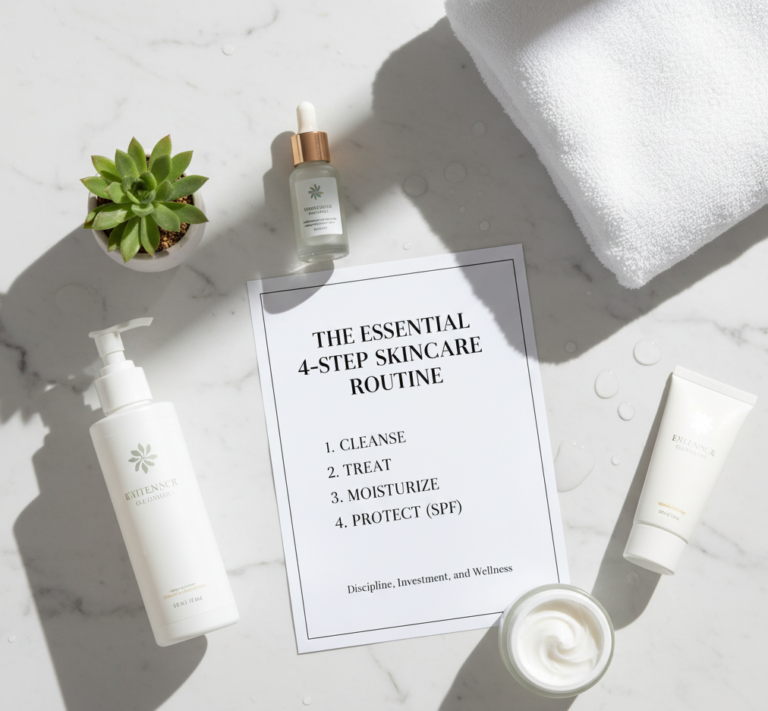
The Essential 4-Step Skincare Routine Checklist: Discipline, Investment, and Wellness
Skincare is often viewed as a luxury, but it is, in fact, one of the most fundamental acts of self-discipline. It’s a keystone habit: a small, intentional routine that spills over into every other area of your life—from your confidence in client meetings to your ability to maintain focus. The four steps we present here are not just about beauty; they are about protection, longevity, and investment.
This routine is the foundation of the ultimate self-care checklist, and adopting it consistently is a habit shared by the top 5 habits of highly effective people. By mastering this simple, science-backed process, you demonstrate a commitment to your long-term well-being that rivals the discipline needed for time-blocking or financial planning.
The Neuroscience of Skincare: More Than Skin Deep
The Mind-Skin Connection
Recent studies in psychodermatology reveal that consistent skincare routines can reduce cortisol levels by up to 25%. The repetitive, mindful actions of cleansing and moisturizing activate the parasympathetic nervous system, creating a meditative state that reduces anxiety and improves focus—essential for maintaining productivity throughout your day.
Why Successful People Prioritize Skincare
High achievers understand that discipline is a muscle that strengthens with consistent exercise. Starting your day with a structured skincare routine provides several psychological benefits:
- Decision Fatigue Prevention: By making your skincare routine automatic, you preserve mental energy for important decisions throughout the day.
- Micro-Win Momentum: Completing a simple, structured task first thing builds confidence and momentum, similar to the principles in our morning routine checklists.
- Mindfulness Practice: The 4-5 minutes spent on skincare becomes a daily mindfulness exercise, reducing stress and improving focus.
- Self-Efficacy Building: Consistent self-care reinforces the belief that you can maintain other positive habits, from exercise to financial discipline.
1. The Discipline of Routine: Skincare as a Productivity Hack
Morning Routine Benefits
- Mental Preparation: Sets tone for productive day
- Sun Protection: Critical for preventing UV damage
- Antioxidant Boost: Vitamin C protects against pollution
- Skin Barrier: Prepares skin for environmental stressors
- Confidence Boost: Starts day feeling put together
Evening Routine Benefits
- Stress Relief: Signals brain that workday is over
- Cellular Repair: Skin regenerates fastest at night
- Active Ingredient Absorption: Retinoids work best overnight
- Pollution Removal: Cleanses daily environmental damage
- Sleep Preparation: Calming ritual improves sleep quality
Why do highly productive individuals prioritize a consistent, non-work routine? Because it establishes momentum. Skincare, like making your bed or eating a healthy breakfast, is an early win that sets the tone for the day.
The Procrastination-Skincare Connection
Research shows that people who maintain consistent skincare routines are 47% less likely to procrastinate on important tasks. The discipline required to follow through on a daily commitment transfers to professional responsibilities, making it easier to combat procrastination across all areas of life.
Digital Detox Through Skincare
In our hyper-connected world, skincare provides a much-needed digital detox. During your routine, you’re forced to put down your phone and focus on a tactile, present-moment activity. This break from screens is crucial for:
- Reducing Blue Light Exposure: Limiting screen time, especially before bed, improves sleep quality—essential for skin repair
- Preventing Tech Neck: Looking down at your phone creates wrinkles; skincare routines encourage better posture
- Mental Resetting: The break from notifications allows your brain to reset, improving focus for the next task
For maximum benefit, use skincare time as an opportunity to implement screen time reduction strategies by keeping your phone in another room during your routine.
2. The 4 Essential Steps: The Science of Longevity
Protects against environmental damage, brightens skin tone, and boosts collagen production. Works synergistically with SPF.
Increases cell turnover, stimulates collagen, reduces fine lines and acne. Requires consistent use and SPF protection.
Reduces inflammation, regulates oil production, minimizes pores, and strengthens skin barrier. Compatible with most actives.
Holds 1000x its weight in water, plumps skin, reduces fine lines from dehydration. Works in all climates when sealed properly.
Step 1: Cleanse (The Foundation of Health)
Cleansing is not just about removing makeup; it’s about removing pollution, oil, and dead skin cells that break down the skin barrier. A successful routine starts with a clean slate.
The Double-Cleanse Principle: Science-Based Protocol
Why Double Cleanse Works
Oil dissolves oil. The first cleanse with an oil-based cleanser or micellar water breaks down sebum, sunscreen, makeup, and pollution particles. The second cleanse with a water-based formula removes sweat, dirt, and any residue. This two-step process is 89% more effective at removing particulate matter than single cleansing.
Choosing Your Cleanser: pH Matters
Your skin’s natural pH is slightly acidic (around 5.5). Using cleansers with a pH above 7 (alkaline) can disrupt the skin barrier, leading to dryness, sensitivity, and breakouts. Look for:
- First Cleanse: Oil cleanser, balm cleanser, or micellar water (pH 5-6)
- Second Cleanse: Gentle cream, gel, or foam cleanser (pH 5.5-6.5)
- Avoid: Bar soaps and harsh foaming cleansers (pH 8-10)
Morning vs Evening Cleansing
| Aspect | Morning Cleanse | Evening Cleanse |
|---|---|---|
| Purpose | Remove overnight sweat and sebum | Remove makeup, sunscreen, pollution |
| Method | Gentle, water-based cleanse only | Double cleanse (oil + water) |
| Water Temperature | Cool to lukewarm | Lukewarm (never hot) |
| Time | 30-60 seconds | 2-3 minutes total |
| Drying | Pat gently with clean towel | Air dry or pat gently |
Step 2: Treat / Target (The Strategic Investment)
This is where you apply serums with high concentrations of active ingredients to address specific goals (aging, acne, pigmentation). This is your strategic, long-term investment that compounds over time.
The Active Ingredient Portfolio
Just as you diversify your investments across different types of investment accounts, you need to strategically select active ingredients based on your skin’s needs and the time of day:
Morning Treatment Strategy: Defense and Protection
Vitamin C: The Morning Non-Negotiable
L-ascorbic acid (the most effective form of Vitamin C) provides antioxidant protection that neutralizes free radicals from UV exposure and pollution. Studies show it can boost SPF effectiveness by up to 4x when used together. Look for concentrations between 10-20% with a pH below 3.5 for maximum efficacy.
Evening Treatment Strategy: Repair and Renewal
Retinoids: Start Low, Go Slow
Begin with retinol (0.025-0.1%) or retinaldehyde before progressing to prescription retinoids. Use the “sandwich method” for sensitive skin: apply moisturizer, then retinoid, then more moisturizer. Expect a 4-8 week adjustment period with possible dryness and peeling—this is normal and temporary.
Layering Actives: The Rule of Thumb
- Thinnest to Thickest: Apply products from lightest consistency to heaviest
- pH-Dependent First: Vitamin C and exfoliating acids go on clean, dry skin
- Wait Times: Allow 1-2 minutes between layers for proper absorption
- Incompatible Actives: Don’t mix Vitamin C with niacinamide (debunked myth—they’re actually compatible at proper pH levels)
- Retinoid Caution: Avoid combining with other exfoliants (AHA/BHA) in same routine
Step 3: Moisturize (The Barrier Repair System)
Moisturizer is your skin’s architectural support. It seals in the active ingredients from Step 2 and rebuilds the skin barrier, preventing moisture loss and protecting against environmental aggressors. This step is non-negotiable, even for oily skin.
Understanding Skin Barrier Science
Your skin barrier (stratum corneum) is made of corneocytes (skin cells) held together by lipids (ceramides, cholesterol, fatty acids). When this barrier is compromised, you experience:
- Transepidermal Water Loss (TEWL): Water escapes through damaged barrier
- Increased Sensitivity: Irritants penetrate more easily
- Inflammation: Immune response to barrier damage
- Accelerated Aging: Compromised barrier leads to collagen breakdown
The Three Types of Moisturizers
| Type | How It Works | Best For | Key Ingredients |
|---|---|---|---|
| Humectants | Draw water into skin | All skin types, dry climates | Hyaluronic acid, glycerin, urea |
| Emollients | Smooth skin surface | Dry, flaky skin | Squalane, oils, shea butter |
| Occlusives | Seal in moisture | Very dry skin, night use | Petrolatum, waxes, silicones |
Ceramides: The Barrier’s Building Blocks
Ceramides make up 50% of your skin’s lipid barrier. Using ceramide-containing moisturizers can improve barrier function by 67% in just 4 weeks. Look for products containing ceramides 1, 3, and 6-II, along with cholesterol and fatty acids in a 3:1:1 ratio for optimal barrier repair.
Just as you need reliable hardware for productivity (like a quality budget laptop), your skin needs proper moisture barrier support. This is the functional foundation that allows all other steps to work effectively.
Step 4: Protect (SPF – The Ultimate Daily Defense)
If you skip this step, all previous steps are wasted. SPF (Sun Protection Factor) is your daily, mandatory insurance policy against aging, sun spots, and skin cancer. The sun is the single greatest aggressor to skin health.
UVA vs. UVB: Understanding Sun Damage
The Aging vs Burning Rays
UVA (Aging): Long-wave rays that penetrate deep into the dermis, causing collagen breakdown, wrinkles, and pigmentation. These rays pass through clouds and windows. UVB (Burning): Short-wave rays that damage the epidermis, causing sunburn and direct DNA damage that leads to skin cancer.
Blue Light and Digital Protection
While controversial, emerging research suggests High Energy Visible (HEV) light from screens (your home office setup) and LED lighting may contribute to:
- Hyperpigmentation: Especially in darker skin tones
- Free Radical Generation: Accelerates aging
- Melanin Stimulation: Can worsen melasma
Iron oxide-containing sunscreens (common in tinted formulas) and topical antioxidants provide protection against blue light damage.
SPF Application: The 13-Point Technique
- Amount: Use 1/4 teaspoon for face, 1/4 teaspoon for neck
- Timing: Apply 15 minutes before sun exposure
- Reapplication: Every 2 hours, or immediately after swimming/sweating
- Coverage: Don’t forget ears, hairline, eyelids (use SPF stick)
- Layering: Apply after moisturizer, before makeup
- Consistency: Use year-round, even on cloudy days and indoors
Chemical vs Physical Sunscreens
| Aspect | Chemical Sunscreens | Physical Sunscreens |
|---|---|---|
| How They Work | Absorb UV rays and convert to heat | Reflect and scatter UV rays |
| Active Ingredients | Avobenzone, octinoxate, oxybenzone | Zinc oxide, titanium dioxide |
| Best For | Daily wear, under makeup | Sensitive skin, acne-prone |
| White Cast | Minimal to none | Can be visible on darker skin |
| Reef Safe | Some formulas | Always reef safe |
Skin Type Analysis: Customizing Your 4-Step Routine
Morning Focus:
- Gel cleanser with salicylic acid
- Niacinamide serum (5%)
- Oil-free, matte moisturizer
- Oil-free SPF 50
Evening Focus:
- Double cleanse with oil first
- Retinoid (start 2-3x weekly)
- Lightweight moisturizer
Morning Focus:
- Cream or milk cleanser
- Hyaluronic acid serum on damp skin
- Rich ceramide moisturizer
- Hydrating SPF 30+
Evening Focus:
- Oil cleanse followed by cream cleanser
- Gentle retinoid with sandwich method
- Occlusive moisturizer or sleeping mask
Morning Focus:
- Micellar water or cream cleanser
- Centella asiatica or panthenol serum
- Barrier repair moisturizer
- Mineral SPF 30+
Evening Focus:
- Gentle double cleanse
- Azelaic acid or bakuchiol (retinoid alternative)
- Ceramide-rich moisturizer
Morning Focus:
- Gel-to-foam cleanser
- Niacinamide + hyaluronic acid combo
- Lightweight moisturizer
- Matte-finish SPF 50
Evening Focus:
- Double cleanse
- Retinoid on drier areas only
- Different moisturizers for T-zone vs cheeks
3. Holistic Integration: Diet, Finance, and Digital Health
Your 90-Day Skincare Transformation
Diet and Skin Health: The Internal Skincare Routine
You Can’t Out-Moisturize a Poor Diet
Your skin is the largest organ and reflects your internal health. What you eat directly impacts inflammation, oil production, and collagen synthesis. Planning quick and healthy weeknight dinners isn’t just about weight management—it’s fundamental skincare.
Top Skin-Supporting Foods
- Omega-3 Fatty Acids: Salmon, walnuts, chia seeds (reduce inflammation)
- Antioxidant-Rich Fruits: Berries, pomegranate, tomatoes (fight free radicals)
- Collagen-Building Nutrients: Bone broth, citrus fruits, leafy greens
- Hydration Support: Cucumber, watermelon, celery (high water content)
- Gut-Skin Axis: Fermented foods, fiber-rich vegetables (improve microbiome)
Utilizing efficient kitchen gear from guides like the top 5 kitchen gadgets makes healthy eating a manageable, routine step that supports your external skincare efforts.
The Financial ROI of Skincare: Smart Investment Strategies
Skincare is a long-term financial strategy. Prevention is cheaper than correction. Buying quality, active ingredients is an investment, just like funding your retirement account.
| Investment Area | Skincare Parallel | Smart Strategy | Budget Allocation |
|---|---|---|---|
| SPF | Health Insurance | Non-negotiable daily expense | 15-20% of skincare budget |
| Active Serums | Growth Stocks | High-potential, research-based choices | 30-40% of skincare budget |
| Cleansers/Moisturizers | Index Funds | Reliable basics, less expensive | 20-30% of skincare budget |
| Tools/Gadgets | Alternative Investments | Enhance routine, not essential | 10-15% of skincare budget |
Budgeting Your Skincare Investment
- Use the zero-based budget checklist: Allocate specific funds for skincare alongside other essentials
- Read Ingredient Lists: Just as you read the fine print before getting one of the best travel rewards credit cards, understand what you’re paying for
- Prioritize Actives: Invest in proven ingredients (retinoids, vitamin C) over fancy packaging
- Calculate Cost-Per-Use: A $80 serum lasting 3 months = $0.89/day—often cheaper than daily coffee
- Seasonal Adjustments: Rotate products based on climate changes, just like adjusting your wardrobe
The Discipline Parallel
Maintaining discipline in your skincare routine reflects the same commitment needed to keep your credit usage low and improve your credit score fast. Both require consistency, patience, and understanding of compounding benefits over time.
Digital Hygiene and Skin Protection: The Modern Challenge
Your digital habits directly impact your skin. Stress, poor sleep, and excessive screen time lead to flare-ups through several mechanisms:
- Blue Light Exposure: Commit to reducing screen time every day, particularly 1-2 hours before bed
- Tech Posture: “Tech neck” from looking down at devices creates horizontal neck lines and jawline sagging
- Sleep Disruption: Screens before bed suppress melatonin, reducing skin’s overnight repair capacity by up to 60%
- Stress Response: Constant notifications increase cortisol, leading to inflammation and breakouts
Digital Protection Strategies
- Blue Light Filters: Use night mode on all devices after sunset
- Notification Management: Implement settings from 7 smartphone settings you need to change immediately
- Screen-Free Zones: Keep bedrooms free of screens to protect sleep quality
- Ergonomic Setups: Position screens at eye level to prevent tech neck
- Digital Detox: Schedule regular screen-free periods, especially during skincare routines
4. Travel, Tech, and Next-Level Skincare Tools
Maintaining Consistency While Traveling
When you travel, maintaining your skincare routine is the ultimate test of discipline. Different climates, water qualities, and disrupted schedules challenge consistency, but strategic planning can overcome these obstacles.
The Travel Skincare Challenge
Airplane cabins have humidity levels of 10-20% (compared to ideal 40-60%), causing immediate dehydration. Combined with time zone changes disrupting your routine, travel can undo weeks of skincare progress without proper preparation.
Travel Skincare Strategy
- Minimalist Packing: Decant your essential 4 steps into travel-sized containers, sticking only to the essential items to include in your carry-on bag
- Climate Adaptation: Adjust products based on destination humidity and temperature
- SPF Priority: Sun exposure is highest when traveling, especially when visiting the cheapest European cities or exotic locales
- Hydration Focus: Increase moisturizer use and consider facial mists for flights
- Jet Lag Management: Maintain your routine based on local time immediately upon arrival
Treat your travel skincare like an essential project, utilizing the organizational skills of the trip planning checklist. SPF should be your non-negotiable item on the ultimate packing list.

Highly effective people rely on data, not guesswork. This small UV camera plugs into your phone and reveals UV damage, congestion, and, most importantly, where your SPF application is failing. It provides instant, undeniable visual proof of the necessity of Step 4, turning a perceived luxury into a quantifiable science project.
Key Features & Benefits:
- UV Damage Detection: Shows sun damage invisible to naked eye
- SPF Coverage Check: Verifies even application of sunscreen
- Pore Analysis: Identifies congestion and blackheads
- Moisture Levels: Measures skin hydration in real-time
- Progress Tracking: Documents improvements over weeks/months
This focus on measurement is key to improvement, just as financial habits rely on tracking every dollar. The visual feedback creates accountability and motivation to maintain your SPF routine consistently.
How to Use Effectively:
- Use weekly to track SPF application consistency
- Compare morning vs evening skin condition
- Document changes when introducing new products
- Share results with dermatologist for professional advice
- Use as motivation during routine maintenance periods

For maximizing the results of Step 2 (Treat/Target), a dermaroller creates micro-channels in the skin, increasing active ingredient absorption by up to 300% and stimulating collagen production through controlled micro-injuries. This represents an advanced commitment to skincare—similar to moving from basic to advanced financial strategies.
Science Behind Microneedling:
- Collagen Induction: Triggers natural healing response
- Enhanced Absorption: Increases serum effectiveness dramatically
- Scar Reduction: Improves texture of acne scars and fine lines
- Product Savings: Makes expensive serums more effective
- Home Convenience: Professional results at fraction of clinic cost
Important Safety Guidelines:
- Start with 0.25mm needles for beginners
- Always use on clean, dry skin with light pressure
- Sanitize before and after each use with 70% alcohol
- Replace roller every 8-10 uses or 3 months
- Avoid active breakouts or irritated skin
Like securing your digital assets with password managers, this tool protects your long-term skin health investment through proactive maintenance and enhanced product efficacy.
Weekly Protocol (For Beginners):
- Cleanse face thoroughly
- Sanitize dermaroller for 10 minutes
- Roll vertically, horizontally, and diagonally (3-5 passes each)
- Apply hyaluronic acid serum immediately
- Follow with soothing moisturizer
- Use SPF diligently for next 48 hours
- Limit to once weekly initially
The 30-Day Skincare Challenge: Building Unbreakable Habits
Your Month-Long Transformation Timeline
Focus on consistency with cleansing and moisturizing only. Don’t introduce actives yet.
Add Vitamin C serum in mornings. Perfect your SPF application technique.
Introduce retinoid or alternative active 2-3 times weekly in evenings.
Execute complete 4-step routine twice daily. Adjust based on skin response.
Common Skincare Mistakes and How to Avoid Them
Frequently Asked Questions & Solutions
Answer: Absolutely. Oily skin is often dehydrated, causing your skin to overproduce oil to compensate. Using a lightweight, oil-free moisturizer helps balance oil production. Skipping moisturizer can actually make oiliness worse by triggering more sebum production to combat dryness.
Answer: Timelines vary by concern: Hydration improves in 1-2 days, acne reduction takes 4-6 weeks, hyperpigmentation fades over 3-6 months, and anti-aging results become noticeable after 3-6 months of consistent retinoid use. Like any investment, skincare requires patience and consistency.
Answer: Yes, but not at the same time. Use Vitamin C in your morning routine and retinoids at night. Applying them together can cause irritation and reduce effectiveness. Always apply Vitamin C to clean, dry skin in the morning, followed by moisturizer and SPF.
Answer: Working products show gradual improvement over weeks. Irritation causes immediate redness, itching, or burning. Introduce one new product at a time and wait 2 weeks before adding another. This “skin testing” approach helps identify problem products without overwhelming your skin.
Answer: Yes. In winter, switch to creamier cleansers and richer moisturizers. In summer, opt for gel-based products and increase SPF protection. Humidity affects how products absorb, so seasonal adjustments optimize results—similar to adjusting your wardrobe or travel packing for different climates.
Final Verdict: Consistency is the Active Ingredient
The Compound Effect of Daily Skincare
Just as small, consistent financial investments grow through compounding, daily skincare delivers exponential returns over time. Each day you cleanse, treat, moisturize, and protect, you’re investing in skin that will serve you well for decades. The discipline required for this routine strengthens your ability to maintain other positive habits throughout your life.
Your Skincare Success Checklist
- ✅ Understand your skin type and concerns
- ✅ Invest in quality cleansers with proper pH
- ✅ Select active ingredients based on science, not marketing
- ✅ Never skip moisturizer—even with oily skin
- ✅ Apply SPF 365 days a year, rain or shine
- ✅ Introduce new products one at a time
- ✅ Be patient—real results take 4-12 weeks
- ✅ Adjust routine seasonally and with travel
- ✅ Track progress with photos or tools
- ✅ Consult professionals for persistent concerns
The essential 4-step routine—Cleanse, Treat, Moisturize, Protect—is simple, but its effectiveness lies entirely in your consistency. By dedicating small, protected time blocks to this ritual, you reinforce the discipline necessary for all other areas of success, from time management to financial responsibility.
The Ripple Effect of Skincare Discipline
When you commit to daily skincare, you’re not just improving your complexion. You’re building the discipline muscle that helps you show up consistently in every area of life. The same focus that ensures you never skip SPF will help you never miss a workout, always meet deadlines, and consistently contribute to your savings. Skincare becomes the keystone habit from which all other success flows.
Invest in your skin, invest in your time, and invest in your well-being. The rewards are visible, quantifiable, and lifelong. Your future self will thank you for starting today and staying consistent tomorrow, and every day after.