
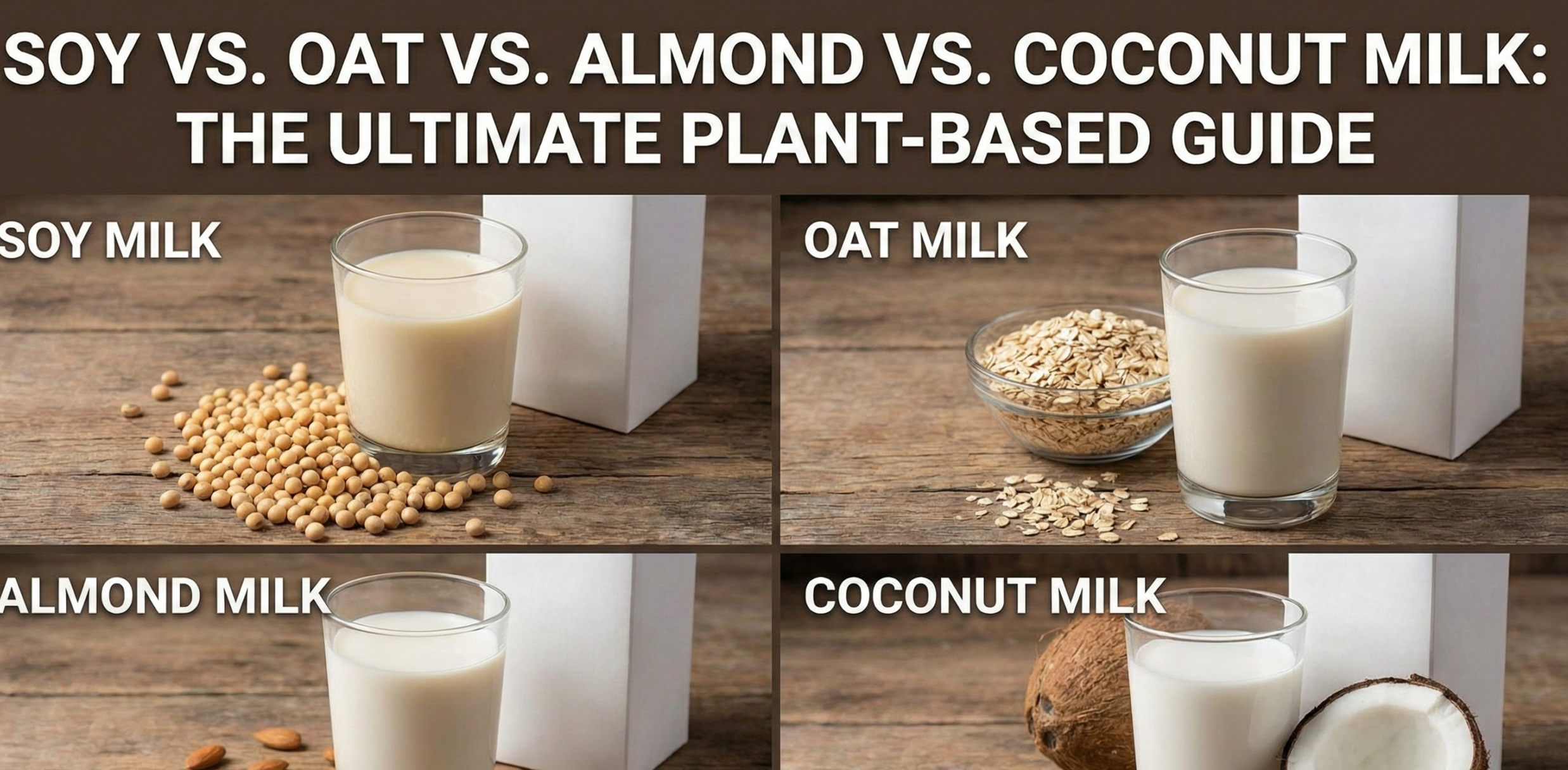
Soy vs. Oat vs. Almond vs. Coconut Milk: The Ultimate Plant-Based Guide
Walk into any coffee shop today and the menu looks less like a simple beverage list and more like a chemistry exam. Gone are the days when the only question was “whole or skim?” Now you are faced with a dizzying array: oat milk, almond milk, soy milk, and coconut milk—each with passionate advocates, distinct nutritional profiles, and dramatically different environmental footprints.
The confusion is real and the stakes are surprisingly high. Is oat milk actually healthy, or is it a cleverly marketed carb bomb? Is soy milk dangerous for hormones, or is that fear rooted in outdated pseudoscience? If you are trying to shed a few pounds—perhaps while debating Pilates versus yoga for weight loss—knowing the caloric difference between almond milk and oat milk is genuinely crucial. The wrong choice adds hundreds of calories to your week without you noticing.
In this comprehensive guide, we are pitting the “Big Four” plant milks against each other across every dimension that actually matters: nutrition, weight loss, protein content, barista performance, cooking versatility, environmental impact, gut health, blood sugar response, allergen profiles, and long-term sustainability. We will also cover hemp milk, rice milk, macadamia milk, and pea milk as emerging contenders worth knowing about. By the end, you will have a clear, personalized recommendation and the science to back it up.
The Quick Comparison Matrix
Before diving into the deep science, here are the numbers. Values shown are for unsweetened, 8 oz (240 ml) servings. Fortified versions will have higher vitamin and mineral content. Always check the specific brand label, as formulations vary.
| Milk Type | Calories | Protein | Fat | Carbs | Sugar | Best For |
|---|---|---|---|---|---|---|
| Almond Milk | 30–40 | 1g | 2.5g | 1g | 0g | Weight loss, smoothies, keto |
| Oat Milk | 120–140 | 3g | 5g | 16g | 7g | Lattes, baking, creaminess |
| Soy Milk | 80–100 | 7–8g | 4g | 4g | 1g | Muscle building, satiety |
| Coconut Milk (carton) | 45–60 | 0g | 4g | 1g | 0g | Keto, curries, flavor |
| Soy Milk | 80–100 | 7–8g | 4g | 4g | 1g | Dairy replacement, protein |
| Pea Milk | 70–80 | 8g | 4.5g | 0–2g | 0g | Protein, low sugar, allergen-free |
| Hemp Milk | 60–80 | 3g | 5g | 1g | 0g | Omega-3s, anti-inflammatory |
| Rice Milk | 100–130 | 1g | 2g | 22g | 10g | Allergen-free, sweet taste |
Round 1: Weight Loss and Calories
If your primary goal is a caloric deficit, there is a clear winner and a clear loser in the oat milk vs almond milk calories battle. Understanding why matters as much as knowing the numbers.
The Heavyweight: Oat Milk
Oat milk is delicious for a reason: it is essentially liquified grains. During production, oat flour is blended with water and then treated with enzymes that break down oat starches into simpler sugars—primarily maltose. This enzymatic process is what gives oat milk its natural sweetness, creamy body, and relatively high calorie count. With 120–140 calories per cup, three oat milk lattes a day adds up to a substantial caloric contribution—the equivalent of a small meal—purely from your beverages.
The glycemic impact is also worth noting. Even unsweetened oat milk has a glycemic index comparable to white bread. For anyone managing blood sugar, insulin resistance, or following a low-carbohydrate dietary approach, this makes oat milk the most problematic of the four options.
The Featherweight Champion: Almond Milk
Almond milk vs oat milk for weight loss is almost an unfair fight. Unsweetened almond milk is comprised mostly of water with a small percentage of blended almond solids, clocking in at just 30–40 calories per cup. You could drink four cups of almond milk for the caloric cost of a single cup of oat milk.
This dramatic calorie gap compounds meaningfully over time. If you drink two cups of plant milk daily—in coffee, smoothies, and cereal—switching from oat milk to almond milk saves approximately 170–190 calories per day. Over a month, that is a meaningful contribution to a weight management strategy without any sacrifice in volume or perceived fullness from liquids.
If you are following a regimen like quick and healthy weeknight dinners to stay lean, using almond milk in sauces, smoothies, or protein shakes is the strategically sound choice.
The “sweetened” trap: Many commercial plant milks contain added cane sugar, vanilla flavor, or other sweeteners. “Original” flavors often contain 7–12g of added sugar per cup. Always buy “Unsweetened” to get the calorie counts listed above. The caloric difference between sweetened and unsweetened oat milk can exceed 50 calories per cup.

The Low-Calorie Champion: Califia Farms Unsweetened Almond Milk
Zero sugar and only 35 calories per serving. The gold standard for weight management without sacrificing texture.
Check Price on AmazonRound 2: The Protein Showdown
Protein is the macronutrient most critical for satiety, muscle preservation during weight loss, and muscle synthesis during resistance training. When we compare oat milk vs almond milk protein, both fall well short of dairy’s 8g per cup. Soy milk is the extraordinary exception.
Soy Milk: The Plant-Based Protein King
Soy milk is the only plant-based milk that naturally rivals cow’s milk in protein content, delivering 7–9g per cup depending on the brand. More importantly, soy is a complete protein—it contains all nine essential amino acids in proportions that support human health. This is a distinction that oat, almond, and coconut milk cannot claim. The amino acid profile of soy milk, particularly its leucine content, makes it genuinely useful for muscle protein synthesis post-exercise.
For vegans or busy professionals relying on the ultimate self-care checklist to maintain energy and body composition, soy milk is often the most functional daily choice. Its protein content keeps you fuller longer compared to the more watery profiles of almond or coconut milk.
Pea Milk: The Protein Newcomer
Pea milk—made from yellow split peas, not green garden peas—has quietly emerged as a serious protein contender. Brands like Ripple deliver 8g of complete protein per cup, matching soy, while being free from the top eight common allergens. This makes pea milk an compelling alternative for those who need high protein content but cannot or choose not to consume soy. We will cover it more in the emerging alternatives section.
The Phytoestrogen Question: Is Soy Safe?
One of the most persistent myths in nutrition circles is that soy milk is dangerous due to its phytoestrogen (isoflavone) content—the idea being that these plant compounds mimic estrogen in the body and disrupt hormonal balance. The scientific consensus, after decades of research, does not support this concern for typical consumption levels.
Phytoestrogens are structurally similar to estrogen but bind to estrogen receptors with far lower affinity. Meta-analyses of clinical trials consistently show that moderate soy consumption—one to two servings daily—does not negatively impact testosterone levels in men, does not increase breast cancer risk in healthy women, and is associated with modest improvements in cardiovascular markers including LDL cholesterol reduction. Concerns remain primarily around very high consumption (five or more servings daily) and for individuals with specific thyroid conditions, for whom consulting a physician is advisable.
For the vast majority of adults, a daily glass of soy milk is not only safe but nutritionally beneficial.
Protein Content Side-by-Side
| Milk | Protein per Cup | Complete Protein? | Protein Quality |
|---|---|---|---|
| Cow’s Milk (reference) | 8g | Yes | Excellent |
| Soy Milk | 7–9g | Yes | Excellent |
| Pea Milk | 8g | Yes | Very Good |
| Oat Milk | 3g | No | Low |
| Almond Milk | 1g | No | Negligible |
| Coconut Milk (carton) | 0g | No | None |
| Hemp Milk | 3g | Yes | Good (omega-3 rich) |
| Rice Milk | 1g | No | Very Low |
Round 3: Texture and Coffee Performance
If you have invested in a quality espresso machine—perhaps among the top kitchen gadgets actually worth the money—you need to know which milk will deliver latte art-quality microfoam and which will curdle into an unpleasant grainy mess.
Oat Milk: The Undisputed Barista Darling
There is a reason every specialty cafe charges a premium for oat milk. It froths with remarkable similarity to whole dairy milk—creating dense, velvety microfoam that holds latte art patterns with precision. The science behind this lies in oat milk’s beta-glucan fiber content and its moderate protein levels, which together create an emulsion stable enough to withstand the heat and pressure of steam wand aeration.
Oat milk also does not overpower espresso’s flavor. Its natural sweetness and neutral grain notes complement rather than compete with coffee’s aromatics. The barista edition versions—specifically formulated with slightly higher fat and protein content plus added emulsifiers—outperform the regular drinking versions noticeably in steaming situations.
Soy Milk in Coffee: A Close Second
Soy milk’s protein content allows it to froth well, though it requires more technique than oat milk. The key challenge is curdling: the proteins in soy milk are sensitive to the acidity of espresso and will curdle if the milk is added to coffee too quickly or at too high a temperature. The solution is to either steam the soy milk to a slightly lower temperature (around 130–140°F versus the typical 150–160°F for dairy) or to pour the espresso into the milk rather than the reverse. With proper technique, soy milk produces a smooth, creamy latte.
Coconut Milk in Coffee: Flavor Over Function
Coconut milk vs oat milk in coffee is a contrast between flavor-forward and texture-forward. Full-fat canned coconut milk creates an exceptionally rich, indulgent coffee experience—but the prominent coconut flavor is polarizing and can overwhelm delicate single-origin espresso. The carton version (much lower fat than canned) froths adequately but does not approach oat milk’s performance. For those who enjoy the combination, a coconut milk flat white is genuinely delicious; it just requires that you want your coffee to taste of coconut.
Almond Milk: The Curdling Problem Explained
Almond milk is notorious for splitting or curdling when added to hot, acidic coffee. This happens because almond milk’s extremely low protein content means there is almost no emulsifying structure to maintain stability under heat and acid stress. When cold almond milk meets hot, acidic espresso, the proteins that do exist denature and aggregate, producing the characteristic flaky curd texture that almond milk latte drinkers know and hate.
Solutions include: using barista-formulated almond milk (which contains added emulsifiers like sunflower lecithin), warming the almond milk before adding it to coffee, choosing lower-acid espresso roasts, or pouring the milk first and adding the espresso gradually. Barista versions of almond milk are significantly more stable and frothable than standard grocery versions.

The Barista’s Choice: Oatly Barista Edition
Formulated specifically to froth and foam. If you want latte art at home, this is the carton to buy.
Check Price on AmazonRound 4: Health Nuances and Blood Sugar Response
Beyond macronutrients, the health impact of each plant milk relates to its effect on blood glucose, its fat quality, its micronutrient density, and how it interacts with specific health conditions.
Coconut Milk: The MCT Advantage
When discussing coconut milk vs almond milk for health, coconut’s defining characteristic is its MCT (medium-chain triglyceride) content. Unlike the long-chain fatty acids found in most dietary fats, MCTs are absorbed directly into the portal circulation and transported to the liver for rapid oxidation—they are preferentially burned for energy rather than stored. This metabolic pathway has made coconut milk popular in ketogenic dietary frameworks and among those who use MCT oil for cognitive and energy benefits.
The caveat is saturated fat content. The carton version of coconut milk contains 4–5g of saturated fat per cup; the canned full-fat version contains 12–15g. Current cardiovascular research on saturated fat and heart disease risk remains nuanced—the source and type of saturated fat appears to matter, and the saturated fat in coconut (primarily lauric acid) may have different physiological effects than saturated fat from animal sources. For individuals with established cardiovascular disease or elevated LDL cholesterol, moderation remains advisable until the evidence clarifies further.
Blood Sugar and Glycemic Index
The glycemic response to plant milks varies substantially and matters considerably for the approximately 11% of the population managing type 2 diabetes and the larger proportion managing insulin resistance or metabolic syndrome.
| Milk | Glycemic Index (approx.) | Blood Sugar Impact | Suitable for Diabetics? |
|---|---|---|---|
| Almond Milk (unsweetened) | ~25 | Minimal | Excellent |
| Coconut Milk (carton) | ~41 | Low | Good |
| Soy Milk (unsweetened) | ~34 | Low | Very Good |
| Oat Milk (unsweetened) | ~69 | Significant | Caution advised |
| Rice Milk (unsweetened) | ~86 | High | Not recommended |
The Sugar Trap: Reading Labels Correctly
Managing dietary choices thoughtfully—whether you are tracking macros, managing inflammation, or curating your wellness approach like a precise skincare routine—requires reading labels rather than trusting front-of-pack marketing. The word “original” on any plant milk almost always indicates added sugar. Some brands add 8–12g of cane sugar per cup to their standard varieties. The premium you pay for “barista” or “unsweetened” versions is almost always worth it nutritionally.
Label reading guide: On the nutrition facts, look at “Total Sugars” and “Added Sugars” separately. Oat milk will always show some naturally occurring sugars from the enzymatic processing (typically 4–7g in unsweetened versions). Almond and coconut milks should show 0g added sugars and 0–1g total sugar in their unsweetened forms. Any plant milk with more than 2g added sugar per cup is worth reconsidering.
Round 5: Cooking and Baking Performance
The kitchen application of plant milks extends far beyond coffee. Each behaves very differently under heat, in emulsions, and in baking chemistry—and choosing the wrong one can meaningfully affect the outcome of a recipe.
Oat Milk in Cooking and Baking
Oat milk’s creamy body and moderate carbohydrate content make it the most versatile cooking milk in the Big Four. It blends seamlessly into white sauces and béchamels, creates moist and tender baked goods, and holds up well in soups and chowders without breaking. The natural sugars in oat milk contribute to Maillard browning in baked goods, which can enhance crust color and flavor. For sweet applications—custards, puddings, cakes, and muffins—oat milk delivers results very close to whole dairy milk. It is the default recommendation for anyone attempting to veganize traditional dairy-heavy baking recipes.
Coconut Milk in Cooking: The Specialist
Canned full-fat coconut milk is a culinary powerhouse specifically for Southeast Asian, Indian, and Caribbean cooking traditions. Thai curries, laksa, dal, and rice pudding all depend on the fat content and characteristic flavor of full-fat coconut milk for their authentic richness. It withstands sustained high-heat cooking without breaking and adds body to sauces that no other plant milk replicates. The key distinction: use full-fat canned coconut milk for cooking and carton coconut milk for drinking and smoothies. They are dramatically different products despite sharing a name.
Soy Milk in Savory Cooking
Soy milk works well in most savory cooking applications—soups, sauces, scrambled eggs, and porridge. Its neutral flavor (in refined, high-quality versions) does not impose on the dish. The primary concern is curdling when combined with acidic ingredients. Adding soy milk to a tomato-based sauce or a recipe with vinegar or lemon juice can cause protein aggregation. The solution is to add soy milk toward the end of cooking when acids are already incorporated and temperatures have been reduced.
Almond Milk in Baking
Almond milk works adequately in baking but produces noticeably drier, less rich results than oat or dairy milk due to its extremely low fat content. Adding a tablespoon of neutral oil to almond milk-based baking recipes compensates partially for the missing fat. Almond milk performs best in lighter applications—smoothies, protein shakes, overnight oats, light sauces, and recipes where the liquid’s role is primarily hydration rather than fat contribution.
Plant Milk Baking Substitution Guide
| Recipe Type | Best Choice | Second Choice | Avoid |
|---|---|---|---|
| Cakes & muffins | Oat Milk | Soy Milk | Coconut Milk (flavor) |
| Creamy soups | Oat Milk or Coconut (canned) | Soy Milk | Almond (too watery) |
| Curry & Asian dishes | Coconut Milk (canned) | Oat Milk | Almond or Soy |
| Smoothies | Almond Milk | Oat Milk | Canned Coconut (too rich) |
| Scrambled eggs / omelettes | Soy Milk | Oat Milk | Almond (too watery) |
| Custard & pudding | Oat Milk | Soy Milk | Coconut (strong flavor) |
| Protein shakes | Soy Milk or Almond | Pea Milk | Oat (high sugar) |
| Overnight oats | Oat Milk | Almond Milk | Coconut (strong flavor) |
Round 6: Environmental Impact
For environmentally conscious consumers, the ecological footprint of plant milk production is a genuine consideration—and the differences between options are stark.
The Land, Water, and Emissions Matrix
All four major plant milks have substantially lower greenhouse gas emissions than dairy milk. However, their relative environmental impacts differ significantly from each other depending on whether you prioritize water use, land use, or carbon emissions.
| Milk Type | GHG Emissions (kg CO₂ / L) | Water Use (L / L milk) | Land Use (m² / L) | Overall Rating |
|---|---|---|---|---|
| Dairy Milk (reference) | 3.2 | 628 | 9.0 | ⚠️ Highest impact |
| Oat Milk | 0.9 | 48 | 0.76 | ✅ Best overall |
| Soy Milk | 0.98 | 28 | 0.66 | ✅ Excellent |
| Almond Milk | 0.7 | 371 | 0.5 | ⚠️ High water use |
| Coconut Milk | 0.9 | ~200 | 0.8 | 🔶 Mixed |
Almond Milk’s Water Problem
Almond milk’s low calorie count and light texture come with a hidden environmental cost. Approximately 80% of the world’s almonds are grown in California’s Central Valley, a region that depends heavily on groundwater irrigation during a prolonged period of water scarcity. Each liter of almond milk requires roughly 371 liters of water to produce—almost as much as dairy milk. For consumers in water-stressed regions or those prioritizing water conservation, almond milk’s credentials are significantly tarnished by this factor.
Oat Milk’s Sustainability Advantage
Oat milk scores best across the combination of greenhouse gas emissions, water use, and land use. Oats are hardy crops grown across temperate climates worldwide, typically requiring minimal irrigation, fixing nitrogen in soil, and grown in regions (Europe, Canada, parts of the US) with established sustainable agricultural practices. The primary environmental concern around oat milk is the canola or rapeseed oil added to many formulations for texture—scrutinizing the sourcing practices of this additive is worth doing for dedicated environmental consumers.
Soy Milk and Deforestation Concerns
Soy cultivation has historically been linked to Amazon deforestation—though the critical clarification is that approximately 70–75% of global soy production is grown for animal feed, not human consumption. Direct human consumption of soy milk represents a small fraction of total soy demand. Purchasing certified non-GMO, organic, or sustainably sourced soy products meaningfully reduces this concern. European-grown soy is also increasingly available and carries far lower deforestation risk.
Round 7: Gut Health and Digestion
The microbiome—the ecosystem of bacteria residing in your digestive tract—is increasingly recognized as a central influence on overall health, mood, immune function, and metabolic processes. How plant milks interact with digestive health is a dimension most comparisons overlook.
Oat Milk and Beta-Glucan Fiber
Oat milk contains beta-glucan—a soluble dietary fiber that functions as a prebiotic, selectively feeding beneficial gut bacteria including Lactobacillus and Bifidobacterium species. Regular consumption of beta-glucan is associated with improved gut microbiome diversity, reduced LDL cholesterol, improved blood sugar regulation, and enhanced immune function. The amount of beta-glucan retained in oat milk varies by brand and processing method, but it represents a genuine digestive health advantage over the other options.
Soy Milk and Digestive Tolerance
Soy contains oligosaccharides—complex carbohydrates that are not fully digested in the small intestine and are fermented by colonic bacteria. For most people, this fermentation is beneficial—it feeds good bacteria and contributes to a healthy microbiome. However, for individuals with irritable bowel syndrome following a low-FODMAP dietary protocol, soy milk (made from whole soybeans) is typically excluded. Soy milk made from soy protein isolate rather than whole soybeans is lower in FODMAPs and often better tolerated by those with IBS.
Coconut Milk and Antimicrobial Properties
Lauric acid—the primary fatty acid in coconut milk—has demonstrated antimicrobial properties in laboratory settings, with activity against certain pathogenic bacteria and yeasts including Candida species. Whether the concentration delivered by drinking carton coconut milk is sufficient to produce meaningful antimicrobial effects in the gut is unclear, but the MCT content may support gut lining integrity and reduce intestinal permeability based on emerging evidence. This is an area of active research rather than established fact.
Almond Milk: The Gut Wildcard
Almond milk’s very low fiber and protein content means it contributes little to gut microbiome feeding. Some individuals experience digestive discomfort from the gums and emulsifiers added to commercial almond milk—carrageenan, locust bean gum, and gellan gum in particular have been subjects of research on intestinal inflammation, though the evidence remains contested. Consumers who suspect gut sensitivity to these additives can find almond milk brands formulated with minimal additives or can make homemade almond milk with just almonds and water.
Round 8: Allergens and Dietary Intolerances
Plant milk selection is often driven not by preference but by necessity—specific allergies and intolerances that make certain options medically unsuitable.
Common Allergen Overview
| Milk | Tree Nut Allergy | Soy Allergy | Gluten Intolerance | Nut Allergy | Dairy Free? |
|---|---|---|---|---|---|
| Almond Milk | ❌ Avoid | ✅ Safe | ✅ Safe | ❌ Avoid | ✅ Yes |
| Oat Milk | ✅ Safe | ✅ Safe | ⚠️ Check label | ✅ Safe | ✅ Yes |
| Soy Milk | ✅ Safe | ❌ Avoid | ✅ Safe | ✅ Safe | ✅ Yes |
| Coconut Milk | ⚠️ Varies* | ✅ Safe | ✅ Safe | ✅ Safe | ✅ Yes |
| Pea Milk | ✅ Safe | ✅ Safe | ✅ Safe | ✅ Safe | ✅ Yes |
| Hemp Milk | ✅ Safe | ✅ Safe | ✅ Safe | ✅ Safe | ✅ Yes |
*Coconut is classified as a tree nut by the FDA, though coconut allergy is relatively rare and distinct from standard tree nut allergies. Consult an allergist for individual guidance.
The Celiac and Gluten-Sensitivity Consideration
Oats are naturally gluten-free at the molecular level, but conventional oats are almost universally processed in facilities that also handle wheat, barley, and rye—leading to cross-contamination levels that can trigger reactions in people with celiac disease. For celiac disease management, only oat milk explicitly labeled “Certified Gluten-Free” should be used. This certification requires dedicated gluten-free processing equipment and testing to below 20 parts per million. Non-certified oat milk carries meaningful risk for those with celiac disease and should be avoided.
Lactose Intolerance: All Four Are Safe
All four plant milks are dairy-free and contain zero lactose, making them suitable for the approximately 68% of the global population that experiences some degree of lactose malabsorption. For those transitioning from dairy to plant milk due to lactose intolerance, fortified versions of oat milk and soy milk most closely replicate the calcium and vitamin D profile of cow’s milk, making them the most nutritionally complete dairy substitutes.
Round 9: Vitamins, Minerals, and Fortification
In their natural, unfortified states, plant milks are nutritionally poor replacements for dairy milk in terms of calcium, vitamin D, vitamin B12, and iodine—four nutrients for which dairy is a primary dietary source for many populations. Fortification status is therefore not a nice-to-have feature; it is a nutritional necessity when plant milk replaces dairy entirely.
What to Look for on the Label
When evaluating a plant milk for nutritional completeness as a dairy substitute, check the nutrition facts and ingredient list for:
- Calcium: A good plant milk provides 30–35% of the daily value per cup (equivalent to dairy). Check that it is calcium carbonate or tricalcium phosphate rather than calcium citrate, which is less bioavailable.
- Vitamin D: Look for 15–20% DV per cup. Vitamin D2 (plant-derived) or vitamin D3 (increasingly from lichen, not lanolin, for vegan certification).
- Vitamin B12: Essential for vegans and crucial for neurological function. Many plant milks include 15–50% DV per cup.
- Iodine: Often overlooked. Many people on plant-based diets are low in iodine. Few plant milks are fortified with iodine; seaweed and iodized salt are alternative sources for vegans.
- Vitamin A: Many plant milks include added beta-carotene.
Natural Micronutrients
Beyond fortification, each plant milk carries a distinct natural micronutrient profile. Almond milk is naturally high in vitamin E—a fat-soluble antioxidant with roles in immune function and skin health. Oat milk provides naturally occurring B vitamins (B1, B5, and folate) from the oat grain. Hemp milk supplies a favorable omega-6 to omega-3 ratio from hemp seed fat, potentially contributing anti-inflammatory effects. Soy milk contains natural potassium, phosphorus, and magnesium at meaningful levels.
Beyond the Big Four: Other Plant Milks Worth Knowing
The plant milk category extends well beyond oat, almond, soy, and coconut. Several alternatives have carved out genuine niches based on specific nutritional properties, allergen profiles, or flavor characteristics.
Pea Milk: The High-Protein Dark Horse
Made from yellow split peas (the same legume used in split pea soup), pea milk has emerged as arguably the most nutritionally impressive plant milk on the market. It matches soy milk’s complete protein profile at 8g per cup while being entirely free from the top eight allergens—no soy, no nuts, no gluten. It is also produced with a significantly lower environmental footprint than almond milk and comparable to oat milk. The flavor is neutral and the texture creamy enough for coffee. The primary barrier to wider adoption is cost and availability—pea milk is more expensive than established options and not yet universally stocked.
Hemp Milk: The Omega-3 Specialist
Hemp milk is made from hemp seeds blended with water and delivers a unique fatty acid profile rich in omega-3 alpha-linolenic acid (ALA) and gamma-linolenic acid (GLA)—an omega-6 with anti-inflammatory properties not commonly found in other plant milks. With 3g of complete protein per cup (hemp seeds contain all essential amino acids), it is modest but genuine as a protein source. Hemp milk has a slightly earthy, nutty flavor that some find pleasant and others find challenging. It is best used in smoothies or with strongly flavored cereals where the distinct flavor is less prominent.
Macadamia Milk: The Luxury Option
Macadamia milk offers an exceptionally creamy, buttery mouthfeel—arguably the most indulgent texture of any plant milk—derived from the high monounsaturated fat content of macadamia nuts. It is low in carbohydrates and protein, similar to almond milk, but its fat profile (predominantly oleic acid, the same fatty acid dominant in olive oil) is associated with cardiovascular benefits. The major drawbacks are its premium price point and the environmental footprint of macadamia cultivation, which requires significant water and primarily occurs in Australia and Hawaii.
Rice Milk: The Hypoallergenic Choice
Rice milk is the most allergen-free plant milk option—suitable for people with tree nut allergies, soy allergies, gluten intolerance (if certified gluten-free), and virtually every other dietary restriction. However, its nutritional profile is the weakest of any plant milk: very low protein (1g), very high glycemic index (~86), high sugar content even in unsweetened versions, and minimal healthy fat. Rice milk is best regarded as an occasional beverage option for those with severe multiple food allergies rather than as a nutritional recommendation for general use.
How to Choose the Right Plant Milk for Your Specific Situation
Synthesizing all the evidence above into actionable guidance requires acknowledging that plant milk selection is personal—your goals, health conditions, lifestyle, and taste preferences all influence the optimal choice. Use this framework to identify your primary priority and match it to the right option.
Quick Decision Guide
Answer these three questions to identify your best match:
1. What is your primary goal? Weight loss → Almond. Protein → Soy/Pea. Coffee quality → Oat. Cooking → Oat/Coconut. Keto → Almond/Coconut.
2. Do you have any allergies or intolerances? Nut allergy → Oat/Soy/Pea. Soy allergy → Almond/Oat/Pea. Celiac → Certified GF Oat or Almond. Multiple allergies → Pea Milk.
3. Environmental priority? Water conservation → Oat/Soy (avoid Almond). Carbon emissions → All plant milks are substantially better than dairy.
Recipes Matched to Each Milk: Getting the Best Out of Each Option
Understanding where each plant milk excels in the kitchen transforms your approach from simply substituting dairy to deliberately choosing the right tool for each application.
🥣 Oat Milk: Silky Mushroom Soup
Oat milk’s creamy body makes it ideal for velvety blended soups where richness is the goal.
- Sauté 400g mixed mushrooms with onion, garlic, and thyme until deeply browned.
- Add 500ml vegetable stock and simmer for 10 minutes.
- Blend until smooth, then stir in 240ml oat milk over low heat.
- Season with salt, pepper, and a drizzle of truffle oil. Do not boil after adding oat milk—it will thicken on standing.
🥜 Almond Milk: High-Protein Overnight Oats
Almond milk’s low calories and neutral flavor make it perfect for overnight oats where you want to keep the calorie count controlled.
- Combine 80g rolled oats, 240ml unsweetened almond milk, 1 tbsp chia seeds, and 1 scoop vanilla protein powder in a jar.
- Stir well, seal, and refrigerate overnight.
- Top in the morning with fresh berries and a tablespoon of nut butter.
- Total calories: approximately 400—satisfying, high protein, and far lower calorie than using oat milk.
🌱 Soy Milk: Creamy Tofu Scramble
Soy milk adds protein and richness to plant-based eggs.
- Crumble 300g firm tofu into a non-stick pan over medium heat.
- Add 2 tbsp soy milk, 1 tsp turmeric, nutritional yeast, black salt (for egg flavor), and pepper.
- Cook, stirring, until liquid is absorbed and scramble reaches your preferred texture.
- The soy milk adds moisture and binds the scramble—a role almond or coconut milk cannot perform as effectively.
🥥 Coconut Milk: Golden Milk Latte
Coconut milk’s natural fat content creates a luxurious golden milk that no other plant milk replicates.
- Warm 240ml carton coconut milk (not canned) over medium heat—do not boil.
- Whisk in 1 tsp turmeric, 1/4 tsp cinnamon, a pinch of black pepper, and a teaspoon of honey or maple syrup.
- Optional: add a small knob of fresh grated ginger.
- Froth with a milk frother for 20 seconds. The natural fat creates a golden foam that is genuinely indulgent.
Full Pros and Cons Summary
🥣 Oat Milk
Pros
- Creamiest texture of all plant milks
- Best for coffee, lattes, and frothing
- Nut-free and soy-free
- Contains prebiotic beta-glucan fiber
- Lowest environmental footprint overall
- Most versatile in cooking and baking
Cons
- Highest calorie count (120–140/cup)
- High glycemic index—spikes blood sugar
- Low protein (3g/cup)
- Often contains added canola oil
- Not certified gluten-free by default
- More expensive than almond milk
🥜 Almond Milk
Pros
- Lowest calories (30–40/cup)
- Very low glycemic index
- Naturally high in vitamin E
- Widely available and affordable
- Neutral flavor works in most applications
- Keto and low-carb friendly
Cons
- Watery texture; lowest fat of the four
- Curdles in hot, acidic coffee
- Extremely high water footprint
- Very low protein (1g/cup)
- Unsafe for tree nut allergies
- Almonds contain 2% of final milk
🌱 Soy Milk
Pros
- Highest protein of any plant milk (7–9g)
- Complete amino acid profile
- Closest nutritional match to dairy
- Keeps you fuller than other plant milks
- Good for cooking and baking
- Low glycemic index; heart-healthy
Cons
- Major allergen—unsuitable for soy allergy
- Can have a “beany” flavor note
- Curdles in acidic recipes if overheated
- GMO concerns (buy certified non-GMO)
- Some deforestation concerns around soy farming
🥥 Coconut Milk
Pros
- MCT fats support energy and metabolism
- Nut-free and soy-free
- Zero protein means zero glycemic insulin spike
- Excellent for cooking (especially Asian cuisine)
- Distinct, pleasant tropical flavor
- Keto-compatible
Cons
- Zero protein per cup
- High in saturated fat (especially canned)
- Strong flavor limits versatility
- Classified as tree nut by FDA (rare allergy risk)
- Higher environmental footprint than oat/soy
Final Verdict: Which Milk Wins?
There is no single champion—only the right tool for the job. And as with balancing any aspect of lifestyle, just as you might balance screen time thoughtfully, as outlined in our tips on reducing screen time, the most effective nutrition strategy is one you sustain with flexibility rather than rigid rules.
The most nutritionally savvy approach is to keep multiple plant milks in your refrigerator and use each where it performs best—almond in smoothies, oat in coffee, soy in cereal or cooking, coconut in curries and soups.

The Kitchen Essential: Thai Kitchen Organic Coconut Milk
The canned version for cooking—rich, creamy, and essential for curries. For drinking, use the refrigerated carton version.
Check Price on AmazonFrequently Asked Questions
Does oat milk or almond milk have more calories?
Oat milk has significantly more calories. An 8 oz serving of unsweetened oat milk contains 120–140 calories, while unsweetened almond milk contains just 30–40 calories. Oat milk is denser in carbohydrates due to the enzymatic breakdown of oat starches into sugars during production.
Is coconut milk healthier than oat milk?
It depends entirely on your health goals. Coconut milk (carton version) is lower in sugar and carbohydrates, making it better for blood sugar stability and ketogenic diets. Oat milk is better for gut health due to its beta-glucan fiber content. Oat milk has higher caloric density; coconut milk has more saturated fat. Neither is universally “healthier”—each excels in different health contexts.
Which plant milk is best for weight loss?
Almond milk is the best plant milk for weight loss due to its extremely low calorie density—approximately 30–40 calories per cup unsweetened. Switching from oat milk to almond milk in daily coffee and meals can save 100–200 calories per day without any sacrifice in volume. Unsweetened versions have zero added sugar, making them suitable for virtually all dietary frameworks.
Does oat milk have protein?
Oat milk contains approximately 3g of protein per cup. While this exceeds almond milk (1g) and coconut milk (0g), it is substantially below soy or pea milk (7–9g) and cow’s milk (8g). The protein in oat milk is also not a complete protein—it lacks certain essential amino acids that soy provides.
Why does almond milk curdle in my coffee?
Almond milk curdles due to the combination of coffee’s acidity and temperature shock. The low protein content of almond milk means there is minimal emulsifying structure, and the proteins that do exist denature rapidly in acidic, hot environments. Solutions: use a barista-formulated almond milk with added emulsifiers, warm the almond milk before adding it, pour the milk first and add espresso gradually, or choose lower-acid espresso roasts.
Is soy milk safe to drink every day?
Yes, for the vast majority of healthy adults, one to two daily servings of soy milk is safe and beneficial. Decades of research show no negative hormonal effects at typical consumption levels. It reduces LDL cholesterol, provides complete plant protein, and is heart-healthy. The main exceptions are individuals with soy allergy and those with certain thyroid conditions, who should discuss soy intake with their physician.
Is oat milk gluten-free?
Oats are naturally gluten-free, but most are processed in facilities that also handle wheat, leading to cross-contamination. For people with celiac disease, only oat milk labeled “Certified Gluten-Free” is safe. This certification requires dedicated gluten-free facilities and testing to below 20 parts per million. Non-certified oat milk is not safe for celiac disease management.
What is the most environmentally sustainable plant milk?
Oat milk scores best across the combination of greenhouse gas emissions, water use, and land use. All four plant milks are substantially better than dairy milk environmentally. Almond milk is surprisingly problematic for water use—requiring roughly 371 liters of water per liter of milk, comparable to dairy. Soy milk has low land and water requirements but carries historical deforestation concerns that are best addressed by buying certified sustainable varieties.
Can I use plant milk as a complete replacement for dairy milk?
Yes, with an important caveat: choose a fortified version. Natural plant milks are low in calcium, vitamin D, vitamin B12, and iodine—nutrients for which dairy is a primary source in many diets. Fortified soy milk comes closest to matching dairy’s nutritional profile and is the most recommended direct substitute by dietitians. Always check the label for calcium (aim for 30% DV) and vitamin D (aim for 15–20% DV) per serving.
What plant milk is best for people with diabetes or insulin resistance?
Unsweetened almond milk is the best choice for blood sugar management, with a glycemic index of approximately 25 and virtually zero carbohydrates. Unsweetened soy milk is also excellent at a GI of ~34. Oat milk, even unsweetened, has a glycemic index of approximately 69—similar to white bread—and should be used in moderation by people managing blood sugar. Rice milk, with a GI of ~86, should be avoided by those with diabetes.
What plant milk is best for children?
For children over two who are replacing dairy, fortified soy milk is the most nutritionally appropriate choice—it provides the most comparable protein, calcium, and vitamin D profile to cow’s milk. Almond, oat, and coconut milk are generally not recommended as primary milk replacements for young children due to their low protein content and caloric density. Always consult a pediatric dietitian before making significant dietary changes for children.
Which plant milk is best for building muscle?
Soy milk or pea milk are the best plant milks for muscle building. Both provide 7–9g of complete protein per cup with a full essential amino acid profile, including leucine—the primary amino acid responsible for triggering muscle protein synthesis. Using soy or pea milk as the liquid base in post-workout protein shakes significantly boosts total protein intake compared to using almond, oat, or coconut milk.
Conclusion
The plant milk revolution has given us a remarkably diverse toolkit. Whether you are pouring fortified soy milk over cereal for a protein-dense breakfast, pulling an oat milk flat white on a weekend morning, blending almond milk into a low-calorie post-workout shake, or simmering full-fat coconut milk into a fragrant Thai curry—there is no single wrong answer. There is only the answer that fits your goals, values, body, and kitchen.
The most sophisticated approach is to stop looking for one universal milk and start stocking two or three options intentionally: a low-calorie option for everyday volume use, a high-protein option for satiety and muscle maintenance, and a specialty option for cooking or indulgent coffee moments. This multi-milk strategy is both nutritionally optimized and remarkably cost-effective when you buy each option for the purpose it serves best.
Stock Up on Your Favorites
Skip the grocery store and get the best plant milks delivered to your door.
Shop All Plant Milks on Amazon