
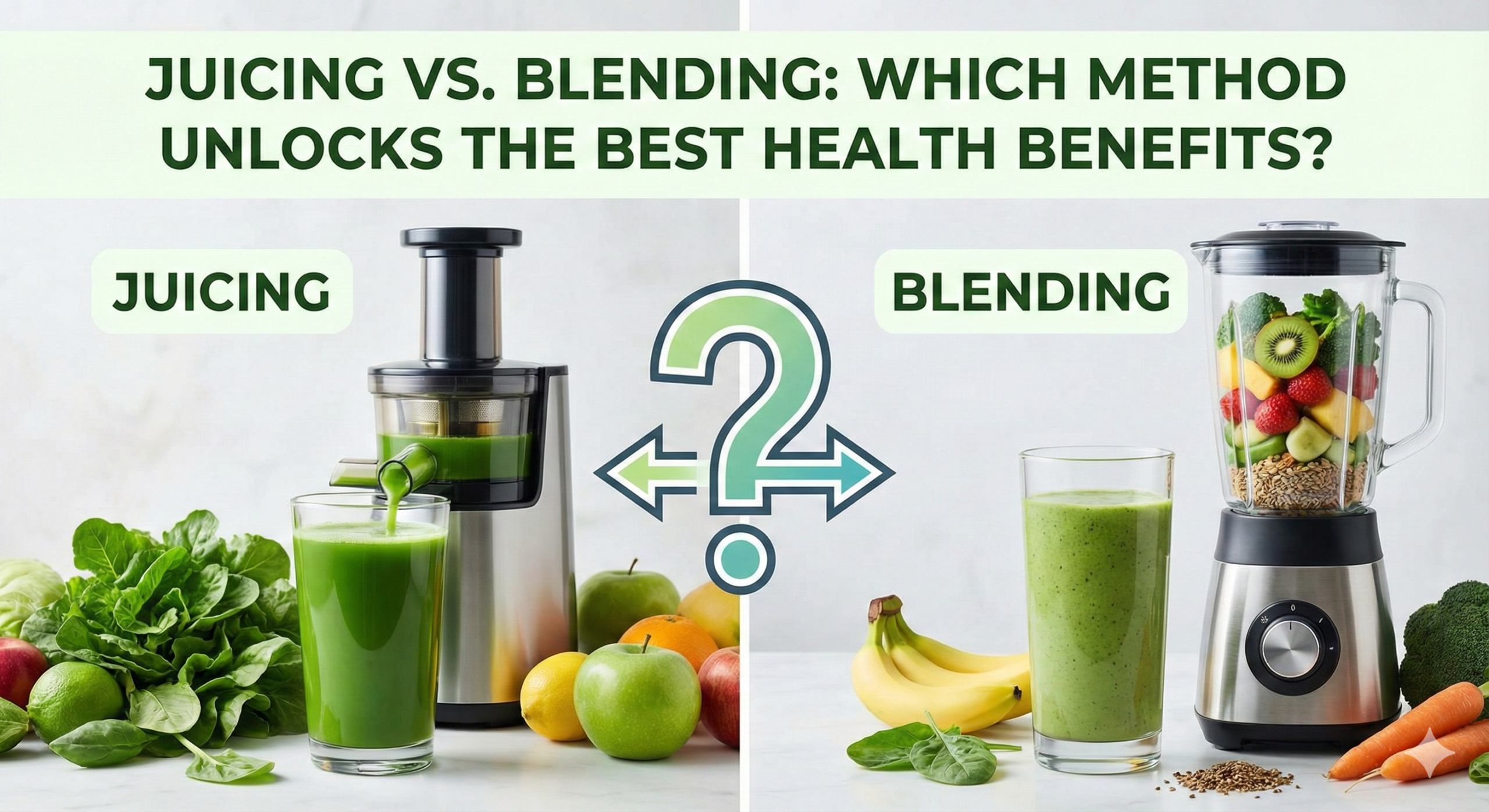
Juicing vs. Blending:
Which Unlocks the Best Health Benefits?
In the world of health trends, few debates run hotter than the battle of the beverages: juicing vs blending. Both promise to flood your body with vitamins, sharpen your energy, and make consuming that daunting pile of kale actually enjoyable. But they are not interchangeable—not even close.
Many of us, in an attempt to follow the ultimate self-care checklist for busy professionals, buy expensive machines hoping to drink our way to better health. Yet choosing the wrong method for your specific goals—weight loss, digestion repair, muscle building, blood sugar management—can be actively counterproductive.
Is the fiber in a smoothie essential for gut health, or does it block the instant nutrient absorption of a cold-pressed juice? Is a juice cleanse legitimate science or expensive theater? Which machine is actually worth the counter space? In this comprehensive guide, we break down the biochemistry, the cost, the practicality, and the recipes—so you can make the right call every single time.
At a Glance: The Full Comparison Matrix
| Feature | Juicing | Blending / Smoothies |
|---|---|---|
| Mechanism | Extracts liquid; discards fiber (pulp) | Pulverizes whole produce; retains everything |
| Fiber Content | Zero to negligible | Full — insoluble + soluble |
| Digestion Speed | Rapid (nutrients in bloodstream ~15 min) | Slow (sustained 2–4 hour release) |
| Blood Sugar Impact | High spike risk without fiber brake | Stable — fiber slows glucose absorption |
| Satiety | Low — not a meal replacement | High — works as a complete meal |
| Produce Volume Needed | High — 2–3 lbs for one glass | Low — 1–1.5 cups produces 1 cup drink |
| Cost Per Serving | High ($3–$8 fresh ingredients) | Low ($0.80–$2.50 including protein) |
| Shelf Life | 24–72 hours (cold-press) / 20 min (centrifugal) | 24–48 hours refrigerated |
| Frozen Produce Compatible | No — damages most juicers | Yes — ideal for smoothies |
| Protein Addition | Difficult and texturally poor | Excellent — designed for it |
| Fat-Soluble Vitamin Absorption | Limited (no fat to transport A, D, E, K) | High — add avocado/nut butter |
| Gut Microbiome Support | None (no prebiotic fiber) | High — fiber feeds good bacteria |
| Cleaning Difficulty | High — 8+ parts, mesh screens | Low — rinse + blend with water |
| Noise Level | Moderate | High (especially high-speed blenders) |
| Best Use Case | Vitamin concentrate, gut rest, detox | Meal replacement, weight loss, post-workout |
Types of Juicers
Not all juicers are created equal. The extraction method determines the nutritional quality, the yield, and the types of produce you can juice effectively. Before investing in a juicer, understanding the three main categories is essential.
Centrifugal Juicer
High-speed spinning blade shreds produce and forces juice through a mesh screen. Works in seconds. Loud. Generates heat that degrades enzymes. Best for hard produce. Juice should be consumed immediately. $60–$200.
Masticating Juicer
Single-gear auger slowly crushes and presses produce. Minimal heat. Lower oxidation = higher enzyme retention. Works with leafy greens and wheatgrass. Juice lasts 48–72 hours. $150–$500.
Triturating (Twin Gear)
Two interlocking gears that crush produce for the most thorough extraction. Highest nutrient retention of any juicer type. Very slow. Used by serious health practitioners. $400–$1,000+.
Citrus Juicer
Dedicated press for citrus fruits — oranges, lemons, limes, grapefruits. Fast, cheap, and effective for its specific purpose. Not versatile beyond citrus. Electric or manual. $15–$60.
Cold-Pressed vs Regular Juice: What the Difference Actually Means
“Cold-pressed” refers to the masticating or hydraulic press extraction process — no heat, no high-speed spinning. The term indicates juice was extracted without friction heat that destroys heat-sensitive enzymes and accelerates oxidation. Cold-pressed juice retains measurably higher levels of nutrients, has longer shelf life, and delivers a more complete nutritional profile.
1 lb of carrots yields approximately 6 oz of juice from a centrifugal juicer. The same 1 lb produces 8–9 oz from a masticating juicer, and 9–10 oz from a triturating machine. Better yield from the same produce spend compounds into meaningful savings over time.

The Nutrient Extractor: Breville Juice Fountain Cold Plus
“Cold Spin” technology minimizes heat transfer during centrifugal extraction — preserving more delicate enzymes than standard centrifugal machines.
Check Price on AmazonTypes of Blenders
The blender category spans an enormous performance and price range. The right blender depends on how frequently you blend, what types of ingredients you use, and how much counter space and noise you can tolerate.
Personal / Bullet Blenders
Single-serve blenders with a cup that threads directly onto the motor base. Perfect for simple smoothies and protein shakes. Struggles with fibrous greens and ice. $30–$100.
Mid-Range Countertop
Standard household blenders with 900–1200W motors. Handles frozen fruit, greens, and ice effectively. Good for daily smoothie making. $60–$200.
High-Performance Countertop
Professional-grade machines (Vitamix, Blendtec) with 1,400–2,600W motors. Pulverizes seeds, skins, and frozen produce. Self-cleaning. Built to last decades. $350–$700.
Immersion / Stick Blender
Handheld stick blenders for blending directly in bowls or cups. Excellent for soups and sauces. No large container to clean. $25–$80.

The “Liquidize Anything” Machine: Vitamix E310
Pulverizes seeds, skins, and frozen fruit into silk-like consistency. If you’re serious about smoothies, this is the machine that changes the game.
Check Price on AmazonRound 1: Nutrient Density & Absorption
The core argument for juicing benefits centers on concentration. Stripping away fiber allows you to pack enormous quantities of produce into a single glass. You would struggle to eat two pounds of carrots, three cucumbers, and a head of celery in one sitting—but you can drink them in a single 12oz juice.
The Rapid-Absorption Advantage of Juicing
When you drink fresh juice, vitamins, minerals, and phytonutrients require minimal digestion. Without fiber slowing their passage through the intestinal wall, water-soluble nutrients enter the bloodstream in as little as 15–20 minutes. This is why juicing is often recommended for people with compromised digestive systems, those recovering from surgery, or individuals undergoing cancer treatment.
The Polyphenol Problem with Juicing
A significant proportion of plant antioxidants—specifically polyphenols and flavonoids—are bound to the dietary fiber in fruits and vegetables. When you juice and discard the pulp, you discard a meaningful portion of these bound antioxidants. Research has found that fruit and vegetable pulp retains up to 85% of the polyphenol content of the whole produce. A blended smoothie retains all of this; a juice loses most of it.
Fat-Soluble Vitamin Absorption: Smoothies Win
Vitamins A, D, E, and K are fat-soluble—they require dietary fat to be absorbed. A plain green juice with no fat provides these vitamins but dramatically limits how much your body can actually use. A smoothie with added avocado, almond butter, chia seeds, or full-fat coconut milk provides the fat matrix that makes these vitamins bioavailable.
Your juice contains the vitamins. Your smoothie contains the vitamins and the biological machinery your body needs to actually use them.
Round 2: Blood Sugar, Satiety & Weight Loss
This is where the debate finds its sharpest practical edge—and where choosing the wrong method for your metabolic situation can have real consequences.
The Fiber Brake: Why It Matters More Than You Think
Dietary fiber functions as the body’s natural governor for glucose absorption. When you consume fructose alongside fiber, the fiber forms a gel-like matrix in the gut that physically slows the rate at which sugar molecules pass through the intestinal wall. Remove the fiber—as juicing does—and that same fructose hits the bloodstream in a rapid bolus. Three juiced oranges and two apples produce a drink with approximately 40–50g of sugar and zero fiber.
The standard practitioner recommendation for anyone juicing regularly is to maintain an 80% vegetable to 20% fruit ratio. An 80/20 green juice has a dramatically lower glycemic impact than an apple-orange-carrot combination.
Smoothies for Weight Management
Smoothies retain fiber, which creates satiety through two mechanisms: physical volume in the stomach and the slower digestive process that keeps you feeling satisfied longer. A 500-calorie smoothie with protein, fiber, and healthy fat can function as a complete meal replacement that keeps hunger suppressed for 3–4 hours. A 500-calorie juice will leave most people hungry within 60–90 minutes.
Round 3: The Grocery Bill & Waste
The economic difference between daily juicing and daily blending is substantial enough to determine whether either habit is sustainable for most households.
The Produce Math of Juicing
A satisfying 16oz green juice requires approximately 1.5–2 lbs of produce: a large bunch of kale, two cucumbers, four stalks of celery, two green apples, and a lemon. At typical supermarket prices, that costs $5–$9 per serving—before accounting for the juicer itself. The extracted pulp (60–80% of solid mass) goes into the compost.
The Blending Economics
With blending, input equals output. A 16oz green smoothie might use one cup of frozen spinach, one cup of frozen berries, one banana, almond butter, and oat milk. Total ingredient cost: $1.50–$2.50. Nothing is discarded. Frozen produce is nutritionally equivalent or superior to supermarket fresh, significantly cheaper, and creates perfect thick texture without diluting ice.
Most centrifugal juicers will be damaged by frozen produce. Never put frozen fruit or vegetables through a centrifugal or masticating juicer — the hard ice crystals can strip the mesh screen, jam the auger, and void the warranty.
Round 4: Digestion & Gut Health
Your gut microbiome—the trillions of bacteria that colonize your intestinal tract—thrives on one thing above all: dietary fiber.
Smoothies as Prebiotic Fuel
The insoluble fiber retained in smoothies acts as a structural prebiotic—a food source for beneficial gut bacteria. When these bacteria ferment fiber in the colon, they produce short-chain fatty acids (SCFAs) including butyrate, which supports the intestinal lining, reduces inflammation, and has been associated with reduced risk of colorectal cancer. Daily juicing at the expense of fiber systematically starves the microbiome.
When Juicing Is the Right Choice for Digestion
However, for individuals with diagnosed inflammatory bowel conditions—Crohn’s disease, ulcerative colitis, diverticulitis in an active flare—raw dietary fiber can mechanically irritate inflamed intestinal tissue and worsen symptoms. For these individuals, juicing provides high micronutrient intake without the friction of fiber moving through an inflamed gut.
The Oxalate Warning: A Risk Few People Know About
Spinach, kale, beet greens, and Swiss chard are high in oxalic acid. Juicing concentrates oxalates significantly, and drinking large volumes of high-oxalate green juice daily can raise urinary oxalate levels, increasing kidney stone risk. People with a history of calcium oxalate kidney stones should limit high-oxalate juices and consult their physician before adopting daily green juicing practices.
The Oxidation Problem: How Fast Nutrients Disappear
Both juicing and blending expose produce to oxygen—initiating oxidation that degrades nutrients over time. Understanding this timeline helps you maximize the nutritional return from your investment in fresh produce.
Centrifugal Juicer Oxidation Timeline
Peak nutritional quality. Enzymatic activity intact. Drink immediately for maximum benefit.
Vitamin C begins degrading. Color starts changing as polyphenols oxidize. Acceptable quality window.
Significant nutrient degradation underway. Flavor becomes more bitter. Not recommended for storage.
Meaningful reduction in heat-sensitive vitamins. Beneficial enzymes largely deactivated. Flavor noticeably off.
Masticating / Cold-Press Juicer Oxidation Timeline
Peak nutritional quality maintained. Lower initial oxidation due to slow extraction process.
Gradual nutrient decline. Store sealed in airtight glass jars filled to the brim in the refrigerator.
Acceptable quality for most nutrients. Vitamin C notably reduced. Flavor and enzyme activity diminished but still nutritionally useful.
Significant quality degradation. Not recommended for consumption.
Smoothie Oxidation
A freshly blended smoothie loses measurable Vitamin C within 20–30 minutes at room temperature. Refrigerated smoothies in sealed containers retain acceptable quality for 24–48 hours. The addition of acidic ingredients—lemon juice, vitamin C powder, or fresh lime—slows oxidation by creating an antioxidant-rich environment that protects other nutrients.
The Juice Cleanse & Detox Debate: What Science Says
Juice cleanses—typically 3–7 day programs where participants consume only fresh juices—occupy a contested space between wellness trend and nutritional science. Let us examine what the evidence actually shows.
What a Juice Cleanse Actually Does to Your Body
During a multi-day juice cleanse, you are consuming a very low-calorie, zero-fiber, low-protein, low-fat diet. The initial weight loss—often 3–7 lbs in a 3-day cleanse—is primarily water weight and glycogen depletion, not fat loss. When you resume eating solid food, glycogen stores refill and the fluid returns. The “detox” narrative is not supported by peer-reviewed evidence. The liver detoxifies blood continuously and does not require dietary assistance to do so.
What Juice Cleanses Can Do Legitimately
Despite overstated marketing claims, short juice cleanses have documented benefits in specific contexts. They can serve as a powerful behavioral reset—breaking ingrained processed food habits, reducing cravings for sugar, and creating heightened awareness of food choices. For some people, the psychological experience of a reset period genuinely supports longer-term dietary improvements.
Pregnant or breastfeeding women, individuals with diabetes or blood sugar regulation issues, those with kidney disease (oxalate risk), anyone underweight or with a history of disordered eating, and individuals taking medications that interact with grapefruit. Always consult a healthcare provider before a multi-day juice cleanse.
Choosing Based on Your Specific Health Goal
| Health Goal | Better Choice | Reasoning |
|---|---|---|
| Weight Loss (sustainable) | 🥑 Blending | Fiber keeps you full; prevents compensatory overeating |
| Weight Loss (quick start) | 🥤 Either | Short juice cleanse can reset habits; unsustainable long-term |
| Muscle Building | 🥑 Blending | Protein powder, fats, and caloric density possible; juice cannot deliver this |
| Diabetes / Blood Sugar Management | 🥑 Blending | Fiber is essential; high-sugar juice without fiber is contraindicated |
| IBS / IBD / Digestive Conditions | 🥤 Juicing | Fiber can irritate inflamed gut; juice provides nutrients without mechanical stress |
| Immune Boost / Vitamin C Flood | 🥤 Juicing | Concentrated dose of Vitamin C and minerals in rapid-absorption format |
| Skin Health / Collagen Support | 🥤 Juicing | High silica, Vitamin C, and beta-carotene in concentrated form |
| Gut Microbiome Health | 🥑 Blending | Prebiotic fiber feeds beneficial bacteria; juicing provides none |
| Pre-Workout Fuel | 🥑 Blending | Sustained energy from complex carbs + protein; juice spike crashes during workout |
| Post-Workout Recovery | 🥑 Blending | Protein addition is essential; add whey or plant protein with fruit and greens |
| Cancer Nutritional Support | 🥤 Juicing (consult MD) | High-dose nutrients without digestive burden; always supervise medically |
| Budget-Conscious Daily Nutrition | 🥑 Blending | Frozen produce compatible; 3–5× lower cost per serving |
Common Mistakes That Kill Your Results
Both juicing and blending are genuinely beneficial—when done correctly. The mistakes below are extremely common and significantly undermine the health value of either practice.
Juicing Mistakes
- Too much fruit. Using primarily fruit turns your juice into an expensive sugar delivery system. Aim for 80% vegetables, 20% fruit. Use apple, lemon, and ginger as flavor enhancers rather than primary ingredients.
- Buying cold-pressed commercial juices and storing them too long. Commercial cold-pressed juices use HPP to extend shelf life, but the nutritional quality still declines. Drink within 3 days of the printed bottling date for maximum benefit.
- Juicing as a standalone meal replacement. A juice does not have sufficient protein, fat, or calories to function as a meal. Without these macronutrients, you will be hungry quickly and may overeat at the next meal.
- Ignoring produce rotation. Juicing the same combination daily increases risk of concentrated exposure to specific antinutrients. Rotate your greens — alternate between spinach, kale, romaine, and Swiss chard across different days.
- Not cleaning the juicer immediately. Juice residue dries and adheres to mesh screens within minutes. Rinse all components immediately after use — before storing the juice.
Blending Mistakes
- Turning a smoothie into a dessert. Adding flavored yogurt, flavored protein powder, honey, dates, maple syrup, and multiple fruits creates a smoothie that exceeds 600 calories and 80g of sugar. Use unsweetened bases and limit sweeteners to a small amount of whole fruit.
- Skipping protein and fat. A smoothie of only fruit and greens is not nutritionally complete. Without protein and fat, it digests quickly, fails to satisfy hunger, and does not support muscle maintenance.
- Blending and storing without acidification. Smoothies oxidize rapidly without Vitamin C protection. Add a squeeze of lemon or lime juice to any smoothie you plan to store.
- Using the wrong milk base. The soy vs oat vs almond vs coconut milk choice affects protein content, calorie density, and fat type significantly.
- Drinking too fast. Rapidly consuming a smoothie bypasses satiety signaling. Sip smoothies over 10–15 minutes, or use a spoon for smoothie bowls, to allow proper satiety hormones to register fullness.
Foundation Recipes: The Formulas That Work
Rather than a collection of random recipes, here are the foundational formulas for each application—templates you can customize with whatever produce is in season or on sale.
Classic 80/20 Green
- 4 stalks celery
- 1 large cucumber
- 2 cups spinach or kale
- 1 green apple
- ½ lemon (peeled)
- 1-inch fresh ginger
Citrus Carrot Immune
- 4 large carrots
- 2 oranges (peeled)
- 1-inch turmeric root
- 1-inch ginger root
- Pinch black pepper (add after)
Cucumber Radiance
- 2 cucumbers
- 4 stalks celery
- 1 cup spinach
- 1 green apple
- ½ lemon
- Small beet (optional)
Post-Workout Rebuild
- 1 scoop protein powder
- 1 cup frozen berries
- 1 cup spinach
- 1 tbsp almond butter
- 1 cup unsweetened oat milk
- ½ banana
Satiety Green Smoothie
- 2 cups frozen spinach
- 1 cup frozen mango
- 1 tbsp chia seeds
- ½ avocado
- 1 cup unsweetened almond milk
- Squeeze lemon juice
Smoothie Bowl Base
- 2 frozen bananas
- 1 cup frozen acai or berries
- ¼ cup plant milk (just enough)
- Blend thick; top with granola
- Fresh fruit + chia seeds + coconut flakes
What to Do with Leftover Juicer Pulp
One of the most compelling environmental and economic critiques of juicing is the volume of produce pulp it generates. A single juicing session can produce a cup or more of moist vegetable pulp. The good news: juicer pulp has multiple legitimate uses.
- Vegetable stock: Simmer vegetable pulp with water, herbs, and salt for 30 minutes to create a nutrient-rich stock base for soups and risottos. Strain and refrigerate for up to 5 days.
- Baked goods: Carrot pulp is the most versatile—use it directly in carrot cake, muffins, or energy balls.
- Veggie burgers and patties: Mixed vegetable pulp combined with beans, oats, and seasoning creates a dense, nutritious vegetable patty.
- Crackers: Spread thin vegetable pulp on a baking sheet, season, and dehydrate at 200°F for 4–6 hours to create crispy vegetable crackers.
- Compost: If none of the culinary options appeal, pulp composts rapidly and adds excellent organic matter to garden soil.
- Smoothie boost: Add a tablespoon or two of mild pulp (apple, carrot) to your blender smoothie to reintroduce some fiber.
Batch Blending & Smoothie Meal Prep
One of blending’s strongest practical advantages over juicing is its compatibility with batch preparation—critical for anyone trying to maintain consistent nutrition habits within a busy schedule.
Smoothie Freezer Packs
The most time-efficient smoothie strategy is preparing freezer packs: pre-portioned bags containing a single serving’s worth of frozen and dry ingredients. Spend 15–20 minutes on Sunday filling seven individual bags. Each morning, empty one bag into the blender, add liquid base, and blend for 45 seconds. Weekday smoothie preparation time: under two minutes.
Batch Blending and Refrigerator Storage
A full batch of 4–6 smoothie servings can be blended in one session and stored in sealed glass jars for up to 48 hours. Add lemon juice to slow oxidation. Shake or stir before drinking as natural separation will occur.
Smoothie vs Juice for Office and On-the-Go
Smoothies travel significantly better than juice. Stored in a sealed insulated container, a morning smoothie maintains acceptable quality through a mid-morning office drink. Juice stored in partially filled containers degrades rapidly and should be consumed within a few hours of preparation.
How Long They Last: Storage & Shelf Life
| Product Type | Best Consumed By | Maximum Safe | Best Storage Method |
|---|---|---|---|
| Centrifugal juice | Immediately (within 20 min) | 2–4 hours refrigerated | Sealed glass jar; drink same session |
| Masticating (cold-press) juice | Within 24 hours | 72 hours refrigerated | Airtight glass jar filled to brim; no air gap |
| Commercial cold-pressed juice | Within 3 days of bottling | Per label (HPP-extended) | Refrigerated; never freeze commercial juice |
| Blended smoothie | Within 30 minutes | 48 hours refrigerated | Sealed glass jar; add lemon juice; shake before drinking |
| Smoothie freezer pack | N/A — freeze until use | 3 months frozen | Labeled zip-lock bags; lay flat to freeze |
| Smoothie bowl (blended only) | Same session | 4 hours refrigerated before topping | Do not store with toppings added |
Always store both juice and smoothies in glass containers rather than plastic. Glass is non-reactive, does not leach compounds into acidic liquids, and provides a better oxygen barrier. Fill glass jars to the very top to minimize headspace above the liquid.
Adding Supplements: Juice vs Smoothie
Both juice and smoothies can serve as delivery vehicles for nutritional supplements—but the right supplement goes in the right beverage.
Add to Smoothies Only
- Protein powder: Juice lacks the viscosity to carry protein powder without clumping. Smoothies blend protein powder seamlessly.
- Fat-soluble vitamins (A, D, E, K): Must be consumed with dietary fat. Add only to smoothies that contain fat (avocado, nut butter, coconut oil).
- Collagen powder: Dissolves well in smoothies. The amino acids support skin, joint, and gut lining health.
- Nut-based adaptogens: Ashwagandha, lion’s mane, and similar powders blend into creamy smoothie bases effectively.
Add to Either (Juice or Smoothie)
- Spirulina and chlorella: Water-soluble algae powders blend into either. Strong flavor — mask with apple, lemon, or pineapple.
- Turmeric and black pepper: Curcumin absorption is enhanced by piperine in black pepper. Add both to either format.
- Ginger: Anti-inflammatory compounds and digestive benefits in both juice and smoothies.
- Vitamin C powder: Water-soluble; absorbs well in juice and also slows oxidation of both drinks when added fresh.
- Probiotics: Open capsules and stir into either, but avoid high-speed blending — heat from high-performance blenders may kill some probiotic strains.
Cleaning & Maintenance: The Reality Nobody Talks About
The cleaning burden is the primary reason most people abandon their juice or blending habit within weeks of purchase. Understanding the real time commitment is essential to sustaining either practice long-term.
Juicer Cleaning: The Real Investment
A centrifugal juicer typically has 6–10 individual components. The mesh screen is the most time-consuming element—produce fiber weaves into the fine mesh and requires a brush under running water immediately after use. If allowed to dry, mesh cleaning time multiplies. Realistic cleaning time: 5–8 minutes when cleaned immediately; 15+ minutes if left. This is the most cited reason people stop juicing regularly.
Blender Cleaning: The Clear Winner
Most blenders can be effectively cleaned in under 60 seconds: add warm water and dish soap to the blender jar, blend for 10–15 seconds, rinse, and set to dry. Over a year of daily use, the difference in cleaning time between a juicer and a blender amounts to hours of saved effort.
If you are deciding between juicing and blending purely based on which habit you will maintain for longer, the blender wins. The cleaning friction of a juicer is the single most significant factor in juicer abandonment. The best nutritional tool is the one you actually use.
Pros, Cons & Final Verdict
Juicing
- ✓ Rapid nutrient absorption — 15 min to bloodstream
- ✓ High produce concentration per glass
- ✓ Best for sensitive/inflamed digestive systems
- ✓ Light, refreshing texture; easy to drink large volumes
- ✓ Cold-press juice lasts 48–72 hours
- ✗ Zero fiber — blood sugar spikes without 80/20 rule
- ✗ Expensive — $5–$9 of produce per glass
- ✗ Generates significant food waste (pulp)
- ✗ Not compatible with frozen produce
- ✗ Not a meal replacement — hunger returns quickly
- ✗ Cleaning is time-consuming; drives abandonment
Blending
- ✓ Full fiber — blood sugar stable; sustained satiety
- ✓ Complete meal replacement capability
- ✓ Protein, fat, and supplement compatible
- ✓ Frozen produce compatible — cheaper ingredients
- ✓ Supports gut microbiome with prebiotic fiber
- ✓ Batch-prep and freezer-pack friendly
- ✓ Cleaning takes under 60 seconds
- ✗ High-speed oxidation — drink immediately for best results
- ✗ Can cause bloating with sudden fiber increase
- ✗ Poor quality blenders produce gritty results
- ✗ High noise — not suitable for early morning in quiet homes
Choose Juicing When:
You are pursuing a daily concentrated vitamin supplement to drink alongside your meals. You are doing a deliberate short-term gut reset or digestive rest period. You have a diagnosed inflammatory bowel condition where fiber causes pain. Just maintain the 80/20 vegetable-to-fruit ratio, use a masticating juicer for quality and economy, and drink immediately for peak nutrition.
Choose Blending When:
You want a complete, satisfying meal replacement for breakfast or post-workout. You are managing blood sugar, diabetes, or weight loss goals. You are on a budget and want to use affordable frozen produce. You value gut health and want to feed your microbiome daily. You want to add protein powder, healthy fats, and supplements. You need a habit you will actually maintain for the long term.

Never Run Out of Ideas: Simple Green Smoothies
100+ recipes that prove healthy green drinks don’t have to taste like lawn clippings. A practical, approachable starting point for daily blending.
Check Price on AmazonFrequently Asked Questions
Is juicing or blending better for cancer patients?
Many oncology nutritionists recommend juicing for patients undergoing chemotherapy because it delivers concentrated micronutrients without the digestive energy expenditure required to process fiber — important when appetite and digestive function are compromised. However, blending remains beneficial for weight maintenance. Always consult an oncologist or registered oncology dietitian before making changes during cancer treatment.
Which is better for weight loss: juicing or smoothies?
Smoothies are significantly better for sustainable weight loss. The retained fiber creates genuine satiety, preventing the compensatory overeating that typically follows a juice. Juice cleanses produce rapid initial water weight loss followed by rebound — not true fat loss. For lasting results, a high-protein, high-fiber smoothie that keeps you full for 3–4 hours outperforms juice every time.
Does blending destroy nutrients?
No, blending does not significantly destroy nutrients. High-speed blending introduces oxygen that degrades Vitamin C over time — which is why smoothies are best consumed immediately. The nutrient losses from blending are minor compared to the losses from storing fresh produce for days in a refrigerator.
What is the difference between cold-pressed juice and regular juice?
Cold-pressed juice is produced by a masticating or hydraulic press that slowly crushes produce without generating heat or introducing significant oxygen. This preserves heat-sensitive enzymes and produces less oxidation than centrifugal juicing. Cold-pressed juice has longer shelf life (48–72 hours vs 20 minutes for centrifugal) and higher nutrient retention per ounce.
Can I put frozen fruit in a juicer?
No. Both centrifugal and masticating juicers require fresh, raw produce with high water content. Frozen fruit can damage the mesh screen, jam the auger, strain the motor, and void the warranty of most juicers. Frozen produce is designed for blenders, not juicers. Never attempt to juice frozen produce.
Why do I feel bloated after a green smoothie?
Smoothie bloating has several common causes: a sudden increase in dietary fiber that your gut bacteria are not yet adapted to; swallowing air by drinking too quickly; using cruciferous vegetables (broccoli, kale) that produce gas during fermentation; or using a milk base you are sensitive to. Increase fiber gradually over 2–3 weeks and sip slowly.
Does a juice cleanse actually detox your body?
No, not in the mechanistic sense that juice cleanse marketing implies. The liver, kidneys, and lymphatic system handle metabolic waste removal continuously and do not require dietary assistance. What juice cleanses can legitimately provide is a behavioral reset — eliminating processed food, alcohol, and refined sugar habits that drive inflammation.
What is the best blender for green smoothies?
For genuinely smooth green smoothies with kale, seeds, and frozen fruit, a high-performance blender is the only reliable choice. The Vitamix E310 and A2300 are industry benchmarks for home use. The Blendtec Total Classic is a strong competitor. For budget-conscious daily smoothie drinkers using softer ingredients, the Ninja Professional lineup handles these ingredients effectively at a fraction of the cost.
How long can I store freshly made juice or smoothies?
Centrifugal juice: consume within 20 minutes; maximum 2–4 hours refrigerated. Masticating (cold-press) juice: best within 24 hours; acceptable to 72 hours refrigerated in an airtight glass jar filled to the brim. Smoothies: best consumed immediately; acceptable quality to 48 hours refrigerated with lemon juice added. Smoothie freezer packs: up to 3 months frozen.
What can I do with leftover juicer pulp?
Juicer pulp has multiple useful applications: use carrot pulp in carrot cake or muffin recipes; simmer mixed vegetable pulp for soup stock; blend mild pulp into future smoothies to reintroduce fiber; dehydrate thin layers in the oven to make vegetable crackers; mix with beans and oats to make vegetable burger patties; or compost it for garden use.
Conclusion
The juicing vs smoothie debate does not require a binary choice. Many serious health practitioners use both strategically: a cold-pressed green juice as a concentrated morning micronutrient delivery, and a protein-rich smoothie post-workout as a meal replacement and muscle recovery tool. The two methods complement rather than compete when used in the right contexts.
What matters most is this: the best method is the one you enjoy enough to do consistently, the one whose results align with your specific health goals, and the one whose practical requirements fit into your actual lifestyle. A smoothie habit you maintain for twelve months outperforms a juice cleanse you do once in January and never repeat.
Start with a blender if you are new to liquid nutrition—lower cost, more versatile, easier to clean, and more nutritionally complete as a daily habit. Add juicing when your goals specifically demand it and when you have built the habit infrastructure to support the additional produce cost and cleaning commitment.
Equip Your Kitchen for Health
Whether you want to extract or pulverize, we have the top-rated machines for every budget.
Shop Blenders & Juicers on Amazon