
How to Set Boundaries with a Friend: The Art of Protecting Your Peace
Learn the proven strategies to establish healthy limits without ruining your friendship. Say goodbye to guilt and hello to mutual respect.
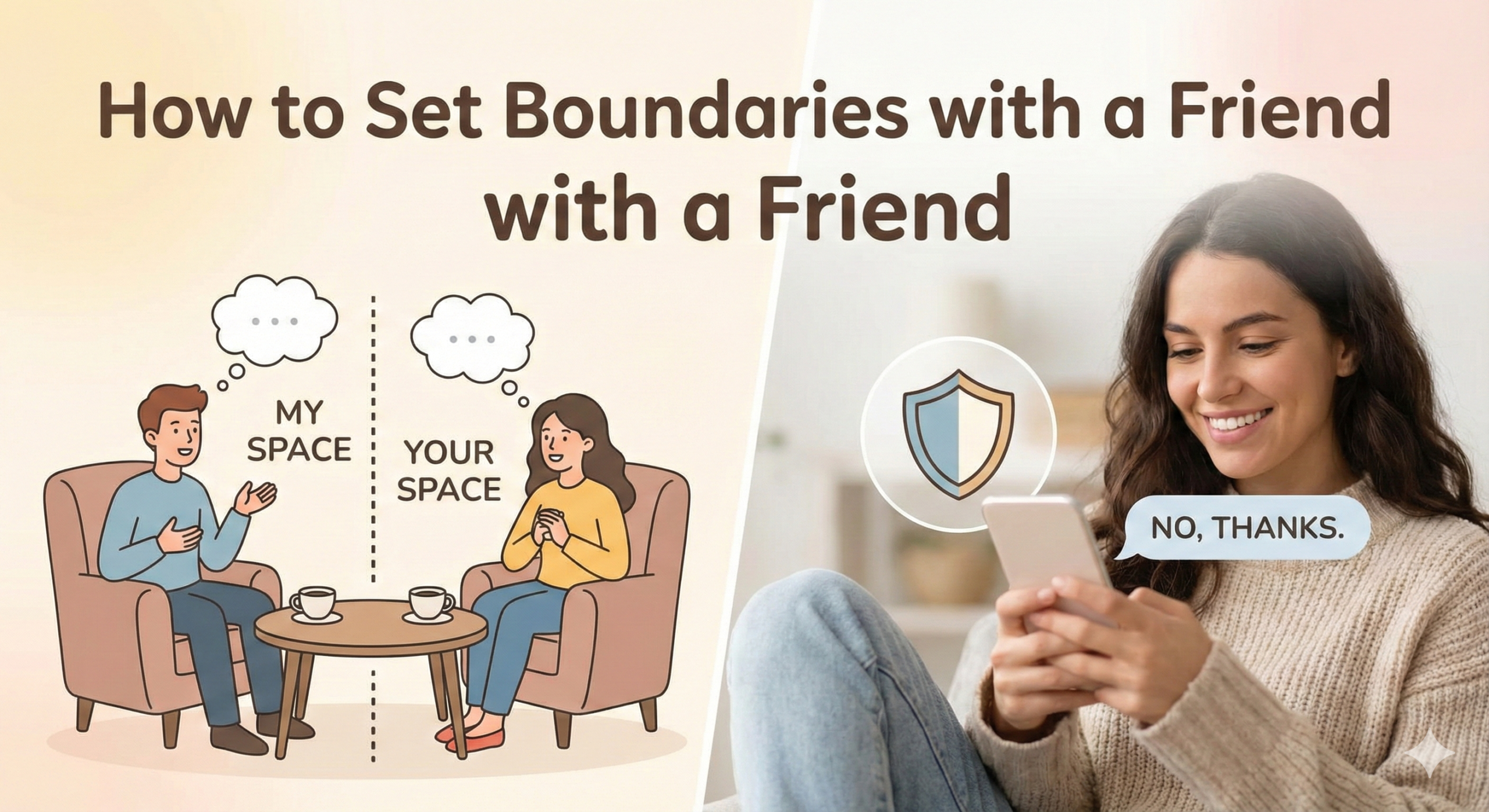
We often think of boundaries as walls—barriers designed to keep people out. But in reality, boundaries are bridges. They are the guidelines that tell people how to treat us so that we can feel safe, respected, and eager to maintain the connection. Yet, when it comes to friendships, drawing these lines can feel excruciatingly difficult.
You might fear that speaking up will make you look selfish or, worse, cause you to lose a friend. Perhaps you have a friend who calls you late at night to vent, draining the energy you need for your own morning routine checklists for success. Or maybe you have a buddy who constantly “forgets” to pay you back, forcing you to reconsider your financial planning.
If you feel drained, resentful, or anxious when a certain friend’s name pops up on your phone, it is a clear sign that a boundary has been crossed. This guide will walk you through exactly how to set boundaries with a friend, manage the inevitable guilt, and strengthen your relationships through honest communication.
What Are Friendship Boundaries and Why Do You Need Them?
Friendship boundaries are the limits we set to protect our emotional well-being, time, energy, and values. They are not punishments; they are acts of self-respect. Without them, relationships become enmeshed and codependent, leading to burnout.
The 5 Types of Boundaries
- Emotional Boundaries: Protecting your feelings and not taking responsibility for a friend’s happiness.
- Time Boundaries: protecting how your time is used (e.g., not answering calls during work hours).
- Material Boundaries: Rules regarding money and possessions (e.g., lending clothes or cash).
- Physical Boundaries: Personal space and touch preferences.
- Intellectual Boundaries: Respect for differing opinions and ideas.

Set Boundaries, Find Peace: A Guide to Reclaiming Yourself
This bestseller by Nedra Glover Tawwab is the gold standard for learning how to express your needs clearly and without apology.
Check Price on AmazonSigns You Need to Draw the Line
How do you know if a friendship lacks boundaries? Your body and mind usually tell you before you consciously realize it.
1. The “Dread” Factor
If seeing a notification from them gives you a pit in your stomach, or if you find yourself procrastinating on replying, pay attention. Procrastination is often an emotional regulation problem, not a time management one. (See our list of ways to beat procrastination for more on this).
2. Decision Fatigue
Do you feel exhausted trying to manage their crises while handling your own life? Over-involvement in a friend’s drama can lead to severe decision fatigue, leaving you with no mental energy for your own work or family.
3. Resentment
Resentment is the number one signal of a crossed boundary. If you feel taken for granted—perhaps you are always the one driving, paying, or listening—you are overextending yourself.
How to Set Boundaries: A 5-Step Framework
Setting a boundary is a skill, much like learning how to build better communication skills. It requires preparation, execution, and maintenance.
Step 1: Identify the Boundary Clearly
You cannot enforce what you haven’t defined. Spend some time reflecting. Are you upset because they were late, or because they didn’t value your time? Be specific.
Step 2: Choose the Right Time
Do not set a boundary in the heat of an argument. Wait until you are calm. This prevents the conversation from turning into a fight.
Step 3: Use the “I” Statement Script
Avoid accusatory language (“You always…”). Instead, focus on your feelings and needs.
“I feel [emotion] when [situation] happens. To protect my [value/need], I will need to [boundary].”
Step 4: Communicate Consequences
A boundary without a consequence is just a suggestion. You must be willing to act if the line is crossed again.
Step 5: Release the Guilt
It is normal to feel guilty, especially if you are a people-pleaser. This guilt is often fueled by negative self-talk telling you that you are a “bad friend.” Challenge those thoughts. You are not responsible for their reaction to your boundary.
Real-Life Scenarios and Scripts
Here are specific examples of how to handle common sticky situations with friends.
Scenario A: The “Time Vampire”
Your friend calls you every day during work hours to complain about their partner. It disrupts your flow and makes it hard to stay focused while working from home.
What to say: “I love hearing from you, but I can’t take personal calls between 9 AM and 5 PM anymore. I need to focus on my work. Let’s catch up after 6 PM.”
Scenario B: The Financial Drain
You are trying to save money, perhaps following a zero-based budget checklist, but your friend always suggests expensive dinners.
What to say: “I’m really focusing on my financial goals right now, so I’m taking a break from expensive outings. I’d love to come over for a movie or go for a hike instead.”
Scenario C: The Unexpected House Guest
A friend constantly drops by your home unannounced. Even if you love making your living room cozy for guests, unexpected visits can be intrusive.
What to say: “I love seeing you, but I’m not up for surprise visits these days. Please text or call me at least a few hours ahead to see if I’m free.”
Healthy vs. Unhealthy Responses to Boundaries
How your friend reacts tells you a lot about the health of the relationship.
| Reaction Type | Healthy Friend’s Response | Toxic Friend’s Response |
|---|---|---|
| Immediate Reaction | Listens, might be surprised but stays calm. | Gets defensive, angry, or plays the victim. |
| Respect for Needs | Acknowledges your need (“I didn’t realize I was interrupting work, sorry!”). | Dismisses your need (“You’re being too sensitive/uptight”). |
| Long-term Behavior | Adjusts behavior to respect the limit. | Ignores the boundary and tests it repeatedly. |
| Focus | Focuses on the friendship’s health. | Focuses on their loss of access to you. |
The One-Minute Gratitude Journal
Dealing with relationship friction is stressful. Use this journal to stay grounded and focus on the positive aspects of your life.
Check Price on AmazonWhen Boundaries Fail: Knowing When to Let Go
Sometimes, despite your best efforts, a friend refuses to respect your limits. If you have communicated clearly and they continue to cross the line, this is no longer a misunderstanding—it is a choice they are making.
Continuing to engage with someone who disrespects your boundaries is a form of self-sabotage. It might be time to distance yourself. This can be painful, but it is necessary for your mental health. Consider this a vital part of your ultimate self-care checklist. You cannot pour from an empty cup, and you cannot thrive with a leaky one.
If the stress of a failing friendship is overwhelming, turning to mindfulness can help. You might want to explore meditation apps to manage anxiety. Check out our comparison of Headspace vs Calm vs Insight Timer to find support.
Expert Tips for Success
- Start Small: If you are new to this, start with a small boundary (e.g., “I can’t talk right now”) before tackling big issues.
- Be Consistent: Intermittent reinforcement (enforcing sometimes, caving other times) teaches people to keep pushing.
- Don’t Over-Explain: “No” is a complete sentence. You don’t need to write a thesis defense on why you can’t attend the party.
- Journal Your Progress: Use one of the best ways to organize notes or a physical journal to track how setting boundaries improves your mood over time.
Frequently Asked Questions
Conclusion: Empowering Yourself and Your Friendships
Setting boundaries with a friend is one of the most challenging yet rewarding things you can do for your personal growth. It moves you from a place of passive resentment to active empowerment. It filters out those who only want to take, and deepens connections with those who are willing to give and respect.
Remember, if you are planning to change your life in 30 days, mastering your relationships is a cornerstone of that transformation. Start small, be kind, but stand firm. You deserve friendships that fill you up, not ones that wear you down.
Take Control of Your Social Energy
Ready to reclaim your time? Check out our guide on productivity tools to help you manage your schedule better.
Read Next: Best Productivity Apps