
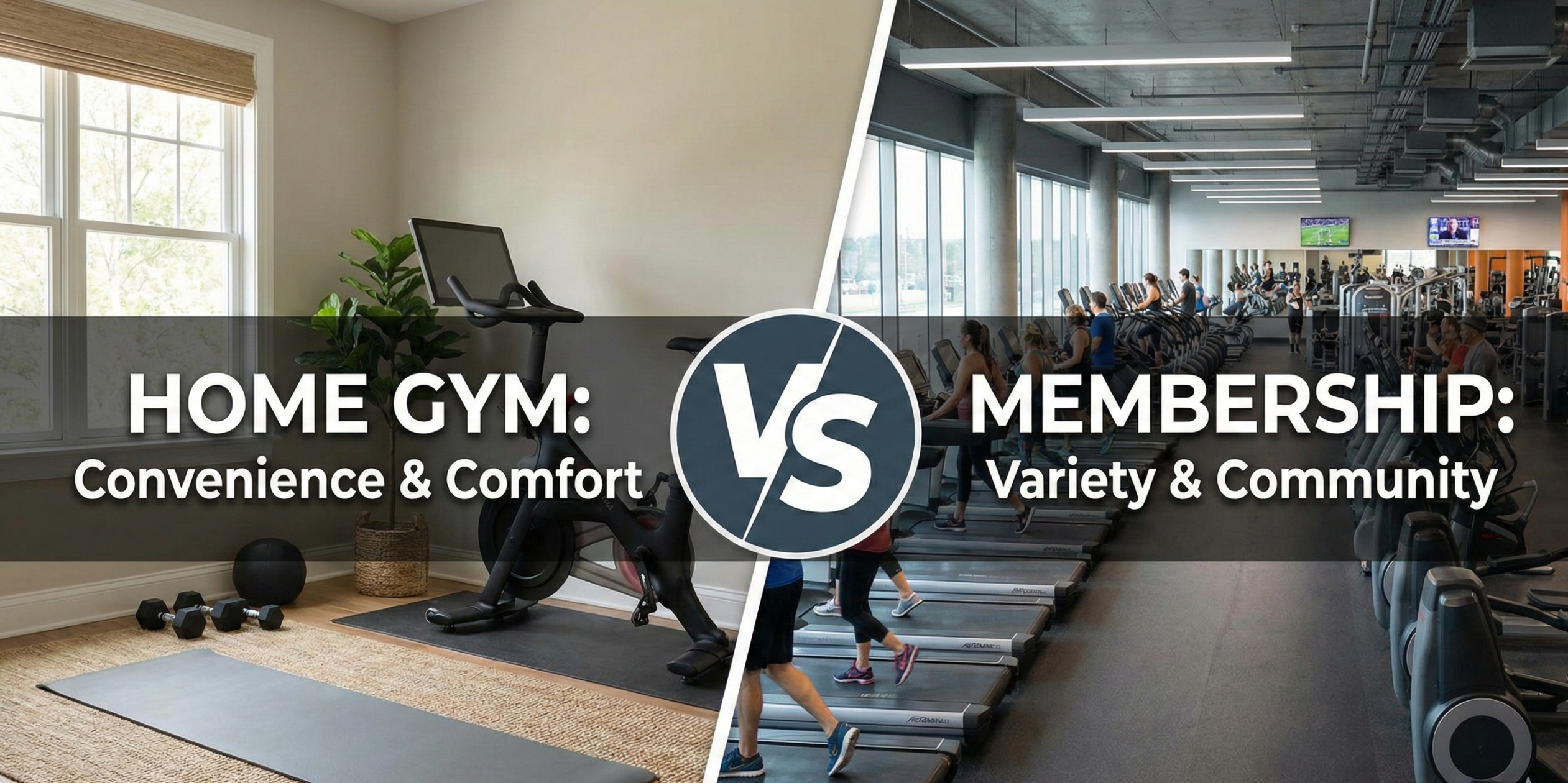
Home Gym vs. Membership: Which Investment Builds a Better You?
It is the classic fitness dilemma. Do you sign the contract, pay the monthly fee, and fight for a parking spot at the local commercial gym? Or do you clear out the garage, invest a lump sum upfront, and build a sanctuary of iron at home?
The debate of home gym vs gym membership isn’t just about money—though the financials are startling. It is about psychology, lifestyle, and how you value your time. For some, the gym is a social outlet and a place to escape the chaos of home life. For others, it is a source of anxiety, germs, and wasted commuting hours.
In this comprehensive guide, we are stripping away the marketing hype to look at the cold, hard data. We will analyze long-term costs, the “convenience factor,” equipment variety, hidden mental health benefits, flooring, home gym setup tips, the best gym membership types, hybrid strategies, and specific goal-based recommendations. Whether you are a busy professional, a new parent, a powerlifter, or someone just trying to lose weight—this is the verdict you need.
At a Glance: The Comparison Matrix
Before we dive into the deep analysis, here is a quick breakdown of how the two options stack up against each other across every major dimension.
| Category | Home Gym | Gym Membership |
|---|---|---|
| Upfront Cost | High ($500 – $5,000+) | Low ($0 – $100 initiation) |
| Ongoing Cost | $0 (maintenance only) | $30 – $200+ per month |
| Commute Time | 0 minutes | 15 – 45 minutes average |
| Equipment Variety | Limited to what you buy | Extensive (cardio, machines, sauna) |
| Privacy | 100% private | Zero (crowded) |
| Atmosphere | Your music, your temperature | High-energy, social environment |
| Availability | 24/7, no wait times | Limited hours, peak-hour queues |
| Hygiene | Full control | Dependent on staff & users |
| Resale Value | 60–80% retained | $0 (sunk cost) |
| Long-term Cost (10 yrs) | $1,500 – $3,000 total | $7,200 – $24,000+ total |
| Amenities | What you build | Pool, sauna, classes, lockers |
| Social Component | None (unless virtual) | High – community & classes |
| Space Required | 8×8 ft minimum | None at home |
| Flexibility | Train any time, any style | Depends on gym schedule |
Round 1: The Full Financial Breakdown
The most common argument for a gym membership is that it is “cheaper.” In the short term, that is mathematically true. But fitness is a lifetime pursuit, not a monthly subscription. Let us do the honest math—including every hidden cost most people ignore.
The Gym Membership Math
Let us assume an average decent gym membership costs $60 per month—a reasonable mid-range figure that accounts for budget gyms on the low end and premium facilities on the upper end.
Hidden costs most people forget: Gym bags, padlocks, gym-specific footwear, protein shakes from the smoothie bar, guest passes for family members, personal training add-ons, parking fees, and the mandatory “freeze fee” you pay when injured. These can easily add $500–$1,500 to your annual gym spending.
The Home Gym Investment
Building a home gym hurts upfront. A quality squat rack, a barbell, an adjustable bench, and a set of plates might run you $1,500 to $2,000 initially. However, once you buy it, it is yours—forever.
The Break-Even Point: For most modest home gyms, the break-even point occurs around the 24-month mark. After two years, you are essentially working out for free. High-quality gym equipment holds its value incredibly well. If you decide to sell your weights later, you can often recoup 60–80% of your investment from the second-hand market.
If you are trying to budget for this, consider checking our guide on gadgets that are actually worth the money—the philosophy is the same. Buy quality once, rather than paying for a service forever.
Budget Tiers for Building a Home Gym
One of the biggest misconceptions about home gyms is that they require a massive upfront investment. The truth is that there is a tier for every budget:
| Budget Tier | Investment | What You Get | Best For |
|---|---|---|---|
| Starter | $200 – $500 | Adjustable dumbbells, resistance bands, yoga mat, jump rope | Beginners, cardio & bodyweight focus |
| Intermediate | $500 – $1,500 | Above + adjustable bench, kettlebells, pull-up bar, TRX | General fitness, HIIT, hypertrophy |
| Serious Lifter | $1,500 – $3,000 | Power rack, Olympic barbell, weight plates, bumper plates | Strength training, powerlifting |
| Premium | $3,000+ | All above + cardio machine, cable system, rubber flooring, mirrors | Replacing gym entirely |
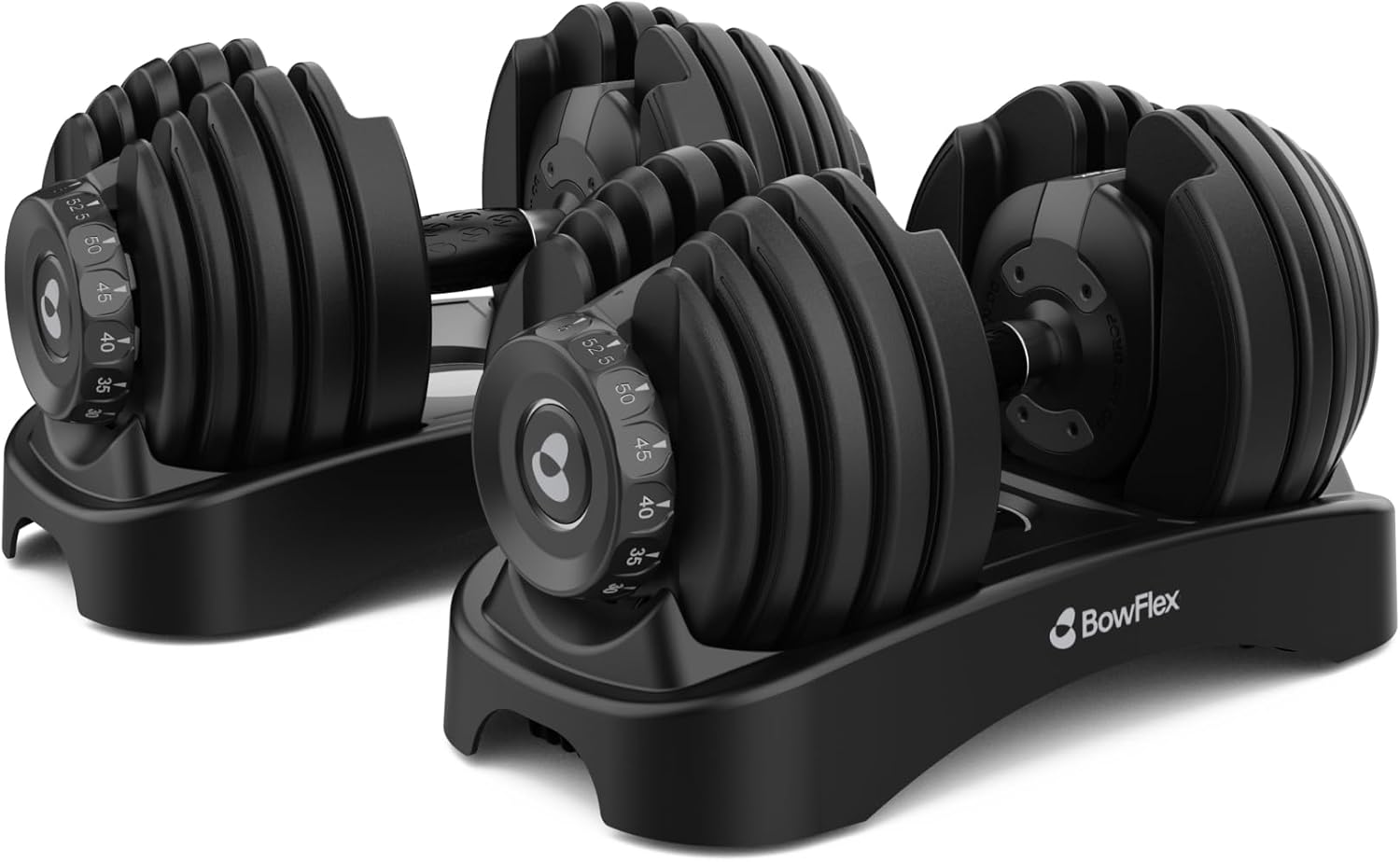
The Best Starter Investment: Bowflex SelectTech 552
Replace 15 sets of weights with one. The ultimate space-saver for starting a home gym without breaking the bank.
Check Price on AmazonRound 2: Convenience and Time Management
Time is the one resource you cannot earn back. This is where the home gym dominates in an almost unfair way.
The “Friction” of the Commercial Gym
Going to a commercial gym requires logistics. You have to pack a bag, find your keys, drive there, park, change in a locker room, and then wait for the squat rack to open up because someone is scrolling through social media. A 45-minute workout can easily consume 90 minutes of your day.
For busy professionals following the ultimate self-care checklist, losing that extra time is genuinely stressful. The friction of getting to the gym is often the primary reason people quit their memberships altogether—studies consistently show that members who live more than 5 miles from a gym visit significantly less frequently.
“The gym you don’t go to because of a 20-minute drive is infinitely less effective than the home gym you use every morning before the rest of the house wakes up.”
The Efficiency of Training at Home
With a garage or basement gym, the commute is ten seconds. You can lift in your pajamas. You can grunt as loud as you want, blast your preferred playlist without headphones, and pause your set to switch the laundry. Most importantly, you reclaim an hour or more of productive time every single workout day.
If you work out four times per week and each gym trip adds just 30 minutes of transit and logistics, you are spending over 100 hours per year in the car going to and from the gym. That is more than four full days of your life, spent driving.
This efficiency also influences what you eat. Instead of rushing home starving at 7:30 PM, you finish your workout by 6:00 PM with plenty of time to utilize quick and healthy weeknight dinner ideas rather than defaulting to fast food because you are exhausted and time-poor.
The 24/7 Availability Advantage
Commercial gyms have operating hours. Even those that advertise 24-hour access often have restrictions on which equipment is available after hours, or they have the main floor locked while only cardio is accessible. Holidays, equipment maintenance, and unexpected closures also cut into your training schedule.
Your home gym is open on Christmas morning. It is open at 4 AM when you cannot sleep. It is open when there is a blizzard outside and the roads are closed. That unconditional access fundamentally removes every scheduling excuse from your fitness arsenal.
Round 3: Equipment, Variety, and Space
This is the category where commercial gyms traditionally win—but the gap has narrowed dramatically as home gym equipment quality has improved and prices have become more competitive.
Commercial Gym Variety
Big-box gyms have millions of dollars worth of equipment under one roof. You have access to rows of cardio machines, cable towers, leg presses, Smith machines, functional trainers, saunas, steam rooms, and in some cases, swimming pools. If you enjoy a wide variety of training modalities—going from Pilates to yoga or using specialized isolation machines for every minor muscle group—a membership provides unparalleled physical variety.
Home Gym Constraints (and How to Overcome Them)
At home, you are limited by square footage and budget. You likely will not have a leg press or a dedicated sauna. However, for 95% of fitness goals—including muscle building, fat loss, and significant strength increases—you need only the fundamentals: a barbell, a rack, and dumbbells.
If you are worried about space, note that effective workouts do not require a warehouse. An 8×8 foot footprint handles a power rack and plates comfortably. A 6×6 foot clear space is sufficient for resistance bands, dumbbells, and a mat-based workout. Even a corner of a living room can transform into an effective training zone, which also helps with reducing screen time by creating a dedicated physical movement space in your home.

The Centerpiece: Fitness Reality 810XLT Power Cage
Safe for solo lifting, rated for 800 lbs, and fits in most garages. This is how you build real strength at home safely.
Check Price on AmazonRound 4: Atmosphere, Hygiene, and Mental Health
The environment in which you train dictates the quality and intensity of your workouts. But it also significantly affects your mental state before, during, and after exercise.
The Germ Factor
Commercial gyms are high-traffic environments touched by hundreds of people daily. Despite spray bottles stationed around the floor, barbells, cable handles, and machine pads carry significant bacterial loads. At home, the equipment is yours alone. There is also the understated luxury of finishing a workout and stepping immediately into your own bathroom to follow your essential skincare routine without wearing flip-flops to avoid foot fungus in a shared shower.
The Social Energy of the Gym
Do you need people around you to push your effort level? The collective energy of a well-run commercial gym can be genuinely motivating. Seeing others working at maximum effort creates a subtle social pressure that prevents you from cutting sets short or leaving early. Group fitness classes, in particular, leverage this group dynamic powerfully—the instructor’s energy and the shared rhythm of the class can elevate performance in ways that solo training rarely replicates.
The Mental Benefits of a Private Training Space
Conversely, the home gym offers something increasingly rare in modern life: focused, undisturbed solitude. No one is asking how many sets you have left. No one is filming content in your space or playing music that conflicts with your focus. It is you and the work. If you use meditation or focus apps to center yourself, comparing Headspace vs Calm becomes far more relevant when you can play these tools over a speaker while stretching in your private gym—something you cannot comfortably do in a packed weight room.
For many people, particularly those dealing with gym anxiety, social anxiety, or body image concerns, the home gym is not just a preference—it is genuinely transformative. Removing the social performance aspect of exercise means they can focus entirely on the physical work and build confidence incrementally without an audience.
The Different Types of Gym Memberships Explained
Not all gym memberships are created equal. Understanding the landscape of options is critical before you decide whether a membership makes sense for your budget and lifestyle. The range spans from ultra-affordable no-frills options to luxury wellness clubs that rival high-end hotels.
Budget Gym Memberships ($10–$25/month)
Chains in this tier—think Planet Fitness, Crunch Fitness, and similar budget brands—offer a compelling value proposition: access to a large floor of cardio and resistance machines for a near-negligible monthly fee. The trade-offs are real, though. These facilities are often extremely crowded during peak hours, equipment maintenance can be inconsistent, and premium amenities like saunas, pools, and group classes are typically absent or locked behind a higher-tier fee. For someone who just needs a treadmill and a set of dumbbells, these memberships can be genuinely good value.
Mid-Range Gym Memberships ($40–$80/month)
This is the sweet spot for most gym-goers. Mid-range facilities offer a reasonable spread of equipment, group fitness classes, adequate locker facilities, and a maintained environment. National chains as well as quality local gyms operate in this bracket. If you attend consistently—five or more times per week—the cost per visit becomes very reasonable. The problem is that most people do not attend consistently, which drives the average cost per visit much higher.
Premium and Luxury Memberships ($100–$250+/month)
Premium health clubs like Equinox, Life Time Fitness, and upscale boutique studios occupy this tier. Memberships here include top-tier equipment, professional-grade group classes, spa facilities, swimming pools, towel service, smoothie bars, and a social environment that many members explicitly pay for. If wellness is your primary social outlet and you use every amenity on offer, the cost per use can genuinely justify the price. If you go twice a week and skip the classes, it is extremely difficult to justify over a well-equipped home gym.
Pay-Per-Visit and Boutique Studio Options
An often-overlooked alternative is the drop-in or pay-per-visit model. Many boutique studios—spin, yoga, barre, boxing—operate on a per-class or punch-card basis, typically ranging from $15–$35 per session. For someone who wants professional instruction and community for specific modalities without a full-time membership, this hybrid approach can be surprisingly cost-effective. We will explore this more in the hybrid section below.
Corporate and Employer Gym Benefits
A factor many people overlook entirely: a significant number of employers offer gym subsidies, on-site fitness facilities, or health insurance discounts tied to gym membership or fitness tracking. Before making any financial decision about gym membership, check your employee benefits package. Some employers fully reimburse memberships up to $50–$100 per month, which dramatically changes the financial calculus. Similarly, certain health insurance plans offer wellness credits that can offset gym costs. This can make a mid-range gym membership effectively free.
How to Set Up a Home Gym on Any Budget: A Step-by-Step Guide
The biggest mistake people make when setting up a home gym is trying to replicate a commercial gym from day one. Start lean, train consistently, then upgrade based on real gaps in your training—not theoretical ones.
-
Define your goals first. Are you training for fat loss, muscle building, strength, athletic performance, or general health? Your goal determines everything—the space you need, the equipment you should prioritize, and the budget required. A person training for a marathon needs very different equipment than someone training for powerlifting.
-
Identify your space. Walk through your home with fresh eyes. A single-car garage (roughly 10×20 ft) is the ideal home gym space. A spare bedroom works well for dumbbells and bodyweight. A basement can handle a full rack setup. Even a cleared corner of a living room can serve for resistance band and mobility work. Measure the space and note the ceiling height—critical if you plan to do overhead pressing.
-
Start with foundational equipment only. Resist the urge to buy everything at once. For most people, the first purchases should be: adjustable dumbbells (covers virtually every exercise), a sturdy adjustable bench, and a pull-up bar. These three items handle the majority of upper-body and core training at a fraction of the cost of a full rack setup.
-
Add a power rack when you’re ready for serious compound lifting. If your goals include squats, bench press, deadlifts, and overhead press—the foundational compound movements—a quality power rack is your next investment. Budget at least $400–$600 for a decent rack that will last, paired with an Olympic barbell (~$150–$300) and plates.
-
Address cardio strategically. Cardio equipment takes up significant space and cost. Before buying a treadmill, consider: can you run outside? Would a jump rope, rowing machine, or stationary bike serve you better? An indoor cycling bike provides excellent cardiovascular training in a compact footprint and at a fraction of the cost of a commercial-grade treadmill.
-
Floor protection before anything else. Installing rubber flooring (horse stall mats from feed stores are a proven cost-effective option at $40–$50 each) before any equipment is placed protects your concrete or wood floor, reduces noise transfer, and makes the space feel intentional and permanent rather than temporary.
-
Create a training atmosphere. Add a Bluetooth speaker, install a whiteboard or chalkboard for tracking weights and progress, add adequate lighting (many garages are poorly lit), and consider mirrors to check form. These finishing touches cost relatively little but have a significant impact on how motivated you feel to train in the space.
Pro tip: Shop for used equipment before buying new. Facebook Marketplace, Craigslist, and local gym liquidation sales frequently list quality barbells, plates, and benches at 30–50% of retail price. Weights in particular are essentially indestructible, making used iron an excellent purchase.
Home Gym Flooring, Mirrors, and Storage: The Details That Matter
Once you have equipment decisions sorted, the secondary elements of your home gym—flooring, mirrors, storage, and ventilation—have a surprisingly large impact on your training experience, safety, and property value.
Flooring Options for Every Budget
Never place gym equipment directly on a bare concrete floor if you can avoid it. Impact, vibration, and moisture can damage both your floor and your equipment over time. The right flooring also dramatically reduces noise—a significant consideration if family members sleep beneath your training space or if you live in a multi-unit building.
Horse stall mats (4×6 ft, 3/4-inch thick): The gold standard of home gym flooring. Available at agricultural supply stores, these dense rubber mats are virtually indestructible, provide excellent shock absorption, and cost roughly $40–$50 each. A two-car garage requires approximately 6–8 mats. The only downside is a temporary rubber odor that dissipates within a few weeks.
Interlocking foam tiles: A lighter and cheaper option that works well for areas without heavy barbell work. These are ideal for stretching, yoga, or dumbbell-only areas. They compress over time under heavy loads, so they are not recommended under a squat rack.
Rolled rubber flooring: A professional-looking option that provides seamless coverage. More expensive than stall mats but easier to clean and aesthetically superior for a dedicated gym room.
Mirrors: Form, Space, and Psychology
Wall mirrors serve both a functional and psychological role in a home gym. Functionally, they allow you to observe and self-correct your lifting form without a training partner. Psychologically, mirrors make a space feel larger and create a gym-like atmosphere that reinforces training consistency. Large frameless mirrors from hardware stores or second-hand furniture retailers are the most cost-effective option. Place them along the wall facing your primary lifting area.
Storage and Organization
A disorganized gym is a demotivating gym. Investing in proper storage solutions—plate trees, dumbbell racks, wall-mounted accessory storage, barbell holders—keeps your space safe, navigable, and visually appealing. Floor clutter is also a genuine safety hazard. A basic plate tree costs $40–$80 and makes your weight room feel like a real facility rather than a storage room that happens to contain iron.
Ventilation and Temperature Control
Temperature is one of the most-overlooked aspects of garage gym design. Uninsulated metal garage doors conduct heat and cold aggressively. In summer, a poorly ventilated garage gym can reach temperatures that make intense training dangerous. In winter, training in near-freezing conditions creates injury risk and makes the space deeply unappealing. Solutions include insulated garage doors, portable fans, wall-mounted shop fans, mini-split HVAC units, and space heaters. For most climates, a combination of a quality shop fan in summer and a small electric heater in winter addresses the problem for under $200.
Choosing Based on Your Specific Fitness Goals
The “right” answer between a home gym and a commercial membership shifts dramatically depending on what you are actually trying to accomplish. Here is a goal-by-goal breakdown:
Strength Training and Powerlifting
For the dedicated barbell athlete—someone training the squat, bench press, and deadlift as primary movements—the home gym is arguably superior to most commercial gyms. The equipment you need is limited (rack, bar, plates, bench) and relatively affordable. You have no wait times for the squat rack, no one asking to work in on your sets, and no limitation on chalk or shoes. High-end home gym setups with quality barbells from reputable manufacturers can replicate the exact environment of a serious training facility. Powerlifters and Olympic weightlifters training at home report consistently that the lack of distraction significantly improves training quality.
Bodybuilding and Hypertrophy
Bodybuilding training traditionally benefits from access to a wide variety of machines—cable towers, pec decks, leg extensions, and isolation equipment that targets muscles from specific angles. Commercial gyms have the edge here in terms of sheer variety. However, a well-equipped home gym with a cable attachment for a power rack, adjustable dumbbells, and bands can replicate the stimulus of most isolation exercises. For the vast majority of the muscle-building process—particularly in the early and intermediate stages—free weights are more effective than machines anyway.
Cardiovascular Training and Endurance
If cardio is your primary focus, the calculus changes. Running on a treadmill at home requires a significant investment in quality equipment—budget treadmills are notoriously unreliable and uncomfortable. Commercial gyms offer access to commercial-grade treadmills, ellipticals, stair climbers, rowing machines, and cycling bikes that would cost thousands to replicate at home. For dedicated runners, swimmers, or cyclists who rely heavily on cardio equipment, a gym membership can provide better returns.
Functional Fitness and HIIT
High-intensity interval training and functional fitness require minimal equipment but demand space and a few key tools: kettlebells, battle ropes, plyo boxes, resistance bands, and a pull-up bar. A well-organized home gym handles all of these in a modest footprint. The real advantage here is that HIIT demands spontaneity—being able to move immediately from a warm-up into 20-second maximum-effort intervals is far easier when you are already home than when you have to commute to a facility first.
Yoga, Pilates, and Mobility Work
Studios offer the immersive, instructor-led experience that many practitioners find motivating and technically corrective. However, the at-home yoga and Pilates space is extremely well-served by digital content—apps, streaming subscriptions, and YouTube instructors. For this category of training, neither a commercial gym membership nor a full home gym setup is necessary. A quality mat, a set of blocks, and a monthly digital subscription costing $15–$25 delivers excellent instructional content in your own space.
Home Gym vs. Gym Membership for Weight Loss: What the Research Says
Weight loss is the most commonly cited fitness goal, and it is one where the home vs. gym debate has real nuance. The core principle of fat loss—a sustained caloric deficit combined with adequate protein intake and progressive resistance training—does not care whether you are lifting in a garage or a commercial facility. However, the environment you train in significantly influences the behavioral consistency that makes fat loss happen.
Consistency Is the Only Variable That Matters
Research consistently shows that the most effective exercise program for fat loss is the one you actually perform consistently over an extended period. A moderate gym membership that you use five times per week outperforms an elite home gym setup you use once per week. The key question is not which environment is physically superior—it is which environment removes enough friction and generates enough motivation that you show up regularly.
“You don’t get lean from your best workout. You get lean from your ten-thousandth average workout, repeated without interruption.”
The Friction-Reduction Advantage of the Home Gym
For fat loss specifically, the home gym’s friction-reduction advantage is substantial. The pre-decision fatigue of packing a bag, driving to the gym, and negotiating parking and locker rooms consumes willpower resources before you have lifted a single weight. When training at home, the micro-decision is simply: step into the gym. This small friction difference compounds significantly over months and years of training—particularly during periods of high life stress when any additional logistical burden can tip the balance toward skipping the session entirely.
The Accountability Advantage of the Commercial Gym
Conversely, for people who are highly susceptible to the “I’ll do it later at home” trap, the act of physically going to the gym can function as a commitment mechanism. Getting in the car and driving to a facility puts you in a training mental state in a way that walking ten steps to your garage sometimes does not. Group fitness classes offer an additional accountability layer—the social contract of showing up to a class you have booked and paid for.
The Verdict for Weight Loss
For sustainable long-term fat loss, the home gym wins if—and only if—you are the type of person who exercises more when exercise requires less logistics. For those who benefit from external accountability structures, class-based programming, and a dedicated external training environment, a gym membership may drive better behavioral consistency. Know yourself honestly before making the decision.
The Hybrid Approach: Getting the Best of Both Worlds
One of the most underrated options in the home gym vs. membership debate is the hybrid model—maintaining a modest home gym for the majority of your training while using a minimal or specialized gym membership for specific needs. This approach is increasingly popular among serious fitness enthusiasts and offers a compelling combination of cost-effectiveness, flexibility, and access.
How the Hybrid Model Works in Practice
A common hybrid setup looks like this: build a home gym that covers your primary training needs—compound movements, dumbbells, a cardio option—and supplement with a budget gym membership ($10–$25/month) for access to a pool, a sauna, specialty equipment like a leg press or cable machine, or the occasional social training session. The total monthly cost remains lower than a premium gym membership, while coverage is vastly better than either option alone.
Pay-Per-Visit as a Hybrid Strategy
For those who want even more flexibility, the pay-per-visit or day-pass model works well. Many commercial gyms offer day passes ranging from $5–$20, and many boutique studios sell class packs rather than monthly subscriptions. Training at home four days per week and visiting a commercial gym or studio once per week gives you access to amenities and social training without the financial commitment of a full membership.
The Virtual Class Hybrid
The explosion of virtual fitness content has created another hybrid option: maintaining a basic home gym while subscribing to a digital fitness platform (Peloton, Apple Fitness+, Nike Training Club, or any of dozens of streaming services). These platforms deliver instructor-led classes, progressive programming, and community elements at a fraction of the cost of boutique studio membership. A $15–$35 per month digital subscription combined with a home gym delivers a remarkably complete fitness ecosystem.
The Optimal Hybrid Setup (Most People)
Based on cost-effectiveness and coverage across most training goals, the optimal setup for the majority of fitness-conscious adults is:
- Home gym investment of $1,000–$2,000 for foundational equipment
- Budget commercial gym membership ($10–$25/month) for amenities and variety
- Digital fitness subscription ($15–$25/month) for programming and guided classes
Total ongoing monthly cost: $25–$50. Total annual cost after setup: $300–$600. Compare this to a standalone premium gym membership of $100–$200/month ($1,200–$2,400/year) with no equity built and no home convenience.
Home Gym Safety: Training Alone Without Getting Hurt
One of the legitimate concerns about home gym training—particularly for heavy barbell work—is safety when training solo. In a commercial gym, other members and staff are present if something goes wrong. At home, you are on your own. This does not make home gym training dangerous, but it does require specific safety practices that are not optional.
The Power Rack Safety Bar Setup
Any serious home gym built around barbell training requires a power rack with adjustable safety bars, and those safety bars must be correctly set before every session. The J-hooks and safety bars are the equivalent of a spotter—set them at the correct height (just below the depth of your failed rep for squats; just below your chest height for bench press) and you can train to failure alone without risk of being pinned under a barbell.
Never bench press in a home gym without safety bars or a spotter. This is non-negotiable. The “feet-up roll of shame” technique for escaping a failed bench press works, but a properly set power rack is the real solution.
Proper Warm-Up and Form Standards
Without a coach or experienced training partner watching your form, you are solely responsible for self-monitoring technique. Investing time in learning proper movement patterns before adding significant load is particularly important for solo home gym trainees. Video recording your lifts from multiple angles using a phone stand allows post-session form review—a practice used by serious strength athletes at all levels.
Emergency Considerations
Tell someone when you are training. Keep your phone within reach. If you train early in the morning before others in the household are awake, let someone know your training schedule. For exercises with high injury potential—heavy Olympic lifts, maximal deadlifts, or any lift that could result in a fall—use bumper plates if possible and train in a space with enough clearance to drop the bar safely.
Equipment Maintenance
Home gym equipment requires periodic maintenance that commercial gyms handle for you. Check that your rack bolts are tight every few months. Oil your barbell sleeves regularly. Inspect cable attachments for fraying if you have them. Inspect weight collars for wear. Neglected equipment failures are a genuine injury risk that diligent maintenance eliminates.
Staying Motivated Without a Gym Community
The social environment of a commercial gym is a genuine motivational tool that the home gym cannot replicate exactly. The collective energy of a packed weight room, the competitive environment created by other serious athletes, and the social bonds formed through shared physical effort are real and meaningful. Home gym training requires building substitute motivation structures that are equally effective—which is absolutely possible but requires intentionality.
Structure Your Training with a Written Program
Undirected training—walking into the gym and deciding what to do based on how you feel—is a recipe for inconsistency and poor progress. Following a written, periodized program creates structure that carries you through low-motivation days. You do not need to feel motivated to follow a program; you need only to execute the prescribed work. Dozens of high-quality free programs exist specifically designed for home gym training.
Track Every Session Visibly
A whiteboard or chalkboard mounted in your home gym and used to track your lifts session-by-session creates a powerful visual record of progress. Seeing your squat increase from 185 to 225 to 275 lbs over months of recorded sessions is a profound motivational force. Nothing reinforces continued effort like visible, undeniable evidence of progress. This is the home gym equivalent of the social progress reinforcement you get from workout partners or gym coaches commenting on your improvement.
Online Communities and Virtual Accountability
The home gym training community online is enormous and genuinely supportive. Reddit’s home gym communities, Instagram training groups, and app-based fitness communities offer real social connection around shared training goals. Posting training videos for form feedback, sharing personal records, and following the progress of other home gym athletes creates meaningful social accountability without requiring physical co-presence. Apps that support workout tracking and social sharing bring the community element of gym training into a format that works with a home training schedule.
Use Training Music Strategically
One of the underrated advantages of the home gym is complete control over your acoustic environment. Unlike a commercial gym where you are limited to headphones or the facility’s playlist, you can run a full speaker system at the volume that maximizes your performance. Research on exercise and music consistently shows that music tempo and personal preference significantly affect workout intensity and duration. Building specific training playlists for different session types—heavy strength work, conditioning, mobility—creates environmental cues that signal your nervous system that it is time to work.
Tracking Your Progress at Home: Tools and Methods
Without the institutional infrastructure of a commercial gym—personal trainers, fitness assessments, and body composition testing—home gym trainees need to build their own progress-tracking systems. Fortunately, the tools available today make this easier than ever.
Training Logs: The Foundation of Progress
A training log is the single most important tracking tool you can implement. Record the date, exercises performed, sets, reps, and weight used for every session. Reviewing this log regularly reveals trends—exercises where you are progressing, exercises that have stalled, and patterns in performance relative to sleep, nutrition, and stress. A simple notebook works perfectly. Digital apps like Strong, HEVY, or Google Sheets spreadsheets provide additional functionality like progress charts, personal record tracking, and volume calculation.
Body Composition Tracking
For those training with body composition goals, tracking body weight and measurements provides objective feedback on whether your training and nutrition approach is working. Weigh yourself daily at the same time (immediately upon waking, post-bathroom) and take a 7-day rolling average to smooth out natural daily fluctuations. Monthly circumference measurements at the waist, hips, chest, arms, and thighs capture changes that the scale misses—particularly during periods of concurrent muscle gain and fat loss.
Strength Standards as Benchmarks
Established strength standards provide useful benchmarks for tracking training progress relative to body weight. Reaching a bodyweight squat, a 1.5x bodyweight deadlift, or a 10-rep pull-up milestone represents meaningful, measurable progress markers that can sustain motivation through the inevitable plateaus of a long-term training program.
Video Form Review
Setting up a phone stand to record training sessions provides a technical progress record that is genuinely valuable. Reviewing your squat form at 225 lbs compared to your initial recorded attempts at 135 lbs gives concrete visual evidence of technical development, not just load progress. It also provides early warning of form breakdown as loads increase—particularly important when training without a coach or spotter.
Hidden Gym Perks: Employer Benefits, Insurance, and Tax Considerations
The financial comparison between home gym ownership and commercial gym membership becomes more complex when you factor in employer benefits, health insurance credits, and in some cases, tax implications. These are areas most people completely overlook when making their decision.
Employer Wellness Subsidies
A significant proportion of employers—particularly large corporations, technology companies, and public sector organizations—offer some form of fitness or wellness subsidy as part of their benefits package. This can take the form of direct reimbursement for gym membership fees (typically $50–$100/month), access to a subsidized on-site gym facility, or contributions to a Health Spending Account that can be applied toward fitness equipment and memberships. Before committing to a home gym investment, review your full benefits package carefully. If your employer fully reimburses a $60 gym membership, the financial argument for a home gym weakens considerably—at least for the period you remain with that employer.
Health Insurance Wellness Credits
Some health insurance plans—particularly employer-sponsored plans with wellness components—offer premium discounts, cash rewards, or wellness account credits for maintaining a gym membership or meeting fitness activity targets. Programs like Vitality, SilverSneakers, and various insurer-specific wellness platforms provide tangible financial incentives tied to gym attendance or fitness tracker data. These programs can reduce the effective cost of a gym membership by $20–$80 per month for active participants.
Home Gym Tax Considerations
In most jurisdictions, a personal home gym is not a deductible business expense. However, if you are self-employed and use a home office or dedicated workspace, equipment used primarily for maintaining fitness that directly supports your ability to perform your work may have some limited deductibility in certain situations. This is a nuanced area where the guidance of a tax professional is strongly recommended before any claims are made. Home gym equipment that is installed in a dedicated, finished room can also potentially be factored into home office space calculations in some jurisdictions.
Pros and Cons Summary
🏠 The Home Gym
- Pros
- Open 24/7/365, no commute.
- No monthly fees; equipment builds equity.
- Total privacy and hygiene control.
- No waiting for equipment.
- Train your way: music, temperature, attire.
- 60–80% resale value on quality iron.
- Eliminates every logistical excuse.
- Cons
- High upfront investment required.
- Requires dedicated space.
- No sauna, pool, or specialty machines.
- Demands self-directed motivation.
- Safety precautions required for solo lifting.
🏢 Gym Membership
- Pros
- Access to extensive equipment variety.
- Social environment and group classes.
- Amenities: showers, saunas, pools.
- Low startup cost.
- Professional trainers available on-site.
- External accountability and energy.
- Cons
- Expensive long-term; zero equity built.
- Commuting time adds up significantly.
- Crowded during peak hours.
- Hygiene dependent on others.
- Operating hours limit flexibility.
- Price increases erode value over time.
Choose the Gym Membership If:
You are a social exerciser who genuinely thrives on group energy and class-based programming. If you love Zumba, spin cycling, competitive swim training, or the sauna ritual after a workout—and you genuinely use these amenities regularly—a membership provides experiences a home gym cannot replicate. It is also the right choice if you live in a small apartment without dedicated space for equipment, or if you are still in the exploratory phase of your fitness journey and want access to variety before committing to a specific training style.
Choose the Home Gym If:
You are a busy parent, a professional with unpredictable hours, or someone who has found that the logistics of gym-going consistently defeat your best intentions to train. If you have a garage, basement, or spare room and can commit $1,000–$2,000 to a quality initial setup, the home gym is the superior long-term financial decision and—for most serious trainees—the superior training decision. The freedom to train on your schedule, without an audience, without waiting, without commuting, and without a monthly fee compounding indefinitely is a genuinely transformative quality-of-life upgrade.

Complete Your Home Setup: Sunny Health Indoor Cycle
Commercial gym cardio machines cost thousands. This reliable workhorse delivers the same sweat-inducing cardio for a fraction of the price.
Check Price on AmazonFrequently Asked Questions
Is a home gym cheaper than a gym membership?
In the long run, yes. While the upfront cost is higher ($1,000+), you eliminate monthly fees. Most home gym owners break even within 24–36 months compared to a standard gym membership. After that, your training is essentially free—and your equipment retains significant resale value, unlike membership fees which are a permanent sunk cost.
How much space do I need for a home gym?
Surprisingly little. A single-car garage is luxury. You can fit a power rack and bench in an 8×8 foot area. For dumbbell-only or resistance band training, a 6×6 foot cleared space in a spare room is sufficient. The key is having enough ceiling height (minimum 7 feet for overhead pressing) and a floor that can handle weight.
What is the best first piece of equipment to buy for a home gym?
Adjustable dumbbells. They offer the greatest versatility for the least amount of space and money, covering the vast majority of upper body and accessory exercises. After that, add an adjustable bench, then a pull-up bar, and finally a power rack with barbell and plates when your goals require compound barbell training.
Does a home gym decrease your property value?
No—in fact, a nicely finished dedicated gym space with rubber flooring and mirrors is considered a selling point by many buyers. However, permanent structural alterations (removing walls, cutting ventilation ducts, or significant electrical work) should be considered carefully and done professionally to maintain property value.
Is it safe to lift heavy weights alone at home?
Yes, with the right equipment setup. Training in a power rack with safety bars correctly set allows solo lifting to failure without risk of being trapped under a barbell. Never bench press without safety bars or a spotter. Use collars on your barbell. Inform someone when you are training. Keep your phone accessible. With these practices in place, solo home gym training is entirely safe.
Can I build serious muscle with just a home gym?
Absolutely. Your muscles respond to progressive mechanical tension, not the brand of equipment generating it. A home gym with barbells and dumbbells provides everything needed to build substantial muscle mass. The key is consistent progressive overload—gradually increasing the weight, volume, or difficulty of your training over time. Many accomplished physiques have been built entirely in garage gyms.
How do I stay motivated working out alone at home?
Follow a written program rather than improvising each session. Track your lifts visibly on a whiteboard. Join online home gym communities for social accountability. Use a full speaker system instead of headphones to create an energized training atmosphere. Record your sessions periodically for form review and progress documentation. The structure of a good program removes the need to feel motivated—you simply execute what is written.
What flooring is best for a home gym?
Horse stall mats (3/4-inch thick rubber, 4×6 ft) are widely considered the best value option for home gym flooring. They are extremely durable, provide excellent impact absorption, reduce noise, and cost roughly $40–$50 each. For lighter training areas without heavy barbell drops, interlocking foam tiles are a cheaper and lighter alternative.
What temperature should a home gym be?
Ideal exercise temperature falls between 65–72°F (18–22°C) for most people. Above 80°F performance and safety deteriorate, particularly for intense training. Below 55°F, warm-up requirements increase significantly and injury risk rises. In a garage gym, a quality shop fan for summer and a small electric heater for winter typically manages the temperature range adequately for under $200 total investment.
Does home gym equipment hold its resale value?
Yes, particularly quality iron. Weight plates and dumbbells are essentially indestructible and typically sell for 60–80% of retail price on the used market. Quality barbells and racks from reputable brands also retain strong resale value. This stands in stark contrast to gym membership fees, which are pure sunk costs with zero resale or residual value.
What is a hybrid gym setup and is it worth it?
A hybrid setup combines a basic home gym with a low-cost commercial gym membership. You perform your primary training at home and use the commercial gym for amenities like a sauna, pool, or specialty equipment you cannot justify owning. Combined monthly cost is typically $10–$25 for a budget membership, versus $100–$200 for a premium standalone membership. For many people, this is the optimal balance of convenience, cost, and variety.
Can my employer help pay for my home gym?
Possibly. Many employers offer wellness subsidies that cover gym memberships, and some extend these benefits to home gym equipment purchases. Health Spending Accounts (HSAs), Flexible Spending Accounts (FSAs), or employer wellness stipends may be applicable. Review your full benefits package and speak with your HR department—you may be leaving significant fitness subsidy money on the table.
Conclusion
Ultimately, the best choice is the one that you will actually use—consistently, over a long period, with progressive effort. If the commercial gym is a genuine social club that enriches your life and you use every amenity on offer regularly, keep the membership. But if you want to reclaim your time, build equity in your equipment, eliminate the logistical friction between you and a healthy lifestyle, and train on your own terms without a monthly fee compounding indefinitely, the home gym is the clear winner.
The decision is not permanent. You can start with a budget commercial membership, learn what you actually use and enjoy, and then build a home gym based on that real data. You can also do the reverse—build a lean home gym and supplement with a cheap membership for the amenities you miss. The fitness industry profits enormously from the myth that a gym membership is the only legitimate way to train. The truth is far simpler: iron, effort, and consistency build the physique and health you want, regardless of whether the iron lives in a garage or a polished commercial facility.
Ready to build your training sanctuary?
Start small, buy quality, train consistently, and watch your fitness transform—on your own terms.
Shop Home Gym Essentials on Amazon