
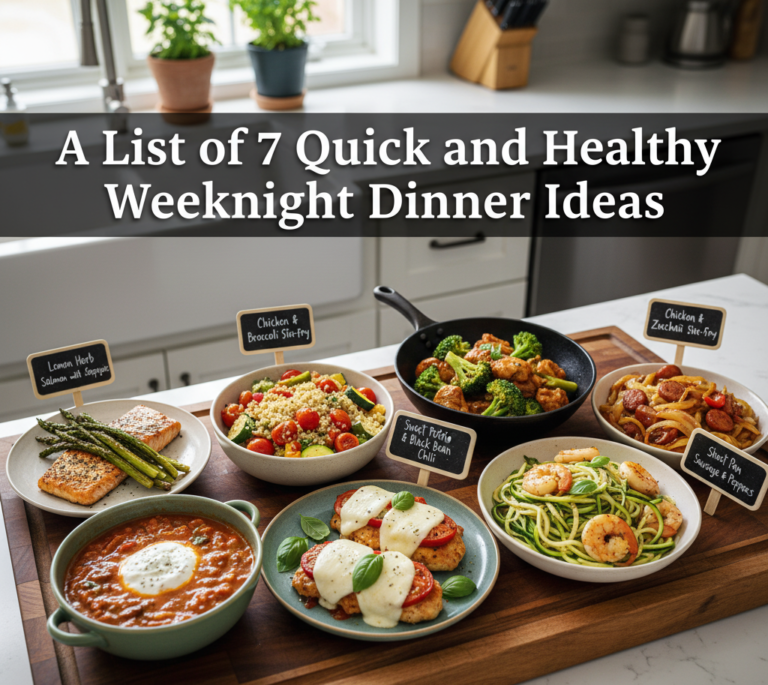
The Weeknight Warrior: 7 Quick, Healthy Dinner Ideas for Max Productivity
The weeknight dinner dilemma is the ultimate productivity killer. You arrive home exhausted after a long day of focused work, only to face the inevitable, energy-draining question: “What should I cook?” Too often, the answer is expensive takeout or an unhealthy frozen meal.
But feeding yourself well is not a reward; it’s a necessary input for success. Eating a balanced, home-cooked meal is a core element of successful morning routines and the foundation of self-care for busy professionals. If you can automate this crucial task, you eliminate a major source of evening procrastination.
Welcome to the kitchen productivity masterclass. We’ve designed seven simple, healthy, and lightning-fast recipes—none requiring more than 30 minutes of active prep—and paired them with efficiency hacks to reclaim your evenings.
1. The Kitchen Productivity Mindset: Planning for Dinner Success
Cooking is a project, and projects require planning. We can apply the same organizational principles we use for work—like time blocking—to meal preparation.
The “Mise en Place” Advantage
The French term “Mise en Place” means “everything in its place.” This is the secret to kitchen speed. Do your prep work (chopping, measuring) before you start cooking. It prevents the panic of juggling a sizzling pan while trying to dice an onion. This is the difference between a top performer and a chaotic cook, aligning perfectly with the top 5 habits of highly effective people.
Inventory Management as a Financial Tool
Know what you have. Before heading to the store, take inventory. This minimizes food waste, which is a key trait among people who are good with money. This proactive approach saves time and keeps your meal planning within the tight constraints of a zero-based budget checklist.
2. The 7 Quick & Healthy Dinner Ideas (30 Minutes or Less)
Dinner Idea 1: Sheet Pan Salmon & Asparagus (The “Minimalist” Meal)
Active Time: 5 Minutes | Cook Time: 15 Minutes
The ultimate low-effort, low-cleanup meal. High in protein and healthy fats, this is a weeknight staple that requires almost no active attention once it hits the oven.
- Protein: 4 Salmon Fillets
- Veggies: 1 bunch Asparagus (trimmed)
- Flavor: Olive oil, salt, pepper, 1 lemon (sliced)
Method: Toss asparagus in oil, salt, and pepper. Lay on a sheet pan. Place salmon fillets on the same pan. Top with lemon slices. Bake at 400°F (200°C) until salmon flakes easily.
Dinner Idea 2: 15-Minute Chickpea Curry (The “Budget-Friendly” Meal)
Active Time: 10 Minutes | Cook Time: 15 Minutes
This meal relies on pantry staples (canned chickpeas, diced tomatoes) and frozen vegetables, making it incredibly cheap, fast, and supportive of a frugal mindset.
- Protein/Base: 1 can Chickpeas, 1 can Diced Tomatoes
- Flavor: 1 can Coconut Milk, Curry Powder, Garlic Powder
- Serve with: Pre-cooked Quinoa or Rice (made during weekend prep).
Method: Sauté garlic/ginger if you have it. Add tomatoes, coconut milk, and curry powder. Simmer 5 min. Add chickpeas and a cup of frozen spinach. Serve hot over grain.
Dinner Idea 3: One-Pot Lemon Orzo with Chicken Sausage (The “Low-Cleanup” Meal)
Active Time: 10 Minutes | Cook Time: 20 Minutes
The beauty of this meal is that everything—the starch, the protein, the flavor—cooks in a single pot, minimizing post-dinner work and freeing up your evening for self-care.
- Protein: 1 lb Pre-cooked Chicken Sausage (sliced)
- Starch: 1 cup Orzo pasta
- Liquid/Flavor: 4 cups Chicken Broth, Lemon Zest, Parmesan Cheese
Method: Sauté sliced sausage. Add orzo and broth. Bring to boil, reduce heat, and simmer until liquid is absorbed (approx. 15 min). Stir in lemon zest and Parmesan. Done.
Dinner Idea 4: Breakfast for Dinner: Savory Egg Scramble (The “Quickest” Meal)
Active Time: 5 Minutes | Cook Time: 7 Minutes
Eggs are nature’s fast food. They are cheap, high-protein, and cook instantly. This meal is faster than waiting for a delivery driver.
- Protein: 4 large Eggs
- Veggies: Handful of Cherry Tomatoes (halved) and Spinach
- Flavor: Feta Cheese, Hot Sauce (optional)
Method: Scramble eggs. Sauté veggies briefly. Add eggs and scramble. Serve with whole-wheat toast or a side of avocado.
Dinner Idea 5: Tuna/Chicken Salad Lettuce Wraps (The “No-Cook” Meal)
Active Time: 10 Minutes | Cook Time: 0 Minutes
Zero cooking required. This is a cold meal perfect for hot nights or when you need a break from the stove. It helps keep your focus sharp after a long session at your home office setup.
- Protein: 2 cans Tuna/Chicken (drained)
- Binder: Greek Yogurt or Light Mayo, Dijon Mustard
- Veggies/Base: Chopped Celery/Onion, Butter Lettuce Cups
Method: Mix protein, binder, and seasonings. Serve immediately in the lettuce cups for a light, crunchy, and refreshing meal.
Dinner Idea 6: Speedy Black Bean Tacos (The “Fiber-Packed” Meal)
Active Time: 10 Minutes | Cook Time: 5 Minutes
A plant-based powerhouse that comes together in minutes. This meal is cheap and customizable, fitting perfectly into nearly any financial or dietary plan.
- Base: 1 can Black Beans (rinsed), Corn Tortillas
- Toppings: Shredded Cabbage/Lettuce, Salsa, Avocado/Guacamole
- Flavor: Chili Powder, Cumin
Method: Warm tortillas. Sauté beans with spices until heated through (approx. 5 min). Load tortillas with the spiced beans and fresh toppings.
Dinner Idea 7: Stir-Fry with Pre-Cut Veggies (The “Efficiency” Meal)
Active Time: 10 Minutes | Cook Time: 10 Minutes
The secret to this meal is pre-cut vegetables. By outsourcing the most time-consuming task (chopping), you save 15–20 minutes. Time saved on cooking can be spent catching up on personal finance books or reducing screen time.
- Protein: 1 lb Shrimp or Chicken Breast (sliced thin)
- Veggies: 1 bag Pre-cut Stir-Fry Vegetables
- Sauce: Soy Sauce, Ginger Paste, Garlic Powder, Honey
- Serve with: Noodles or pre-cooked Rice.
Method: Cook protein until done. Add veggies and stir-fry until tender-crisp. Pour sauce over and toss. Serve.
3. Complete Nutritional Breakdown: What You’re Actually Eating
Understanding the nutritional profile of what you eat is not just for athletes or dieters—it is an essential skill for anyone who wants to sustain peak mental and physical performance. Each of the seven meals above was designed around a simple nutritional framework: adequate protein to preserve and build lean muscle, complex carbohydrates for sustained energy, healthy fats to support brain function, and an abundance of micronutrients from vegetables. Here is the full breakdown so you can make informed decisions.
Estimated Nutrition Per Serving
Values are approximate and will vary based on portion size and specific brands used. All values represent a single adult serving.
| Meal | Calories | Protein (g) | Carbs (g) | Fat (g) | Fiber (g) | Cost/Serving |
|---|---|---|---|---|---|---|
| 1. Sheet Pan Salmon & Asparagus | 420 | 38 | 12 | 24 | 4 | ~$6.50 |
| 2. Chickpea Curry | 380 | 15 | 52 | 12 | 11 | ~$2.00 |
| 3. Lemon Orzo & Chicken Sausage | 480 | 28 | 45 | 18 | 3 | ~$3.50 |
| 4. Savory Egg Scramble | 310 | 22 | 14 | 18 | 3 | ~$1.80 |
| 5. Tuna Lettuce Wraps | 260 | 34 | 8 | 9 | 2 | ~$2.50 |
| 6. Black Bean Tacos | 390 | 16 | 58 | 10 | 14 | ~$2.20 |
| 7. Veggie Stir-Fry | 440 | 36 | 38 | 13 | 6 | ~$4.00 |
💡 Pro Nutrition Tip: Aim for a dinner plate that is 40% vegetables, 30% lean protein, and 30% complex carbohydrates. Every single meal in this guide meets or exceeds that target, making it easy to hit your daily macro goals without tracking obsessively.
The Macronutrient Science: Why Each Number Matters
Macronutrients—protein, carbohydrates, and fat—are the three pillars of any diet. Understanding how each one affects your energy, focus, and long-term health will permanently change the way you approach meal planning for weight loss, muscle gain, or simply maintaining a healthy weight.
🥩 Protein: The Productivity Macronutrient
Protein does far more than build muscle. It is the raw material for neurotransmitters like dopamine and serotonin, the brain chemicals that govern motivation, mood, and focus. A dinner low in protein—say, a large bowl of pasta with a light sauce—can leave you feeling sluggish and unfocused within 90 minutes. Every recipe in this guide delivers at least 15 grams of protein, and most deliver 28–38 grams. For most adults, aiming for 0.7–1 gram of protein per pound of body weight per day is a scientifically supported target for body composition and mental performance.
🌾 Carbohydrates: Fuel, Not the Enemy
Low-carb diets have been popularized for weight loss, but drastically cutting carbs can impair cognitive function. The brain runs almost exclusively on glucose, derived from carbohydrates. The key is the type of carb: complex carbohydrates from whole grains, legumes, and vegetables release glucose slowly, maintaining stable energy. Simple carbs from white bread, sugary drinks, and processed snacks spike blood sugar and cause the dreaded afternoon crash. Every carbohydrate source in this guide—quinoa, black beans, orzo, corn tortillas, whole-wheat toast—is a complex carb that provides sustained fuel.
🥑 Healthy Fats: Brain Food, Literally
Your brain is approximately 60% fat. Omega-3 fatty acids—found in salmon, olive oil, and avocado—are the single most important dietary fat for cognitive health. They reduce inflammation, support memory consolidation, and have been linked to reduced risk of depression. The healthy fats in this meal plan are strategic: salmon provides EPA and DHA (the most bioavailable omega-3 forms), olive oil provides anti-inflammatory oleocanthal, and avocado provides potassium and monounsaturated fat that supports cardiovascular health—which directly supports brain blood flow and focus.
🥦 Micronutrients: The Hidden Performance Boosters
Vitamins and minerals may not show up in calorie counts, but their absence is felt immediately. Iron deficiency causes fatigue and brain fog. Magnesium deficiency (affecting an estimated 50% of Americans) impairs sleep quality and stress regulation. Zinc is critical for immune function and testosterone production. Vitamin B12, found only in animal products, is essential for nerve function and energy metabolism. The vegetable variety in this guide—asparagus, spinach, cherry tomatoes, cabbage, bell peppers—collectively provides a broad spectrum of these essential micronutrients in every single meal.
4. The 7-Day Healthy Dinner Meal Plan: Your Complete Weekly Schedule
One of the most powerful things you can do for your health, budget, and mental bandwidth is to plan your dinners for the entire week on Sunday. Decision fatigue is a real cognitive phenomenon: the more choices you make throughout the day, the worse your later decisions become. By pre-deciding your meals, you eliminate one of the most draining daily choices entirely. Here is how to deploy all seven recipes across a perfect week.
The Logic Behind the Schedule
This weekly meal plan is not random. It is engineered for maximum efficiency and nutritional balance. Monday begins with the Salmon—a meal that provides a powerful dose of omega-3s to fight the inflammation that often builds up over the weekend. Tuesday and Wednesday are the most complex recipes, scheduled for the first half of the week when your energy and motivation are typically highest after the weekend reset. Thursday’s egg scramble is positioned mid-week as the fastest possible dinner for a potentially exhausting day. Friday’s no-cook lettuce wraps require zero effort, perfect for the end of the workweek. Saturday’s tacos are social and fun for a relaxed evening. Sunday’s stir-fry doubles as the trigger for your weekly prep session—while you eat dinner, your rice is cooling, your containers are being filled, and next week’s success is already being built.
⚠️ Flexibility Note: Life happens. If your week gets reshuffled, the beauty of this system is that all seven meals use different base proteins, so there are no conflicts. Simply swap days without penalty. The goal is having the ingredients on hand, not rigidly adhering to a fixed order.
How to Build Your Weekly Grocery Shopping List
A good grocery shopping list for healthy eating is organized not by meal, but by store section. This saves enormous time by eliminating backtracking through the aisles. Here is the consolidated shopping list for the entire 7-day meal plan above.
🥩 Proteins & Refrigerated
- 4 Salmon Fillets
- 1 lb Pre-cooked Chicken Sausage
- 1 lb Shrimp or Chicken Breast
- 4 large Eggs (or 6-pack for extra)
- 2 cans Tuna in water
- Greek Yogurt (small tub)
- Parmesan Cheese (block or pre-grated)
- Feta Cheese (crumbled)
🥦 Produce
- 1 bunch Asparagus
- 1 bag Pre-cut Stir-Fry Vegetables
- Cherry Tomatoes (pint)
- Baby Spinach (5 oz bag)
- 1 head Butter Lettuce
- Shredded Cabbage or Coleslaw Mix
- 2 Avocados
- 2 Lemons
- 1 head Garlic
- 1 Celery Stalk
- 1 White Onion
🥫 Pantry & Canned Goods
- 2 cans Chickpeas
- 1 can Diced Tomatoes
- 1 can Coconut Milk (full fat)
- 1 can Black Beans
- 1 cup Orzo Pasta
- Corn Tortillas (pack of 12)
- 4 cups Chicken Broth (carton)
- Soy Sauce
- Whole-Wheat Bread (loaf)
- Olive Oil
- Dijon Mustard
- Salsa (jar)
🌶️ Spices & Grains
- Curry Powder
- Garlic Powder
- Cumin
- Chili Powder
- Ginger Paste (tube)
- Honey
- Salt & Black Pepper
- Red Pepper Flakes (optional)
- 1 cup Rice (or pre-cooked packets)
- 1 cup Quinoa
- Rice Noodles or Ramen
Total estimated grocery cost for this full week of dinners for two adults: $65–$80. Compare that to seven nights of takeout at an average of $20 per meal for two people: $140. This meal plan literally saves you $60–75 per week, or $3,000–4,000 per year—money that goes straight into your savings or investment accounts.
5. The Ultimate Healthy Pantry: 30 Staples You Should Always Have
The fastest path to a healthy dinner is a well-stocked pantry. When your shelves contain the right ingredients, you can cook a nutritious meal from scratch in under 20 minutes even on the days when you forgot to plan. Think of your pantry as a financial emergency fund—it is a buffer between you and poor decisions (in this case, unhealthy takeout). Here are the 30 non-negotiable pantry staples for anyone serious about quick, healthy cooking at home.
The Essential Canned & Jarred Goods
Canned and jarred goods are the backbone of fast, budget-friendly cooking. They are pre-cooked, shelf-stable, and almost always nutritionally superior to people give them credit for. Canned tomatoes, for example, actually contain more lycopene (a powerful antioxidant) than fresh tomatoes because the canning process breaks down cell walls and increases bioavailability.
- Canned Chickpeas & Black Beans: Two powerhouses of plant-based protein and fiber. They are the foundation of Meals 2 and 6 and can be thrown into almost any dish.
- Canned Diced Tomatoes: The base of curries, pasta sauces, soups, and stews. Buy the no-salt-added variety and season yourself.
- Canned Tuna or Salmon: High-protein, omega-3-rich, and ready to eat in seconds. The foundation of Meal 5 and a great emergency snack.
- Coconut Milk: Adds creaminess and healthy medium-chain triglycerides (MCTs) to curries, smoothies, and soups without dairy.
- Chicken or Vegetable Broth: The liquid base for one-pot meals. Always have at least two cartons on hand.
- Salsa: A zero-effort flavor bomb. Use it as a sauce, marinade, or topping. Far healthier than most condiments.
- Jarred Pasta Sauce: On true emergency nights, a good jarred tomato sauce over whole-grain pasta with canned tuna is a complete, nutritious meal in 12 minutes.
The Essential Dry Goods & Grains
A variety of grains in your pantry gives you flexibility. When you have three different carbohydrate bases available, you can rotate meals to avoid boredom and ensure a diverse intake of micronutrients.
- Brown Rice or White Rice: Both are excellent. Brown rice has more fiber; white rice is faster to cook. Keep both or choose based on your preference.
- Quinoa: The only plant food that is a complete protein, containing all nine essential amino acids. It cooks in 15 minutes and can replace rice in any recipe.
- Orzo Pasta: The star of Meal 3 and a wonderfully versatile pasta that works in soups, salads, and one-pot dishes.
- Whole-Wheat or Chickpea Pasta: Higher in fiber and protein than regular pasta, making it far more satiating.
- Rolled Oats: Not just for breakfast. Oats can be used to make overnight oats, smoothies, and even savory bowls topped with an egg.
- Lentils: Cook faster than other legumes (no soaking required) and are extraordinarily high in protein, iron, and folate.
- Corn Tortillas: Lower in calories and higher in fiber than flour tortillas. Use for tacos, quesadillas, or as a base for mini pizzas.
The Essential Spice Rack
Spices are the cheapest, most calorie-free way to transform a plain, boring meal into something you look forward to eating. A well-stocked spice rack essentially pays for itself in savings on takeout within the first week.
- Garlic Powder & Onion Powder (foundational flavor builders)
- Cumin (earthy warmth for Mexican, Indian, and Middle Eastern dishes)
- Chili Powder (mild heat and depth for beans, meat, and vegetables)
- Curry Powder or Garam Masala (the entire flavor of Meal 2 in a jar)
- Smoked Paprika (adds a rich, BBQ-like depth to any dish)
- Oregano and Italian Seasoning (for pasta dishes and Mediterranean flavors)
- Red Pepper Flakes (for heat, on demand)
- Cinnamon (anti-inflammatory, great in curries and oatmeal)
- Turmeric (one of the most powerful anti-inflammatory compounds known to science)
- Black Pepper (activates the curcumin in turmeric by 2000%, so always pair them)
6. Meal Prep for Beginners: The Complete Sunday Strategy
Meal prepping is the single highest-leverage activity for anyone trying to eat healthily on a busy schedule. It converts one 90-minute Sunday session into five to seven days of effortless healthy eating. However, most beginners make the mistake of trying to prep too much—cooking complete full meals that become soggy or unappetizing by Thursday. The smarter approach is component prepping: preparing the individual building blocks of meals, not the meals themselves.
The 90-Minute Sunday Prep Session: A Step-by-Step Timeline
- Minutes 0–10: Kitchen Setup & Inventory. Clear your counter. Get out all your containers. Check your fridge and pantry against your shopping list. Pull out everything you need. Fill the kettle and get your largest pot on the stove with water beginning to heat.
- Minutes 10–20: Start the Grains. Get a large batch of rice and quinoa cooking simultaneously. Rice goes in the pot with boiling water. Quinoa goes in a smaller saucepan. Both will be done in 15–18 minutes and require almost zero attention. This is your batch cooking foundation.
- Minutes 20–35: Chop All Vegetables. This is the most tedious part of cooking, and doing it once for the whole week is transformative. Dice one full onion, mince an entire head of garlic, slice a bell pepper, and roughly chop any other vegetables you will use throughout the week. Store each separately in small airtight containers or zip-lock bags in the fridge.
- Minutes 35–50: Wash and Prep Produce. Wash your cherry tomatoes, dry your lettuce, trim your asparagus, and store everything in containers lined with paper towels to absorb excess moisture and keep produce fresh for 4–5 days. Pre-wash and spin-dry salad greens—this one step removes the biggest friction point from eating salads during the week.
- Minutes 50–65: Cook Your Proteins (Optional). If you want maximum speed during the week, you can pre-cook chicken breast in the oven at this point. Season it simply with olive oil, garlic, salt, and pepper, then bake at 375°F for 25 minutes. Slice it and store it in a container. It can be used in the stir-fry, the lettuce wraps, or any other meal.
- Minutes 65–80: Portion and Store Grains. Your rice and quinoa should be done now. Portion each into individual meal-prep containers. A useful rule of thumb: ½ cup of dry grain yields approximately 1.5 cups of cooked grain, which is one generous serving.
- Minutes 80–90: Clean Up and Review. Put everything away. Take a look at what you have in your fridge. You now have chopped vegetables, pre-cooked grains, possibly pre-cooked protein, and clean produce. Your weeknight dinners are now 5–10 minute affairs instead of 30-minute projects.
💡 Beginner Mistake to Avoid: Don’t prep more than 4 days’ worth of cooked food. Cooked grains and proteins last 4–5 days safely in the fridge. Vegetables stay fresh 5–7 days. Plan to do a small mid-week refresh on Wednesday—just cook fresh grains and restock produce—to keep everything at peak quality through the weekend.
Food Storage Best Practices: Making Your Prep Last
Even perfectly cooked, nutritious food becomes a health risk if stored improperly. Understanding basic food safety and storage techniques is a non-negotiable skill for anyone who meal preps.
- Cool Before Storing: Never put hot food directly into airtight containers and into the fridge. Allow cooked food to cool at room temperature for no more than 2 hours, then refrigerate. Steam trapped in a sealed container creates condensation that accelerates spoilage and makes rice and grains mushy.
- Use Glass Over Plastic: Glass containers do not absorb odors or stain, they are microwave-safe, and they do not leach chemicals into food. This is why the glass meal prep containers in the product section below are an essential investment, not a luxury.
- Label Everything: Use masking tape and a marker to label each container with the contents and the date it was made. This eliminates the guesswork of “is this still good?” that leads to unnecessary food waste.
- Understand the Freezer: Nearly every recipe in this guide freezes well. The chickpea curry, the black bean taco filling, pre-cooked chicken, and cooked grains can all be frozen in single-serving portions for up to 3 months. This is your food insurance policy—make a double batch of Meal 2 or 7, freeze half, and you have an instant emergency dinner for weeks when life gets chaotic.
- First In, First Out (FIFO): This is a professional kitchen principle: when you add new groceries, move older items to the front. This simple habit reduces food waste by ensuring you always eat what is closest to expiring first.
7. The Efficiency Toolkit: Gadgets for Time Mastery
The right tools can turn a 45-minute cooking session into a 20-minute flow state. Just as you invest in your professional gadgets (like a budget laptop or the ultimate PC build), investing in your kitchen’s time-saving potential is crucial. These are the tools that are actually worth the money, following our guide on the top 5 kitchen gadgets.

Meal preparation is the ultimate antidote to weeknight chaos. These glass containers (with dividers) allow you to pre-portion ingredients or entire meals. Having four servings of Chickpea Curry or Lemon Orzo already ready removes the cooking decision entirely, providing a level of automation akin to the best free password managers—the work is done upfront, and the reward is seamless execution later.
Check Price on Amazon
For recipes involving proteins (Salmon, Chicken Sausage, Stir-Fry), guesswork leads to overcooking, wasted food, and longer cook times. An instant-read thermometer gives you the exact temperature in 2–3 seconds. This speed ensures safety, prevents food waste (supporting your good money habits), and guarantees you pull the meal off the heat at the precise moment it’s perfect.
Check Price on Amazon8. Healthy Ingredient Substitutions: Make Every Meal Work for You
One of the biggest barriers to healthy eating is the belief that recipes must be followed exactly as written. In reality, cooking is flexible, and knowing smart ingredient swaps is a superpower that lets you adapt any recipe to your dietary needs, budget, or what happens to be in your fridge. Here is your comprehensive guide to healthy substitutions for every recipe in this guide.
Protein Substitutions
The protein is often the most expensive and perishable component of any meal. Knowing how to swap proteins without losing nutritional value gives you enormous flexibility.
- Salmon → Canned Salmon or Trout: Same omega-3 profile at roughly 40% of the cost. Works perfectly on a sheet pan at the same temperature and time.
- Chicken Sausage → Smoked Turkey Sausage or Firm Tofu: Smoked turkey sausage is leaner and similarly flavored. Cubed firm tofu absorbs the lemon and broth beautifully for a plant-based version of Meal 3.
- Shrimp → Tempeh or Edamame: For a plant-based stir-fry, tempeh provides a similar chewy, hearty texture with excellent protein content and probiotic benefits from fermentation.
- Eggs → Scrambled Tofu (Tofu Scramble): Crumbled firm tofu with turmeric, black salt (kala namak, which has an egg-like flavor), and nutritional yeast creates a convincing vegan “egg” scramble that is high in protein and completely cholesterol-free.
- Chickpeas → Lentils, White Beans, or Black-Eyed Peas: Any canned legume works in the curry. Lentils are slightly faster to cook from dried, while white beans add a creamier texture.
Carbohydrate Substitutions for Weight Loss Goals
If you are following a lower-carbohydrate approach to support weight loss or blood sugar management, these swaps reduce carbs while maintaining volume and satisfaction—the two most important factors in diet adherence.
- Rice → Cauliflower Rice: A bag of frozen cauliflower rice microwaves in 5 minutes and cuts carbs by approximately 80% while doubling the fiber and adding a meaningful dose of vitamin C and vitamin K.
- Orzo → Zucchini Noodles (Zoodles): Spiralized zucchini makes an excellent low-carb pasta substitute. Sauté it briefly (just 2–3 minutes) and toss with the same lemon-broth sauce from Meal 3.
- Corn Tortillas → Lettuce Cups: You are already using lettuce cups in Meal 5—simply apply the same logic to Meal 6 for a zero-carb taco that is also naturally gluten-free.
- Quinoa → Shirataki Rice: For a near-zero-carb option, shirataki (konjac) rice is made from glucomannan fiber and contains almost no calories or digestible carbs. It has a slightly different texture but works well with saucy dishes like the chickpea curry.
Dairy & Allergy-Friendly Substitutions
- Parmesan → Nutritional Yeast: Provides the same savory, cheesy, umami flavor with the added benefit of being a complete protein and excellent source of B12—particularly valuable for those following a plant-based diet.
- Feta → Dairy-Free Feta: Multiple brands now produce excellent almond-milk or cashew-based feta that crumbles and melts identically to the dairy original.
- Greek Yogurt Binder → Hummus: In the lettuce wraps, hummus makes an outstanding dairy-free binder that adds tahini-flavored depth and an extra hit of plant protein from chickpeas.
9. Anti-Inflammatory Eating: How These Meals Fight Disease Daily
Chronic low-grade inflammation is increasingly recognized as the root cause of most modern diseases—including heart disease, type 2 diabetes, depression, cognitive decline, and certain cancers. The good news is that food is one of the most powerful tools we have to control inflammation. A remarkable feature of this 7-meal plan is that every single recipe is built around foods known for their anti-inflammatory properties. This is not a coincidence—it is the result of deliberately choosing whole, unprocessed ingredients.
The Anti-Inflammatory All-Stars in This Meal Plan
🐟 Salmon: Nature’s Anti-Inflammatory Drug
Wild-caught salmon is perhaps the single most anti-inflammatory food available. Its omega-3 fatty acids—specifically EPA and DHA—are converted by the body into compounds called resolvins and protectins, which actively resolve inflammation at the cellular level. Two servings of salmon per week is the amount associated with significantly reduced markers of systemic inflammation in multiple large-scale studies. The lemon slices in Meal 1 add vitamin C, which supports collagen synthesis and acts as a potent antioxidant.
🌿 Turmeric & Ginger: Ancient Medicine, Modern Proof
If you add turmeric to your stir-fry sauce in Meal 7 and ginger paste to your curry base in Meal 2, you are dosing yourself with two of the most studied anti-inflammatory plant compounds in existence. Curcumin, the active ingredient in turmeric, has been shown in multiple randomized controlled trials to reduce markers of inflammation as effectively as some pharmaceutical drugs—without the side effects. Ginger contains gingerols and shogaols, compounds that inhibit the same inflammatory pathways as ibuprofen.
🫘 Legumes: Gut Microbiome Fuel
The chickpeas in Meal 2 and black beans in Meal 6 are extraordinarily high in prebiotic fiber—the type of fiber that feeds beneficial bacteria in your gut. A healthy, diverse gut microbiome produces short-chain fatty acids like butyrate, which reduce intestinal inflammation, strengthen the gut lining, and even communicate with the brain via the gut-brain axis to regulate mood and stress response. Eating legumes 3–4 times per week is associated with greater microbiome diversity, which is one of the strongest predictors of overall health.
🥬 Dark Leafy Greens: Magnesium & Antioxidants
Spinach appears in Meals 2 and 4. It is one of the highest-magnesium foods available—and magnesium deficiency is directly linked to elevated inflammation markers. Spinach also contains lutein and zeaxanthin, carotenoids that protect the eyes and brain from oxidative damage. The asparagus in Meal 1 is a prebiotic powerhouse in its own right, feeding gut bacteria while also providing folate, which is essential for DNA repair and cardiovascular health.
Foods to Avoid for Maximum Anti-Inflammatory Benefit
Building an anti-inflammatory diet is as much about what you remove as what you add. The seven meals in this guide are intentionally free of the most pro-inflammatory foods in the modern diet. Understanding why will motivate you to keep them out of your weekly rotation.
- Refined Seed Oils (Soybean, Canola, Corn Oil): Extremely high in omega-6 fatty acids that, when consumed in excess relative to omega-3s, drive inflammatory signaling. This guide uses olive oil exclusively.
- Added Sugar: Sugar triggers the release of cytokines, the chemical messengers of inflammation. It also feeds harmful gut bacteria and disrupts the microbiome diversity that legumes work so hard to build.
- Ultra-Processed Foods: Artificial preservatives, emulsifiers, and food dyes found in packaged snacks, fast food, and processed meats have all been independently linked to increased intestinal permeability (“leaky gut”)—a condition that allows bacterial toxins to enter the bloodstream and trigger systemic inflammation.
- Alcohol: Even moderate alcohol consumption significantly impairs gut barrier function and disrupts the sleep architecture needed for cellular repair and inflammation resolution.
10. The Sleep-Nutrition Connection: What You Eat Determines How You Rest
No discussion of healthy dinner habits is complete without addressing the profound two-way relationship between food and sleep. What you eat at dinner directly influences your sleep quality that night, which in turn determines your energy, cognitive performance, and food choices the following day. This creates either a virtuous cycle or a vicious one.
How Dinner Timing Affects Sleep Quality
The timing of your evening meal matters as much as its composition. Eating a large meal within 2–3 hours of bedtime forces your digestive system to remain active when it should be winding down. This elevates your core body temperature (which should naturally drop to initiate sleep), can cause acid reflux, and diverts resources away from the cellular repair processes that happen during deep sleep. The ideal window for dinner is 3–4 hours before your intended bedtime. If you sleep at 10:30 PM, aim to finish dinner by 7:00 PM. This aligns perfectly with the meal timing principles of intermittent fasting if you are following a 16:8 protocol (eating between 11 AM and 7 PM).
Sleep-Promoting Nutrients in This Meal Plan
Remarkably, several of the key ingredients in this guide contain specific nutrients that support the production of melatonin and serotonin—the hormones that govern your sleep-wake cycle.
- Tryptophan (Eggs, Chicken, Tuna): Tryptophan is the amino acid precursor to serotonin, which is then converted to melatonin. A dinner high in tryptophan, paired with a moderate amount of carbohydrates (which help transport tryptophan across the blood-brain barrier), is the biological recipe for easy, restful sleep. Meals 4, 5, and 7 are naturally high in tryptophan.
- Magnesium (Spinach, Chickpeas, Asparagus): Magnesium is often called the “relaxation mineral.” It activates the parasympathetic nervous system, reduces cortisol, and regulates GABA—the inhibitory neurotransmitter that quiets the brain before sleep. Multiple studies have found that magnesium supplementation significantly improves sleep efficiency, onset, and duration.
- Omega-3 Fatty Acids (Salmon): Omega-3s increase the production of serotonin and melatonin and reduce cortisol. Research suggests that people with higher omega-3 levels consistently report better sleep quality and spend more time in restorative deep sleep.
- Complex Carbohydrates (Brown Rice, Quinoa, Black Beans): As noted above, a moderate amount of complex carbs at dinner helps shuttle tryptophan into the brain. This is not an excuse to over-eat carbs, but it does explain why a balanced dinner that includes grains or legumes tends to produce better sleep than a pure protein-and-fat dinner.
11. Essential Cooking Techniques Every Beginner Must Master
Even the simplest recipes in this guide involve a small number of core cooking techniques. Mastering these will not just make these seven meals easier—it will make every meal you cook for the rest of your life better. Think of these as the fundamental programming languages of the kitchen: once you know them, you can build anything.
The Sauté
Sautéing means cooking food quickly over medium-high heat in a small amount of fat. It is used in Meals 2, 3, 4, 6, and 7. The key principles: get the pan hot before adding oil, get the oil hot before adding food, and do not overcrowd the pan. Overcrowding causes food to steam rather than brown, preventing the Maillard reaction—the chemical process that creates the delicious, complex browned flavors that make cooked food taste better than raw food.
The Sheet Pan Roast
Sheet pan cooking (used in Meal 1) is the laziest, cleanest, and most foolproof cooking method available. The only rule: spread food in a single layer with some space between pieces. Food that is piled on top of itself will steam. Food spread out will roast. Roasting at 400–425°F (200–220°C) concentrates flavors through evaporation and creates caramelized edges that dramatically improve taste.
The One-Pot Simmer
Used in Meal 3, simmering means maintaining a liquid at just below boiling—you should see small bubbles breaking the surface gently, not a rolling boil. Simmering coaxes out flavors from aromatics, cooks starches evenly, and allows proteins to become tender without toughening. The key skill is adjusting heat: once your liquid starts boiling, reduce immediately to maintain a gentle simmer.
The Stir-Fry
Stir-frying (Meal 7) is the fastest cooking method in existence. It requires high heat and constant movement. The purpose of high heat is to sear proteins and vegetables quickly, preserving texture and nutrients that would be degraded by prolonged cooking. The golden rule of stir-frying: cook in batches. Protein first, then vegetables, then add sauce and combine. Never add all components at once—each one requires different timing and adding everything simultaneously drops the pan temperature and results in steamed, soggy food.
Understanding Internal Temperature: When Is It Done?
This is where the meat thermometer (Product 2) becomes truly essential. The difference between perfectly cooked and overcooked protein is often less than 5°F—a margin impossible to judge visually with accuracy. Here are the USDA-recommended safe internal temperatures for the proteins in this guide:
- Salmon: 145°F (63°C) — at this temperature, the salmon will still be slightly translucent in the very center. If you prefer well-done salmon, pull it at 145°F and rest for 3 minutes; carry-over cooking will finish it.
- Chicken (all forms): 165°F (74°C) — non-negotiable for food safety. Pre-cooked sausage should still reach this temperature when reheated.
- Shrimp: 145°F (63°C) — shrimp are done when they turn pink and curl into a “C” shape. An “O” shape (tightly curled) means overcooked.
- Eggs (scrambled): 160°F (71°C) — but more practically, remove from heat when the eggs are still slightly glossy and underdone-looking; they will finish cooking from residual heat.
12. Cooking as Financial and Digital Self-Care
When you apply discipline to your diet, the effects ripple through your budget and mental health.
Cooking for Wealth Generation
Restaurant meals are one of the biggest budget drains. By mastering these 7 quick meals, you adopt a core financial principle: control your variable costs.
- Reduce Waste: Efficient cooking and meal prep ensure that the money you allocate to your food budget is maximized. This directly supports the proactive steps needed to improve your credit score fast by keeping your debt-to-income ratio clean.
- Investment in Self: Healthy eating is investing in your energy, which is your most valuable asset. That saved money can now be directed toward learning about the 4 types of investment accounts or reading the top 10 books on personal finance—a true wealth-building habit.
The Kitchen as a Digital Detox Zone
The kitchen is a perfect environment for mandatory focus. By committing to a 30-minute cooking block, you automatically engage in a digital detox.
- Focus Time: You can’t safely chop and check Instagram. The danger forces concentration, providing a healthy break from digital stimulation.
- Digital Boundaries: Cooking is a natural time to implement the principle of changing your smartphone settings to disable notifications. Use this time to recharge your mental battery.
13. Hydration and Healthy Eating: The Forgotten Performance Variable
No nutrition guide is complete without addressing hydration. Dehydration is one of the most common and overlooked causes of afternoon fatigue, difficulty concentrating, headaches, and overeating. Research consistently shows that even mild dehydration—as little as 1–2% of body weight in fluid loss—measurably impairs cognitive performance, mood, and physical endurance. Most people are chronically mildly dehydrated simply because they rely on thirst as their signal to drink, but by the time you feel thirsty, dehydration has already begun to affect performance.
Hydration Strategies That Work
- Drink 16 oz of water immediately upon waking. After 7–8 hours without fluid intake, your body is at its most dehydrated of the day. Starting with water before coffee jumpstarts cellular function and prevents the confusing of thirst signals with hunger.
- Drink a glass of water 30 minutes before dinner. This reduces appetite (preventing overeating), supports digestion, and ensures you are entering your evening meal well-hydrated.
- Eat water-rich foods. Asparagus (Meal 1) is 93% water. Cherry tomatoes (Meal 4) are 94% water. Cucumber (excellent addition to any of these meals) is 96% water. Eating these foods contributes meaningfully to your daily fluid intake.
- Limit alcohol with dinner. Alcohol is a diuretic—it increases urine production and causes net fluid loss. A single glass of wine with dinner can offset much of the hydration benefit of an otherwise excellent meal.
- Herbal tea counts. Caffeine-free herbal teas (chamomile, peppermint, ginger) are nearly 100% water and provide additional anti-inflammatory compounds. A cup of chamomile tea 30–60 minutes before bed supports sleep onset by increasing glycine levels—an amino acid with mild sedative properties.
14. Advanced Prep Hacks and Resources
Meal Prep as Project Management
Think of meal prep like building a large project. Your weeknight dinner is the final product, but the groundwork is crucial. It’s like following the checklist for how to plan a trip—you stage all the components first.
- Batch Chop: Spend 30 minutes Sunday chopping onions, garlic, and bell peppers for the whole week. Store them in airtight containers. This eliminates the longest step for Meals 2, 6, and 7.
- Prep Grains: Cook a large batch of rice or quinoa on the weekend. This makes Meals 2 and 7 instant.
Expanding Your Efficiency Horizons
The skills of efficiency are universal. The focus you apply to mastering these 7 recipes can be applied to other areas of your life, from packing lightly to optimizing your digital life.
- Automate Everything: Just as these recipes use minimal steps, use one of the best productivity apps to automate your digital life.
- Minimalist Packing: Learn the art of essentialism. When packing for a trip, only bring the 8 essential items in your carry-on, just as these recipes use only essential ingredients.
- Financial Travel: Use the saved money to explore destinations like the top 5 cheapest European cities, optimizing your travel funds just as you optimize your food budget. Consider using the best travel rewards credit cards to make your efforts work harder.
15. Portion Control Without Counting Calories: The Visual Method
Calorie counting is one of the most effective tools for weight management—and one of the least sustainable long-term. The cognitive overhead of logging every bite, combined with the emotional relationship most people have with food, makes strict calorie counting a recipe for eventual failure and disordered eating behaviors for a significant portion of the population. The good news is that there is a simpler, more sustainable approach: the visual portion method, also known as the hand portion method, developed by Precision Nutrition.
The remarkable elegance of this system is that your hand scales automatically with your body size. A larger person with higher caloric needs has a larger hand; a smaller person with lower caloric needs has a smaller hand. This means the portions are inherently individualized without any calculation.
The Hand Portion Guide
- Protein (Salmon, Chicken, Tuna, Eggs): 1 palm = 1 serving. For most dinners, 1–2 palms of protein is appropriate.
- Vegetables (Asparagus, Spinach, Cabbage, Bell Peppers): 1 fist = 1 serving. There is no meaningful upper limit—eat as many vegetable servings as you want.
- Complex Carbohydrates (Rice, Quinoa, Beans, Orzo): 1 cupped hand = 1 serving. For most active adults, 1–2 cupped hands at dinner is appropriate.
- Healthy Fats (Olive Oil, Avocado, Feta Cheese, Nuts): 1 thumb = 1 serving. Fat is calorie-dense, so a little goes a long way—but do not eliminate it, as it is essential for satiety and nutrient absorption.
Applied to this meal plan: Meal 1 is 2 palms of salmon + 2 fists of asparagus + 1 thumb of olive oil. Meal 2 is 1–2 cupped hands of chickpeas + 1 cupped hand of rice + 2 fists of spinach + 1 thumb of coconut milk. Without ever opening a nutrition app, you have a perfectly balanced, appropriately portioned meal.
16. Frequently Asked Questions About Quick Healthy Dinners
The solution is component prepping rather than meal prepping. Instead of making four full servings of Meal 2, prep the individual components—cook a large batch of rice, chop your vegetables, and keep canned chickpeas unopened in the pantry. Then mix and match components into different combinations each night. The same cooked rice becomes the base for the chickpea curry on Tuesday and a grain bowl with fried egg on Wednesday. Variety comes from combining components differently, not from cooking entirely separate meals each night.
Yes, all seven meals are highly suitable for weight loss because they prioritize protein (which increases satiety and preserves lean muscle during a caloric deficit), fiber (which slows digestion and keeps you full longer), and volume (large amounts of low-calorie vegetables). The meals average 390 calories per serving, which fits comfortably into most weight loss caloric targets. For accelerated weight loss, use the carbohydrate substitutions in Section 8 (cauliflower rice, zucchini noodles, lettuce cups) to further reduce caloric density while maintaining meal volume and satisfaction.
Absolutely. Meals 2 (Chickpea Curry) and 6 (Black Bean Tacos) are already fully vegan. Meal 5 can be made vegan by substituting canned chickpeas or white beans for the tuna. Meals 1, 3, and 7 can be made vegan using the protein substitutions in Section 8 (tofu, tempeh, edamame). Meal 4 can be made vegan with a tofu scramble. The meal plan is exceptionally flexible for plant-based eating.
Three strategies: First, use the Sunday prep session in Section 6 so that your weeknight cooking is genuinely just reheating and assembling (5–10 minutes). Second, Meals 4 and 5 require 10–12 minutes total—these are your true emergency meals that beat any delivery time. Third, invest in a rice cooker or Instant Pot. Both can cook complete meals with 2–3 minutes of active prep time—you assemble ingredients in the morning, set a timer, and come home to a finished dinner.
This guide is specifically designed to minimize cost. The most expensive meal (Meal 1 with salmon) costs approximately $6.50 per serving. The least expensive (Meal 4, egg scramble) costs under $2. The weekly average is under $4 per serving. By comparison, the average restaurant meal costs $15–25 per person before tip. Following this plan saves the average person $50–100 per week compared to regular takeout or restaurant dining—that is $2,500–5,000 per year, a meaningful amount that can be redirected to savings, investments, or experiences.
While a thermometer is strongly recommended, you can test salmon doneness by gently pressing the thickest part with a fork. If it flakes easily and separates into its natural segments, it is done. If it still feels firm and resistant, it needs more time. Alternatively, look at the color of the flesh on the side of the fillet: raw salmon is bright orange-pink and translucent; cooked salmon is lighter, more opaque, and matte. However, investing in an instant-read thermometer eliminates all guesswork and is one of the highest-value kitchen purchases you can make.
Most of these meals freeze excellently. The chickpea curry (Meal 2), black bean taco filling (Meal 6), and stir-fry sauce with protein (Meal 7) all freeze and reheat perfectly for up to 3 months. The egg scramble (Meal 4) and lettuce wraps (Meal 5) do not freeze well—make these fresh. Salmon (Meal 1) can be frozen raw but not after cooking. The orzo in Meal 3 becomes slightly mushy after freezing—freeze the broth and protein separately and cook fresh orzo when reheating.
17. Your Complete Weeknight Warrior Action Checklist
Everything in this guide distills into a simple, repeatable weekly system. Here is your complete action checklist to implement everything from today.
Sunday: Prep Day (90 minutes)
- Write your weekly meal plan using the 7-day schedule
- Build your consolidated grocery shopping list by store section
- Complete your grocery shop (ideally after eating to avoid impulse buys)
- Cook a large batch of rice and/or quinoa
- Batch chop all vegetables for the week
- Wash and dry all produce, store in lined containers
- Portion grains into individual meal prep containers
- Label all containers with contents and date
- Review the week’s recipes so nothing surprises you
Each Weeknight (10–30 minutes)
- Pull out pre-prepped components from the fridge
- Set your cooking timer to protect focused cooking time
- Apply Mise en Place: arrange everything before turning on the stove
- Cook using the specific technique for that meal
- Use thermometer to verify internal temperature of proteins
- Plate and portion using the hand method (no calorie counting needed)
- Clean as you go—one pot/pan meals make this trivial
- Store any leftovers immediately in labeled containers
Daily Habits That Multiply Results
- Drink 16 oz of water upon waking
- Drink water 30 minutes before dinner
- Eat dinner at least 3 hours before bedtime
- Take a 10-minute walk after dinner to lower blood sugar
- Leave your phone out of the kitchen while cooking
- Track your grocery spending weekly against your food budget
- Review what worked and what didn’t each Sunday before re-planning
Final Thoughts: Success is Made in the Kitchen
The biggest myth of success is that it requires frantic energy. True success is built on consistent, repeatable systems. By adopting these 7 quick and healthy dinner ideas, you are not just feeding yourself better; you are installing a system that frees up cognitive bandwidth and capitalizes on your top habits.
Master these meals, master your evenings, and watch the rest of your life fall into productive, healthy order.
The kitchen is not where time is wasted—it is where success is built, one meal at a time. Every dollar saved on takeout is a dollar invested in your future. Every minute spent cooking real food is a minute invested in your brain, your body, and your long-term energy. Start with Sunday prep. Start with one meal. Start this week.