
Pilates vs. Yoga for Weight Loss: Which Practice Melts Fat Faster?
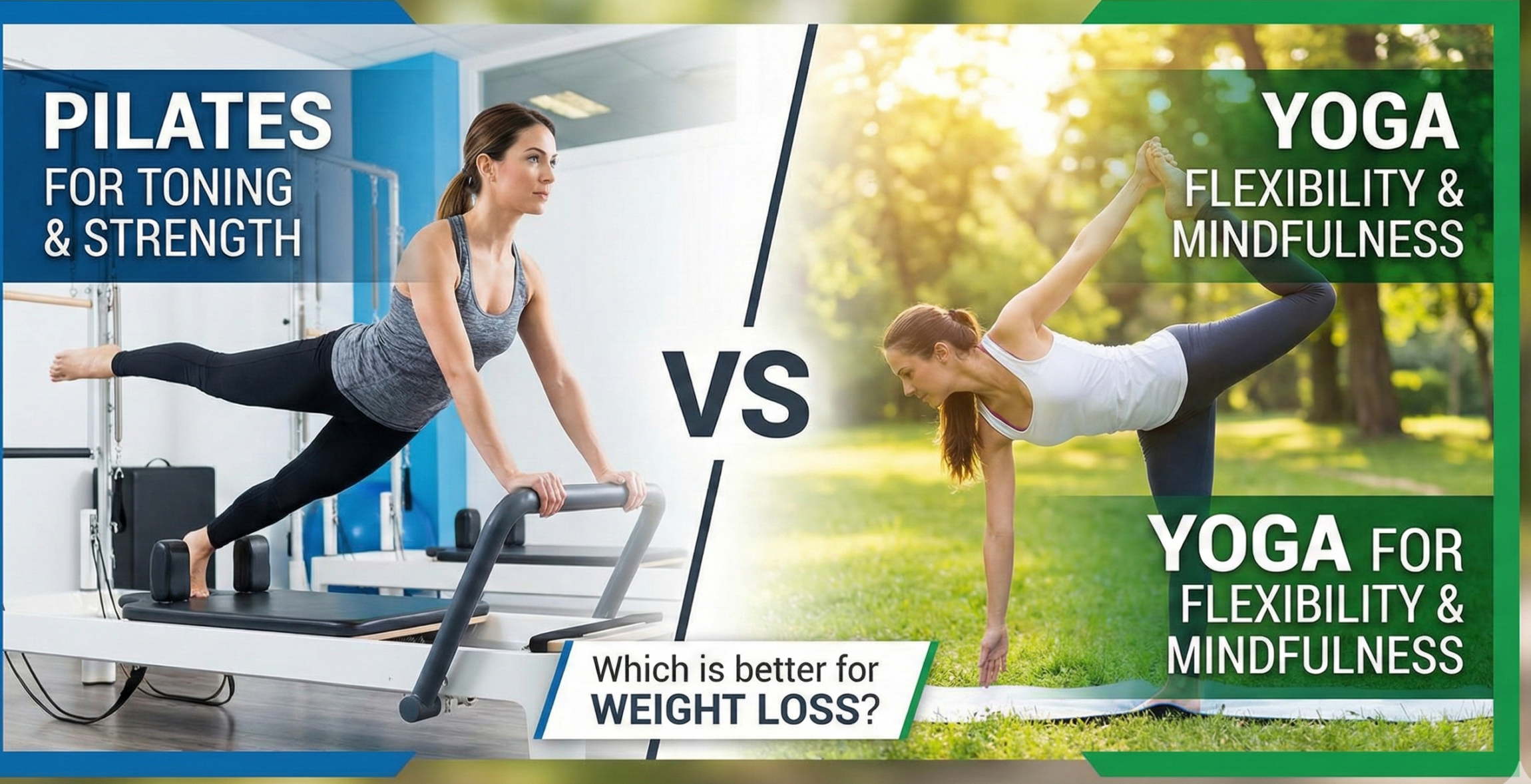
You want to tone up, slim down, and feel better in your body, but the world of low-impact fitness is divided. On one side, the yogis promise lean limbs and mindfulness. On the other, Pilates enthusiasts swear by the “burn” and rock-hard abs.
The debate of Pilates vs. Yoga for weight loss is one of the most common questions in the fitness industry. Both disciplines share DNA—breath work, flexibility, and mind-body connection—but their approach to burning calories and building muscle is fundamentally different. If your primary goal is shedding pounds, choosing the wrong modality might leave you frustrated with slow results.
In this deep-dive comparison, we are stripping away the spiritual marketing and looking at the physiological facts. Which burns more calories per hour? Which builds the metabolism-boosting muscle you need? And most importantly, which one can you actually stick to long-term? Whether you are looking to supplement your ultimate self-care checklist or overhaul your entire fitness routine, this guide will give you the answer.
At a Glance: The Core Differences
Before we analyze the calorie burn and metabolic effects, here is a high-level snapshot of how these two disciplines stack up.
| Feature | Pilates | Yoga |
|---|---|---|
| Primary Focus | Core Strength, Posture, Muscle Endurance | Flexibility, Balance, Spiritual Connection |
| Calorie Burn (Avg/Hour) | Higher (250–450 calories) | Variable (180–600 calories depending on style) |
| Muscle Toning | High (Targeted sculpting, especially abs/glutes) | Medium (Functional full-body strength) |
| Pace | Consistent, controlled, often faster | Slow to flow (varies by style) |
| Equipment | Mat, Ring, Reformer Machine | Mat, Blocks, Straps |
| Best For | Reshaping the body & injury rehab | Stress relief & flexibility |
1. The Calorie Burn: Intensity Matters
If we look strictly at the numbers, weight loss is a game of thermodynamics: calories in versus calories out.
Pilates: The Slow Burn
Pilates, particularly Reformer Pilates, adds resistance to your movement. Springs and pulleys force your muscles to work harder than gravity alone. A 60-minute intermediate Pilates class can burn anywhere from 300 to 450 calories. The constant tension keeps your heart rate in a fat-burning zone, and the focus on the “powerhouse” (your core) engages large muscle groups continuously.
Yoga: The Variable Burn
Yoga is tricky because “Yoga” can mean napping in Savasana or sweating profusely in Bikram.
- Hatha/Yin Yoga: Burns very few calories (approx. 180/hour). Great for recovery, not for weight loss.
- Vinyasa/Power Yoga: This keeps you moving. You can burn 300 to 400 calories an hour because it functions like mild cardio.
However, if you stop frequently to listen to philosophy or hold static stretches, your heart rate drops, and the caloric burn stalls.

Boost Your Burn
Want to turn a mat workout into a calorie scorcher? A Pilates Ring adds resistance to inner thighs and arms, increasing muscle activation instantly.
Check Price on Amazon2. Muscle Building and Metabolic Rate
Weight loss isn’t just about what you burn during the workout; it’s about what you burn after. This is where muscle mass comes in. Muscle tissue burns more calories at rest than fat tissue.
The Pilates Advantage
Pilates is technically a form of strength training. It breaks down muscle fibers (micro-tears) which the body repairs to be stronger and leaner. Because Pilates often isolates specific muscles until failure (the famous “shake”), it is highly effective at increasing lean muscle mass. This elevated muscle mass raises your Basal Metabolic Rate (BMR), helping you burn fat even when you are sitting at your desk reducing your screen time using one of these 10 simple ways to reduce screen time.
The Yoga Advantage
Yoga builds strength using body weight. Holding a plank or a Warrior II pose requires immense endurance. While it creates long, lean muscles, it generally lacks the progressive overload needed to build significant muscle mass compared to the spring-loaded resistance of a Pilates reformer.
3. Stress, Cortisol, and Belly Fat
Sometimes, weight gain isn’t about laziness; it’s about stress. High levels of cortisol (the stress hormone) signal the body to hold onto visceral fat, particularly around the midsection.
Why Yoga Wins Here
Yoga is undeniably superior for stress reduction. The focus on deep, diaphragmatic breathing activates the parasympathetic nervous system (rest and digest). By lowering cortisol levels, yoga creates an internal environment where your body feels safe enough to let go of stored fat. Integrating yoga into a routine is a key part of the ultimate self-care checklist for busy professionals.
Pilates requires focus, but it is physically demanding and can sometimes act as a stressor on the body if the intensity is too high without adequate recovery.

Foundation for Comfort
Whether you choose Yoga or Pilates, a high-density, non-slip mat is non-negotiable for protecting your joints during floor work.
Check Price on Amazon4. The Elephant in the Room: Nutrition
You can do Pilates for two hours a day, but if you are eating processed junk, the scale won’t budge. Both Yoga and Pilates are relatively low-impact compared to running or HIIT, meaning they don’t give you a “free pass” to overeat.
To see results with either practice, nutrition must be 80% of your focus. This means whole foods, lean proteins, and cooking at home. Making healthy food doesn’t have to be a chore. Using the right tools, like the ones in our review of the top 5 kitchen gadgets worth the money, can drastically cut down meal prep time.
Need inspiration? Check out this list of 7 quick and healthy weeknight dinner ideas that pair perfectly with a post-workout recovery meal.
5. Summary: Pros and Cons for Weight Loss
Let’s strip it down to the essentials. Which practice has the edge?
✅ Pilates Pros
- Targeted Toning: Exceptional for abs, waist, and thighs.
- Resistance: Reformer springs build metabolism-boosting muscle.
- Posture: Makes you look 5lbs lighter by fixing alignment.
- Efficiency: Constant movement keeps heart rate up.
❌ Pilates Cons
- Cost: Reformer classes are very expensive ($30+ per class).
- Learning Curve: Technical breathing takes time to master.
- Accessibility: Hard to do “Reformer” workouts at home without equipment.
✅ Yoga Pros
- Stress Relief: Lowers cortisol to fight belly fat.
- Accessibility: Do it anywhere, anytime, for free.
- Detox: Twisting poses aid digestion and reduce bloating.
- Community: Massive support system and free online resources.
❌ Yoga Cons
- Low Calorie Burn: Standard classes burn minimal calories.
- Plateau: Hard to increase difficulty once you master bodyweight.
- Pace: Can be too slow for those seeking a “sweat session.”
6. Every Type of Pilates Explained: Which Burns the Most Fat?
Not all Pilates is created equal. The word “Pilates” on a class schedule can mean anything from a gentle mat class burning 200 calories to an intense Reformer session that challenges elite athletes. Understanding the different formats lets you choose the style that best matches your weight loss goals, budget, and fitness level.
🏋️ Reformer Pilates
The gold standard. A spring-loaded resistance machine allows hundreds of exercises targeting every muscle group. Creates progressive resistance that increases as you get stronger. Most expensive format ($30–$60/class) but delivers the fastest visible body composition changes.
~350–450 cal/hr🧘 Mat Pilates
The original method, requiring only a mat. Uses bodyweight and small props (ball, ring, resistance band). Accessible and affordable—available free on YouTube. Excellent for core conditioning and flexibility. Less resistance than the reformer.
~250–300 cal/hr🔥 HIIT Pilates / Cardio Pilates
A modern hybrid combining classic Pilates movements with cardio intervals. Significantly elevates heart rate above traditional mat Pilates. Popular in boutique studio formats (Club Pilates, Solidcore). One of the highest-calorie-burning Pilates formats.
~400–500 cal/hr🏥 Clinical Pilates
Supervised by a physiotherapist and prescribed for injury rehabilitation. Lower intensity and highly personalized. Not primarily for weight loss but invaluable for safe re-entry into movement after injury. Often covered by health insurance.
~150–250 cal/hr💪 Tower / Cadillac
Uses a vertical frame with springs, bars, and straps attached above the mat. More versatile than the Reformer for advanced practitioners. The vertical orientation allows unique suspension exercises challenging balance, strength, and coordination simultaneously.
~300–400 cal/hr🪑 Wunda Chair
A small spring-resistance box that forces single-limb movements, dramatically increasing stabilizer muscle engagement and balance challenge. Produces significant leg and glute development. Commonly used in athletic conditioning programs.
~280–360 cal/hrPilates for Specific Body Parts: Where It Excels
One of Pilates’ greatest strengths is its ability to target specific anatomical areas with precision. Here is how it addresses each major body zone:
7. Every Major Yoga Style for Weight Loss: Ranked by Calorie Burn
The spectrum of yoga is vast—from deeply meditative Yin practice that barely raises the heart rate to physically demanding Ashtanga that rivals a cardio workout. Choosing the right yoga style for weight loss is as important as the decision to practice yoga at all.
🔥 Bikram / Hot Yoga
26 postures practiced in a room heated to 105°F (41°C) with 40% humidity. Heat artificially elevates heart rate and dramatically increases sweat output. High calorie burn but also high risk of dehydration. Not suitable for cardiovascular conditions.
~400–600 cal/hr⚡ Ashtanga Yoga
A fixed sequence of postures in fast, flowing breath-synchronized movement. The Primary Series is physically intense—more demanding than most gym classes. Builds significant upper body and core strength. The traditional method for serious practitioners.
~350–500 cal/hr💪 Power Yoga
A Western adaptation of Ashtanga without the fixed sequence. Athletic, creative flow. Common in gym settings. Builds strength and endurance while maintaining yoga’s flexibility and mindfulness benefits. Excellent for total-body conditioning.
~300–450 cal/hr🌊 Vinyasa Flow
Continuously flowing movement synchronized with breath. Highly variable depending on teacher intensity. The most popular modern yoga style globally and excellent for building aerobic fitness over time.
~300–400 cal/hr🌿 Hatha Yoga
Individual postures held for 30–60 seconds with rest between. Gentle pace, excellent for beginners and flexibility. Low calorie burn but high value for stress reduction, joint mobility, and mind-body awareness.
~175–250 cal/hr🌙 Yin Yoga
Passive postures held for 3–10 minutes targeting deep connective tissue. Very low calorie burn. Exceptional for recovery, flexibility, and the cortisol-reducing benefits that fight hormonal belly fat. Best paired with vigorous styles.
~120–175 cal/hr💡 Best Yoga Style for Weight Loss: If fat burning is your primary goal, choose Ashtanga, Bikram, or Power Yoga and practice 4–5 times per week. If you struggle with emotional eating or stress-related weight gain, prioritize Yin or Restorative Yoga 2–3 times weekly to regulate cortisol, then add vigorous styles as your resilience builds.
8. EPOC, Afterburn, and BMR: The Science of Fat Loss After Your Workout Ends
Understanding why some workouts produce fat loss that continues for hours after you stop exercising is critical to maximizing results. This is the domain of EPOC (Excess Post-Exercise Oxygen Consumption) and Basal Metabolic Rate (BMR).
What Is EPOC — The Afterburn Effect?
EPOC refers to the elevated rate of oxygen intake that continues after intense physical activity as the body restores itself to its resting state. During EPOC, your body burns calories at an elevated rate above your resting metabolism for anywhere from 15 minutes to 48 hours post-exercise, depending on intensity. The effect is proportional to effort: the harder you pushed, the longer and more significant the afterburn. High-intensity formats—Reformer Pilates, HIIT Pilates, Ashtanga, and Power Yoga—produce meaningful EPOC that adds 50–150 calories on top of the in-session burn. A gentle mat yoga class produces almost none.
How Pilates Raises Your BMR Permanently
Your Basal Metabolic Rate (BMR) is the number of calories your body burns at complete rest. It accounts for approximately 60–75% of your total daily calorie burn. The single most effective way to raise your BMR is to increase lean muscle mass, because muscle tissue is metabolically active: one pound of muscle burns approximately 6 calories per day at rest versus 2 calories for one pound of fat.
Consistent Pilates practice over 6–12 months can increase lean muscle mass by 2–4 pounds in previously sedentary individuals. That added muscle elevates daily resting calorie burn by approximately 12–24 calories per day—compounding to 4,400–8,700 calories per year burned simply from carrying that muscle, with no additional exercise required. Over time, this metabolic raise meaningfully accelerates fat loss.
Yoga’s Hormonal Pathway to Metabolism
Yoga’s metabolic contribution operates through hormonal regulation. Chronic stress elevates cortisol, which increases appetite, promotes visceral fat storage, disrupts sleep, and suppresses thyroid function—the thyroid being the primary regulator of metabolic rate. A sluggish thyroid can reduce BMR by 10–30%. Regular yoga practice—even gentle Hatha 3–4 times weekly—has been shown in clinical studies to reduce cortisol, improve sleep quality, and lower inflammatory markers associated with obesity. For people whose weight gain is driven by chronic stress or poor sleep, yoga’s hormonal benefits can exceed those produced by calorie burn alone.
🔬 Research Note: A 2020 meta-analysis in the Journal of Bodywork and Movement Therapies found that Pilates significantly reduced body weight, BMI, and waist-hip ratio across all age groups studied. The most significant improvements occurred in participants who combined Pilates with dietary modification—reinforcing that nutrition remains the primary driver of fat loss with either practice.
9. Breathing Techniques: The Hidden Engine of Both Practices
Both Pilates and yoga are built on conscious breathwork—but their breathing methods are distinctly different and produce different physiological effects. Correctly applying each practice’s breathing technique is not a technical nicety; it is the mechanism through which both disciplines deliver their most significant benefits.
Pilates Breathing: Lateral Thoracic Breathing
Pilates uses lateral thoracic breathing—expanding the ribcage sideways and backward on inhale while keeping the abdominals drawn inward and upward (the “zip up” cue). This allows maximum lung expansion while maintaining continuous core engagement, protecting the lumbar spine during resistance exercises. Correctly applied, it keeps the transverse abdominis continuously contracted throughout the session, increasing the calorie cost of every movement and providing the compressive “corset” effect on the waist that Pilates is famous for.
Yoga Breathing: Pranayama
Yoga’s breathing system—pranayama—encompasses dozens of specific techniques:
- Ujjayi (Ocean Breath): A slight glottal constriction creates an ocean-wave sound. Generates internal heat, maintains focus, and regulates the pace of flow yoga. Essential for sustaining Vinyasa and Ashtanga.
- Kapalabhati (Skull-Shining Breath): Rapid, forceful exhales with passive inhales. 60–120 repetitions per minute. Stimulates the sympathetic nervous system, increases core temperature, and improves digestive function. A powerful morning practice tool.
- Nadi Shodhana (Alternate Nostril): Balances the left and right brain hemispheres, reduces anxiety, and lowers blood pressure. The key technique for yoga’s cortisol-reduction pathway.
- Box Breathing (4-4-4-4): Inhale 4 counts, hold 4, exhale 4, hold 4. Powerfully activates the parasympathetic nervous system. Used at session’s end or as a standalone pre-sleep practice.
10. Complete Weekly Workout Plans for Weight Loss
The most effective approach is a structured weekly plan that combines both practices strategically. Here are three complete programs designed for different goals and fitness levels.
Plan 1: Beginner 4-Day Plan (Mat Pilates Focus)
For those new to both disciplines with a primary goal of body composition change. Requires only a mat and resistance band.
| Day | Session | Duration | Focus |
|---|---|---|---|
| Monday | Mat Pilates: Core Foundations | 30–40 min | Transverse abdominis, pelvic floor, lateral breathing |
| Tuesday | Light Walk or Rest | 20–30 min | Active recovery, fat oxidation at easy pace |
| Wednesday | Mat Pilates: Lower Body & Glutes | 35–45 min | Hip circles, side-lying series, bridges |
| Thursday | Yin Yoga: Full Body | 30 min | Flexibility, stress reduction, cortisol reset |
| Friday | Mat Pilates: Upper Body & Posture | 35–40 min | Rows, arm work, chest expansion, swan |
| Saturday | Mat Pilates: Full Body Flow | 40–50 min | Classical sequence, medium intensity |
| Sunday | Restorative Yoga + Meditation | 20–30 min | Full recovery, parasympathetic activation |
Plan 2: Intermediate 5-Day Hybrid Plan (Maximum Fat Loss)
Combines Reformer or HIIT Pilates with vigorous yoga styles to maximize calorie burn, muscle building, and cortisol management simultaneously.
Full body sculpt
Cardio + strength
Core + cardio intervals
Recovery + cortisol
Glutes + thighs focus
Active recovery
Muscle repair day
Plan 3: Stress-Driven Weight Loss (Yoga-Dominant)
For those whose weight gain is driven by chronic stress, emotional eating, anxiety, or poor sleep.
- Monday: Morning Hatha Yoga (30 min) + 10-min Nadi Shodhana pranayama
- Tuesday: Mat Pilates (30 min, light) — core awareness focus
- Wednesday: Vinyasa Yoga (45 min) — light sweat session
- Thursday: Yin Yoga (40 min, evening) — parasympathetic reset
- Friday: Mat Pilates (35 min) — full body, medium intensity
- Saturday: Nature walk (45 min) — cortisol-reducing outdoor movement
- Sunday: Restorative Yoga + 10-min body scan meditation
11. Pilates vs. Yoga for Back Pain, Women Over 40, and Postpartum
The right practice varies significantly depending on your specific physiological context. Here is how the Pilates vs. yoga decision shifts for three populations who are frequently under-served by generic fitness advice.
Back Pain: Which Is Safer and More Effective?
Chronic lower back pain affects approximately 80% of adults at some point and is one of the most common referrals to both Pilates and yoga by physiotherapists. Both have strong evidence bases—through different mechanisms.
Pilates for Back Pain
Clinical Pilates is one of the most evidence-supported non-pharmacological interventions for chronic lower back pain. It targets the deep spinal stabilizers—multifidus and transverse abdominis—which are often inhibited in chronic pain sufferers. Reactivating these muscles through Pilates reduces spinal shear forces and relieves compression on discs and facet joints. Best exercises: Pelvic tilts, Cat-Cow, Bird Dog, Clam, Dead Bug, modified Swimming.
Yoga for Back Pain
Yoga addresses back pain through flexibility, postural awareness, and stress reduction. Tight hip flexors and hamstrings are leading contributors to lower back pain—and yoga is peerless at releasing these tissues. The mindfulness component also helps break the pain-fear cycle that perpetuates chronic pain. Best poses: Child’s Pose, Supine Spinal Twist, Pigeon, Legs-Up-The-Wall, Downward Dog, Sphinx.
💡 Back Pain Recommendation: Begin with Clinical Pilates (physiotherapist-supervised) for 6–8 weeks to retrain deep stabilizers. Then add gentle yoga to address flexibility restrictions. Avoid hot yoga and inversions until medically cleared.
Women Over 40: Why Pilates Becomes More Important
The physiological landscape changes significantly after 40. Declining estrogen levels during perimenopause accelerate muscle loss (sarcopenia) and redistribute fat storage to the abdomen. This hormonal transition makes Pilates’ muscle-building capacity more important than ever—preserving lean muscle mass is the primary defense against menopausal metabolic slowdown. Estrogen’s decline also reduces collagen in joints, making the controlled, low-impact nature of both practices far more joint-friendly than running or HIIT for women in this life stage. Aim for Reformer Pilates 3–4 times weekly supported by yoga 1–2 times for flexibility maintenance and stress management.
Postpartum: Safe Return to Exercise
The postpartum period requires specific modifications and medical clearance. Up to 60% of women experience abdominal separation (diastasis recti) during pregnancy. Standard Pilates crunches and sit-ups—as well as yoga poses like Boat Pose—can worsen this condition before it has healed. A women’s health physiotherapist assessment before beginning any postpartum program is essential. Once cleared (typically 6–12 weeks for vaginal delivery, 12+ weeks for C-section), gentle Mat Pilates using diaphragmatic breathing, pelvic floor engagement, and modified Bird Dog provides a safe re-entry. Restorative yoga can begin as early as 2–4 weeks postpartum with medical clearance.
12. How to Track Progress Beyond the Scale
One of the most common frustrations when starting Pilates or yoga for weight loss is the scale appearing stuck. This is because both practices build muscle while losing fat—a process called body recomposition. During recomposition, your weight may stay identical while you simultaneously lose fat and gain muscle. You look and feel dramatically better, but the scale shows no change. This is not failure; it is success that requires different metrics to see.
- Body Measurements (Monthly): Measure waist, hips, chest, arms, and thighs with a fabric tape on the same day each month. Losing 2 inches off your waist while the scale holds steady represents significant fat loss.
- Progress Photos (Bi-Weekly): Same outfit, same lighting, same pose. Side and back views reveal posture improvements that a front-facing scale misses entirely. Pilates produces dramatic postural changes before the scale moves.
- Clothing Fit: Your jeans do not lie. When previously tight clothes become comfortable, you have lost fat volume regardless of what the scale reads.
- Fitness Benchmarks: How many Pilates Hundreds can you complete without losing form? Can you hold Warrior III for 30 seconds? Can you touch your toes? Objective fitness improvements confirm real physiological change.
- Energy and Sleep (Weekly Rating 1–10): Improving from a 4 to a 7 on energy is a metabolic indicator that body composition and hormonal balance are improving—data the scale completely ignores.
🧠 The 30-Day Rule: Joseph Pilates said it—in 30 sessions you will have a whole new body. Research supports this: a consistent 4-week intervention of either Pilates or yoga produces measurable changes in muscle activation, posture, body composition, and subjective wellbeing. Commit to 30 days before evaluating results or changing your program.
13. Combining Pilates and Yoga with Cardio: The Complete Fat Loss Formula
Neither Pilates nor yoga alone is a complete solution for significant fat loss. For most people with meaningful weight loss goals (10+ lbs), the most effective strategy uses both as the foundation of a program that also includes dedicated cardiovascular exercise.
Why You Still Need Cardio
Cardiovascular exercise—sustained activity at 60–85% of maximum heart rate for 20+ minutes—is the most time-efficient way to create the caloric deficit needed for fat loss. A 30-minute run burns approximately 300–400 calories. A 30-minute brisk walk burns 120–180 calories. These numbers are additive with Pilates and yoga sessions, accelerating fat loss without more time in the studio. Cardio also produces cardiovascular adaptations—reduced resting heart rate, improved insulin sensitivity, increased VO2 max—that directly support fat oxidation. Pilates and yoga build the muscular and skeletal infrastructure; cardio builds the metabolic engine.
The Optimal Weekly Combination for Fat Loss
- Pilates: 3 sessions/week (2× Reformer or HIIT Pilates + 1× Mat Pilates)
- Yoga: 2 sessions/week (1× Vinyasa/Power for calorie burn + 1× Yin/Restorative for recovery)
- Cardio: 2–3 sessions/week (30–45 minutes at moderate intensity: brisk walking, cycling, swimming, or rowing)
- Rest: 1–2 full rest days for muscle repair and hormonal recovery
This 7-session program creates a consistent caloric deficit through exercise, builds the muscle base that raises resting metabolism, and maintains the mindfulness practice that reduces cortisol-driven hunger. It is comprehensive, sustainable, and evidence-based for most healthy adults.
14. Final Verdict: Which Should You Choose?
The winner depends entirely on how you currently carry weight and your lifestyle.
Choose Pilates If:
- You want to change the shape of your body (sculpting).
- You carry weight in your midsection and want a flatter stomach.
- You enjoy structured, repetitive exercises.
- You have the budget for equipment or studio classes.
- You are over 40 and want to preserve muscle mass and bone density.
- You are in rehabilitation from a back injury or core muscle weakness.
- You want the highest calorie burn per session from a low-impact workout.
Choose Yoga If:
- You are an emotional eater or have high stress levels.
- You want to improve flexibility and joint health alongside weight loss.
- You need a workout you can do in a hotel room or living room with zero gear.
- You prefer “flow” and movement over “reps” and “sets.”
- You struggle with sleep quality that is sabotaging your fat loss.
- You are postpartum and require a gentle, mindful re-entry to exercise.
Your Beginner’s Action Checklist
- Take progress photos and body measurements before starting
- Choose your primary focus: sculpting (Pilates) or stress relief (Yoga)
- Invest in a quality non-slip mat — used for both practices
- Pick one class or online program and commit for 30 days
- Schedule sessions in your calendar like appointments
- Pair your practice with whole-food nutrition (80% of results)
- Add 2 weekly cardio sessions (walk, cycle, swim) for accelerated fat loss
- Track measurements and energy levels monthly — not daily scale weight
- Re-assess and progress intensity after your first 30 days
The Hybrid Approach: For maximum results, use Pilates 2–3 times a week for muscle building and Yoga 1–2 times a week for recovery and stress management. And don’t forget the after-care; sweating clogs pores, so follow up with the essential 4-step skincare routine checklist to keep your skin glowing.

Bring the Studio Home
Can’t afford a reformer? This portable Pilates Bar Kit mimics the resistance of studio machines, allowing you to get a full-body sculpting workout in your living room.
Check Price on AmazonFrequently Asked Questions
Pilates is excellent for strengthening the deep core muscles (transverse abdominis), which pulls the waist in like a corset. While you cannot “spot reduce” fat—fat loss happens systemically based on your caloric deficit—Pilates will make your midsection appear flatter and tighter than almost any other exercise. Combined with a dietary caloric deficit, it accelerates belly fat reduction because it builds the core musculature that reshapes the midsection as fat diminishes.
Yoga is generally more beginner-friendly as it modifies easily with blocks and straps, and free YouTube resources (Yoga with Adriene) make it extremely accessible. Pilates requires a stronger mind-body connection to correctly engage the core, which can be tricky without an instructor. However, Mat Pilates tutorials (Move with Nicole, Madfit) have made beginner Pilates highly accessible. Start with whichever excites you most—consistency matters far more than the “correct” choice.
Joseph Pilates famously said: “In 10 sessions you’ll feel the difference, in 20 you’ll see the difference, and in 30 you’ll have a whole new body.” Aim for 3–4 sessions per week for visible fat loss and body composition changes. Fewer than 3 sessions weekly produces flexibility and strength gains but insufficient metabolic stimulus for significant change. Pair sessions with a moderate caloric deficit for best results.
For most people with significant weight loss goals, yes. Pilates builds muscle and improves body composition brilliantly, but does not create the large cardiovascular caloric deficits needed for substantial fat loss alone. Pairing 3 Pilates sessions with 2–3 weekly cardio sessions (brisk walking, cycling, swimming) dramatically accelerates fat loss while Pilates preserves and builds muscle throughout the process.
Hot Yoga can burn more calories in-session (400–600 cal/hr) due to heat artificially elevating heart rate. Reformer Pilates typically burns 350–450 cal/hr. However, Reformer Pilates builds significantly more muscle mass, raising your resting metabolic rate permanently. For long-term weight management, Reformer Pilates is the better metabolic investment. For short-term calorie burn, Bikram/Hot Yoga edges ahead.
Absolutely. They complement each other beautifully. A highly effective routine: 30–40 minutes of intense Pilates followed by 20 minutes of Yin or Restorative Yoga to cool down, stretch the muscles worked, and activate the parasympathetic nervous system for recovery. This combination delivers strength, flexibility, and cortisol management in a single session.
No. Pilates focuses on eccentric muscle contractions—lengthening the muscle while it works under resistance—which creates a long, lean “dancer’s body” aesthetic rather than the volume associated with heavy weightlifting. Even intensive Reformer Pilates produces muscle tone and definition without bulk. Significant muscle volume requires heavy concentric loading with caloric surplus: conditions Pilates does not create.
Both are excellent, but Pilates takes priority. The post-menopausal decline in estrogen accelerates muscle loss (sarcopenia) and bone density reduction. Pilates is the most effective low-impact method for building resistance-trained muscle to combat sarcopenia and weight-bearing movement to stimulate bone density. Add 2 gentle yoga sessions weekly for flexibility, balance (fall prevention), and the mental health benefits that support quality of life in this life stage.
Before: A small, easily digestible carbohydrate-based snack 60–90 minutes prior (banana, oatmeal, rice cake with nut butter). Avoid heavy protein or fat immediately pre-workout—both slow digestion and cause discomfort during core-intensive movement. After: A protein-rich meal within 45–60 minutes to support muscle repair. Aim for 25–35g protein (chicken, eggs, Greek yogurt, protein shake) with complex carbohydrates for optimal recovery and body composition adaptation.
Profoundly. Sleep deprivation (under 7 hours) increases the hunger hormone ghrelin by 15–20%, decreases the satiety hormone leptin by 15%, elevates cortisol, impairs insulin sensitivity, and reduces motivation to exercise. This combination makes fat loss nearly impossible regardless of diet quality or exercise frequency. Both yoga (cortisol reduction, parasympathetic activation) and Pilates (physical fatigue, anxiety reduction) significantly improve sleep quality and duration. For many people, improving sleep is the single highest-leverage weight loss intervention available.
Conclusion
In the battle of Pilates vs. Yoga for weight loss, Pilates takes the gold medal for physical reshaping and caloric density, thanks to its resistance training elements. It is the superior choice for those who want to tighten up, build a metabolic furnace, and change the visible shape of their body.
However, Yoga remains the champion of holistic health. If your weight gain is driven by anxiety and cortisol, the intense burn of Pilates might backfire—making Yoga the smarter choice. If you are over 40, postpartum, managing chronic stress, or struggling with sleep, yoga’s hormonal benefits may contribute more to your fat loss than any calorie calculation suggests.
Ultimately, the best workout for weight loss is the one you actually show up for. Start with the practice that excites you. Add the other as your fitness expands. Pair both with whole-food nutrition and consistent sleep. And remember: the body you are building is not just for the mirror—it is for energy, longevity, and the life you want to live in it.