

The Secret Architecture of Wealth: 7 Habits of People Who Are Good With Money
Wealth is not a number in a bank account; it is a set of behaviors. While lottery winners often go bankrupt within years, those who build sustainable wealth do so not through luck, but through the compounding effect of daily habits. Being “good with money” isn’t about deprivation—it’s about intentionality.
We have analyzed the behaviors of the financially successful—from the frugality of millionaires next door to the strategic mindset of savvy investors. These are not get-rich-quick schemes. These are the habits of highly effective people applied specifically to finance. Whether you are just starting your journey or looking to refine your strategy, these seven habits form the blueprint for financial freedom.
The Science Behind Financial Habits: Why Behavior Beats Intelligence
Before examining the seven habits individually, it is worth understanding why habits—rather than knowledge, intelligence, or income level—are the primary determinant of long-term financial outcomes. This is one of the most consistently replicated findings in behavioral economics, and it has profound implications for how you approach financial improvement.
A landmark study following thousands of households over decades found that income level explained only a fraction of the variance in wealth accumulation. Two people earning identical salaries over identical careers frequently ended up with vastly different net worths—differences attributable almost entirely to behavioral patterns: saving rate, investment consistency, debt management, and spending discipline. The highest earners who lacked financial habits consistently underperformed moderate earners who had them.
The mechanism is compound growth operating on behavior rather than money. A person who saves 15% of their income consistently from age 25 to 65 does not save twice as much as someone who saves 15% from age 35 to 65—they save dramatically more, because every year of compounding builds on every previous year’s gains. The habit of consistent saving, started earlier, is worth more than a larger salary started later.
The practical implication: improving your financial situation is primarily a habit engineering problem, not a math problem. Most people already know they should save more, spend less, and invest consistently. The gap between knowing and doing is a behavioral gap—and behavioral gaps are closed through system design, not willpower.
Habit 1: They Automate Decision Making
People who are good with money understand a fundamental truth about human nature: willpower is a finite resource. If you have to decide to save money every single month, eventually, you will fail.
The “Invisible” Money Strategy
Wealthy individuals set up systems that save for them. They don’t wait until the end of the month to see what is left over; they pay their future selves first.
- Auto-Drafting: They set up automatic transfers to their investment accounts the day their paycheck hits.
- Bill Pay: They use technology to ensure they never miss a payment, protecting their credit score. This aligns with our guide on how to improve your credit score fast—automation prevents the errors that tank scores.
- The Tech Stack: They leverage the best productivity apps to track net worth and cash flow without manual effort.
The Automation Architecture: How to Build It
Financial automation is not a single action but a layered system built over time. The goal is to create a financial infrastructure where the right things happen by default—where you have to actively decide to not save, rather than actively deciding to save. This inversion of the default state is the behavioral engineering insight that separates automated wealth builders from those who rely on monthly discipline.
The recommended automation sequence builds in priority order. First, automate your 401(k) contribution to at least your employer match level—this is done through your HR system and requires a single setup decision that compounds for decades. Second, set up an automatic transfer to a Roth IRA or traditional IRA on the first business day after each paycheck. Third, automate your emergency fund contribution until the target balance is reached, at which point the automation redirects to a taxable investment account or specific savings goal. Fourth, automate bill payments for all fixed expenses—utilities, insurance, subscriptions, loan minimums—to eliminate late payment risk entirely.
The psychological benefit of this architecture extends beyond the money saved. When savings transfers are automatic and invisible, the remaining balance in your checking account feels like your spending money—because it is. You stop experiencing the psychological friction of “should I save this or spend it?” because the decision has already been made, permanently, at the system level.
Habit 2: They Value “Value” Over “Price”
There is a massive difference between being “cheap” and being “frugal.” A cheap person buys the lowest-priced item regardless of quality. A person good with money buys the item with the best long-term value.
The Cost-Per-Use Calculation
Wealthy habits involve looking at the lifespan of a purchase.
- Tech Investments: Instead of buying a cheap computer that breaks in a year, they research the best budget laptops that offer longevity and performance. They might build their own machine using the checklist for building a PC to ensure upgradability (saving money long-term).
- Kitchen Efficiency: They cook at home, but they use tools that last. Investing in the top 5 kitchen gadgets worth the money encourages them to skip expensive takeout.
The True Cost Framework: Calculating What Things Actually Cost
The cost-per-use framework is one of the most practically useful mental models in personal finance. It transforms the evaluation of any purchase from a simple price comparison into a value analysis—shifting the question from “how much does this cost?” to “how much does each use of this cost?”
The formula is straightforward: divide the total cost of an item by the realistic number of times you will use it over its lifespan. A $200 chef’s knife used 400 times over ten years costs $0.50 per use. A $20 knife that dulls and breaks after 50 uses costs $0.40 per use—but requires replacement, which means the cumulative cost of the cheap option over ten years may equal or exceed the premium option while delivering far inferior experience throughout.
This framework consistently surfaces counter-intuitive conclusions: that a quality mattress at twice the price of a budget option, used daily for a decade, costs less per night of sleep and produces meaningfully better sleep quality. That a well-made winter coat at three times the price of a fast-fashion alternative, worn 150 times per year for eight years, costs far less per wear. That a reliable, fuel-efficient used car maintained properly costs a fraction per mile of a new car depreciated immediately off the lot.
Where Frugality Becomes False Economy
The frugality mindset has its own failure mode: applying cost-per-use logic to items that do not benefit from it, or using value-over-price framing to justify purchases that are genuinely unnecessary. The financially disciplined individual is not simply someone who buys expensive things and calls it strategic—they are someone who clearly distinguishes between items where quality genuinely produces better long-term economics and items where the premium price reflects marketing, brand, or aesthetic preference rather than functional superiority.
Groceries are a useful example: store-brand staples (flour, rice, beans, cooking oil, canned goods) are functionally identical to premium branded versions and frequently produced in the same facilities. The premium here is entirely branding—there is no cost-per-use case for the name brand. Conversely, a store-brand kitchen knife that requires sharpening after every third use versus a quality mid-range knife that holds an edge for months is a case where the quality premium genuinely changes the economics.
Developing the judgment to distinguish genuine quality premiums from marketing premiums is the mature expression of Habit 2. It requires attention to reviews, product specifications, and personal experience rather than price tag or brand recognition as proxies for quality.
Habit 3: They Master the Gap (Avoiding Lifestyle Creep)
“Lifestyle Creep” is the enemy of wealth. It’s the phenomenon where your spending rises to match your income. People good with money widen the gap between what they earn and what they spend.
Living Below Your Means
This doesn’t mean living miserably. It means spending intentionally.
- Intentional Budgeting: They don’t view a budget as a restriction; they view it as a plan. They utilize the zero-based budget checklist to give every dollar a job.
- Smart Travel: They see the world, but they don’t overpay for it. They utilize the trip planning checklist to find deals, visit the cheapest European cities, and leverage points from the best travel rewards credit cards.
- Minimalism: When they travel, they don’t check bags. They use the ultimate packing list to travel light, saving fees and stress.
Understanding Lifestyle Creep: The Invisible Wealth Destroyer
Lifestyle creep is insidious precisely because it does not feel like a problem when it is happening. Every individual upgrade—a nicer apartment, a newer car, more frequent restaurant visits, a premium gym membership—feels justified in the moment, particularly when accompanied by a salary increase. The cumulative effect, however, is that income growth is fully consumed by spending growth, and the savings rate remains flat or declines despite higher absolute earnings.
The mathematical devastation of lifestyle creep is best understood through the savings rate lens. A person earning $60,000 who saves 20% ($12,000/year) is building wealth at a meaningful rate. If that person receives a $15,000 raise to $75,000 and allows their spending to rise by $12,000 (very easy to justify—nicer housing, a car upgrade, more dining out), their savings rate drops from 20% to 20% of their new income only if they save $15,000—but they are likely saving $15,000 on paper while actually building the same $12,000 in real wealth, because lifestyle inflation absorbed the rest. Many people’s savings rate actually decreases with raises because spending increases faster than savings adjustments.
The countermeasure is the raise allocation rule: when income increases, commit in advance to allocating at least 50% of the increase to savings or debt before adjusting any lifestyle spending. A $10,000 raise becomes $5,000 in increased savings and $5,000 in permitted lifestyle improvement. This rule maintains wealth-building momentum while allowing genuine quality-of-life improvement—the sustainable version of income growth that does not sacrifice the future for the present.
Habit 4: They Protect the Primary Asset (Health & Security)
The greatest wealth destroyer is a medical crisis or a security breach. People good with money understand that they are the asset, and they must be protected.
The Security Protocol
They treat their digital identity like a bank vault. Identity theft can ruin years of financial progress. They secure every account using one of the 5 free password managers.
The Health Protocol
Health is wealth. Medical bills are the number one cause of bankruptcy.
- Preventative Care: They maintain their health through routine. They cook healthy weeknight dinners rather than eating processed food.
- Stress Management: They understand that burnout destroys earning potential. They follow the ultimate self-care checklist to maintain high performance.
- Daily Rituals: They optimize their biology using morning routine checklists and even maintain confidence through the essential skincare routine.
The Full Insurance and Protection Architecture
Health is the most important financial asset, but it is not the only one that requires protection. People who are truly good with money build a comprehensive protection architecture that covers every major category of financial risk. Insurance is the mechanism—the transfer of catastrophic financial risk to a pool in exchange for a predictable, manageable premium.
Health insurance is non-negotiable in the US context, where a single hospitalization can generate bills of $30,000–$150,000+ without coverage. The financially savvy approach to health insurance is not simply enrolling in whatever plan is offered, but actively evaluating plan options annually: comparing premiums, deductibles, out-of-pocket maximums, and network coverage relative to your expected healthcare utilization. A high-deductible health plan paired with a Health Savings Account (HSA) is frequently the optimal choice for healthy individuals—the HSA’s triple tax advantage (pre-tax contributions, tax-free growth, tax-free withdrawals for qualified medical expenses) makes it the most tax-efficient account available in the US tax code.
Disability insurance is the most underowned type of coverage relative to its financial importance. Your ability to earn income is your single most valuable financial asset—for most working adults, the present value of future earnings far exceeds any investment portfolio or property they own. Long-term disability insurance replaces 60–70% of income if illness or injury prevents work. Group disability coverage through employers is often insufficient; individual supplemental policies are worth evaluating for anyone whose income loss would be catastrophic.
Umbrella insurance—a liability policy that extends coverage beyond auto and homeowner limits—is one of the most cost-effective forms of protection available, typically costing $150–$300 per year for $1–2 million in additional liability coverage. For anyone with meaningful assets, it is essential.
Digital Security: The Financial Identity Vault
Identity theft and financial fraud represent an increasingly significant threat to wealth preservation. A single successful credential theft can compromise bank accounts, open fraudulent credit lines, and generate tax fraud that takes years and thousands of dollars in professional fees to resolve. The financial cost of identity theft recovery—including lost time, legal fees, credit monitoring services, and sometimes direct financial loss—can exceed $10,000 for serious cases.
The protection protocol: unique, complex passwords for every financial account stored in a quality password manager; two-factor authentication enabled on all financial accounts (using an authenticator app rather than SMS, which is vulnerable to SIM-swapping attacks); annual credit report reviews from all three bureaus to identify unauthorized accounts; credit freezes with all three bureaus (free, and does not affect existing accounts) if you are not actively applying for new credit; and regular monitoring of your financial accounts for unauthorized transactions, ideally through automated alert systems that notify you of any transaction above a threshold you set.
Habit 5: They Control Their Time and Impulses
Impulse spending is often a result of boredom or the inability to delay gratification. Financial masters control their environment to reduce temptation.
The Anti-Procrastination Link
Financial problems often stem from procrastination—putting off investing, putting off the budget review. People good with money tackle these tasks head-on using the methods in the ultimate list of 7 ways to beat procrastination.
Digital Defense
They know that social media is designed to make you spend. They proactively limit their exposure to ads by implementing ways to reduce screen time and adjusting their device privacy via 7 smartphone settings you need to change immediately.
They also structure their day to avoid decision fatigue. By using time blocking guides, they allocate specific times for financial review, ensuring it doesn’t get pushed aside.
The Behavioral Economics of Impulse Spending
Impulse spending is not a character flaw—it is a predictable, well-documented response to specific environmental triggers that the modern consumer economy has been engineered to produce. Understanding these triggers at a mechanistic level allows you to design an environment that reduces their frequency and impact rather than relying on willpower to resist them in the moment.
The primary triggers of impulse spending are: social comparison (seeing others’ purchases, particularly on social media, activates competitive status-seeking that drives unplanned spending); scarcity signaling (countdown timers, “only 3 left,” limited-time offers activate loss aversion that short-circuits deliberative decision-making); boredom and negative emotional states (retail therapy is a real phenomenon—spending produces a brief dopamine response that provides temporary emotional relief at financial cost); and frictionless purchasing (one-click buying, stored payment credentials, and seamless checkout remove the natural pause that used to occur between desire and purchase).
The most effective countermeasures address the triggers directly rather than fighting them with willpower. Unsubscribing from retailer email lists eliminates a primary exposure channel. Deleting stored payment credentials from shopping sites restores friction to the purchase process. Implementing a 48-hour or 72-hour rule for any non-essential purchase above a threshold—forcing yourself to revisit the decision after the emotional trigger has subsided—eliminates the majority of genuine impulse spending. Creating a “want list” where items you desire are recorded and reviewed monthly rather than purchased immediately satisfies the psychological need to acknowledge the want without immediately acting on it.
Habit 6: They Are Continuous Learners
The tax code changes. Investment vehicles change. The economy changes. People good with money never say, “I know enough.” They are constantly upgrading their financial operating system.
They read. They consume high-quality information. They have likely read the top 10 books on personal finance and refer back to them often. They treat their home office not just as a place of work, but a place of study, equipping it with the must-have gadgets to facilitate learning.
What Financial Education Actually Looks Like in Practice
The “continuous learning” habit is often interpreted as reading personal finance books—valuable, but incomplete. People who are genuinely good with money have a specific relationship with financial information that goes beyond passive consumption. They apply what they learn, they update their understanding when evidence contradicts prior beliefs, and they distinguish between high-quality information sources and the noise that dominates much of the financial media landscape.
The financial media incentive structure is worth understanding clearly. Most financial journalism—television, websites, magazines, social media—is optimized for attention and engagement rather than accuracy and long-term usefulness. Predictions about market movements, stock picks, and investment timing are consistently less reliable than simple index fund investing, but they generate far more engaging content. The financially sophisticated individual develops a strong filter: they treat predictions as entertainment rather than guidance, focus on structural financial principles that change slowly (tax-advantaged account mechanics, diversification principles, debt cost-benefit analysis) rather than tactical market calls that change daily, and evaluate advice sources on the basis of incentive alignment—advisors compensated by commissions have different incentives than fee-only fiduciaries.
The Financial Knowledge Hierarchy
Not all financial knowledge is equally valuable or equally urgent. Understanding where you are in the financial knowledge hierarchy allows you to prioritize learning investments for maximum practical impact.
| Knowledge Level | Key Concepts | Priority |
|---|---|---|
| Foundation | Budgeting, emergency fund, debt types, basic banking | 🔴 Highest — learn first |
| Protection | Insurance types, credit scores, identity security | 🔴 High — learn early |
| Growth | 401(k)/IRA mechanics, index funds, asset allocation | 🟡 High — learn as you build savings |
| Optimization | Tax-loss harvesting, Roth conversions, estate planning | 🟡 Medium — relevant when net worth grows |
| Advanced | Real estate investing, alternative assets, business structures | 🟢 Lower — relevant for specific goals |
The most common learning mistake is jumping to advanced topics—individual stock analysis, options trading, cryptocurrency mechanics—before mastering foundational concepts. Someone who understands options Greeks but does not have an emergency fund, carries credit card debt, and has not maximized their 401(k) match has their learning priorities exactly backwards. The financial return on mastering foundational concepts is enormous and certain; the return on advanced investment tactics is uncertain and only available to those whose financial foundation is already solid.
Habit 7: They Prepare for the Worst (Resilience)
Optimism makes you money; pessimism keeps it. People good with money always have a “Go Bag” plan—both literally and financially.
- Emergency Funds: They keep 3-6 months of expenses in liquid cash.
- Contingency Planning: Just as they prepare for a trip with essential items in a carry-on, they ensure they have access to documents and cash in case of digital banking failures.
Financial Resilience: Building a System That Survives Shocks
The resilience habit is broader than maintaining an emergency fund. It encompasses a philosophy of financial architecture that acknowledges the certainty of unexpected events and designs accordingly. People who are good with money do not assume their financial plan will operate in ideal conditions; they build systems that remain functional under stress.
The core principle is redundancy—having multiple fallback positions rather than a single point of failure. A person whose entire financial resilience consists of one savings account at one bank is more vulnerable than a person who has an emergency fund, an available (unpaid) credit line as secondary liquidity, and a network of professional relationships that could produce income if primary employment ended. None of these individual measures is extraordinary; together, they create a resilience architecture that absorbs shocks without cascading into crisis.
The Three Tiers of Financial Resilience
Tier 1 — Liquid emergency fund: three to six months of essential expenses in a high-yield savings account. This tier handles job loss, medical bills, car repairs, and home maintenance emergencies without touching investments or accumulating debt. It is the most important single financial cushion and should be funded before significant investing begins.
Tier 2 — Available credit as secondary liquidity: a credit card or home equity line of credit with available balance, maintained at zero balance, that functions as a bridge for true emergencies when the Tier 1 fund is depleted. This is not emergency spending capacity—it is a temporary bridge that buys time while the Tier 1 fund is rebuilt, used only when Tier 1 is genuinely exhausted and the expense is genuinely unavoidable.
Tier 3 — Career and income diversification: the resilience that comes from having more than one income stream. A primary salary supplemented by freelance skills, passive investment income, a small side business, or rental income creates redundancy in the income-generating system. The loss of one stream is painful but survivable; the loss of your only income stream is a crisis. Building Tier 3 is a long-term project, but its importance grows with every year of career progress.
The Scenario Planning Exercise
One of the most valuable resilience-building practices is a quarterly scenario planning exercise: sit down and seriously ask what would happen to your financial situation if each of the following occurred tomorrow—you lost your primary income source, you faced a $10,000 unexpected expense, your primary bank account was frozen due to suspected fraud, a major market correction reduced your investment portfolio by 40%. Walking through each scenario and identifying specific action steps (who would you call, what would you liquidate, how long could you maintain expenses, what income could you generate quickly) converts vague anxiety into concrete preparedness.
This exercise is uncomfortable, which is precisely why most people avoid it—and precisely why completing it produces such a powerful sense of financial confidence. Knowing you have a plan for adverse scenarios eliminates a significant source of background financial anxiety that affects decision-making quality in ways that are hard to quantify but very real.
How to Actually Build These Habits: The Implementation Science
Understanding what financial habits look like is the easy part. Building them durably is where most people struggle. The behavioral science of habit formation has produced clear, actionable findings that, when applied to financial habits specifically, dramatically increase the probability of long-term success.
The Habit Loop: Cue, Routine, Reward
Every habit, financial or otherwise, operates through a three-part loop: a cue that triggers the behavior, the routine (the behavior itself), and a reward that reinforces the loop. Most people trying to build financial habits focus exclusively on the routine—”I will save more”—without designing the cue or the reward. Without these elements, the routine requires active willpower to initiate and sustain, which is fragile.
For financial habits, the most reliable cues are time-based (every Friday at 4pm, review the budget) and event-based (every payday, transfer to savings immediately). Time-based cues benefit from calendar integration; event-based cues benefit from automation that removes the willpower requirement entirely. The reward element is often overlooked in financial habit design: if the only reward for budgeting is abstract future wealth, the habit competes poorly against the immediate rewards of spending. Adding explicit near-term rewards—marking budget review completion with a favorite activity, tracking streaks, celebrating debt payoff milestones—creates the reinforcement loop that makes habits durable.
Starting Small: The Minimum Viable Financial Habit
One of the most reliable principles from habit research is the value of starting smaller than feels meaningful. A person who commits to saving $25 per month and maintains that habit for 12 months has built a more valuable financial foundation than one who commits to saving $500 per month, does it twice, and abandons the habit. The habit infrastructure—the automatic transfer, the account, the psychological identity as “someone who saves”—is more valuable than the specific amount, especially early in the process.
The recommended approach: identify the single smallest version of each habit that still counts as doing the thing. For budget review: open your budgeting app once per week and check your top three spending categories—five minutes, not thirty. For investment habit: set up a $50 automatic monthly transfer to an IRA—small enough to be painless, sufficient to build the habit infrastructure. For debt payoff: make one extra payment per month, even if small. These minimum viable habits can be scaled up once they are genuinely established, but the establishment must come first.
The Habit They All Share: Tracking Net Worth
If there is a single financial habit that distinguishes people who build wealth from those who do not, it is net worth tracking. Across every demographic, income level, and investment approach, people who regularly calculate and review their total financial picture—assets minus liabilities—make better financial decisions and accumulate more wealth than those who do not.
Net worth tracking works through three mechanisms. First, it provides a complete financial picture that monthly income and expense tracking alone does not—it captures appreciation in investments, debt payoff progress, and the compound growth of savings in a single number that tells the full story of your financial direction. Second, it converts abstract financial goals into concrete, trackable progress: watching your net worth increase from $-5,000 to $0 to $10,000 to $50,000 is motivating in a way that “I should save more” never is. Third, it forces annual confrontation with any areas of financial stagnation—categories where net worth is not growing as expected, which triggers investigation and correction.
Net worth tracking requires approximately 30 minutes to set up initially—listing all assets (bank accounts, investment accounts, property, vehicle value) and all liabilities (mortgage, car loan, student loans, credit card balances, any other debt) and calculating the difference. Monthly updates take 10–15 minutes. Many budgeting apps automatically aggregate this information from connected accounts, reducing the active effort to a monthly review of the calculated number.
📊 Your Net Worth Snapshot Template
- Assets: Checking + savings accounts, investment accounts (401k, IRA, brokerage), real estate equity, vehicle value, other assets
- Liabilities: Mortgage balance, car loans, student loans, credit card balances, any other debt
- Net Worth = Total Assets − Total Liabilities
- Track monthly. The trend matters more than the absolute number.
The Wealth Building Toolkit
Habits are easier to build when you have the right tools. These physical items reinforce the psychological habits of saving and planning.
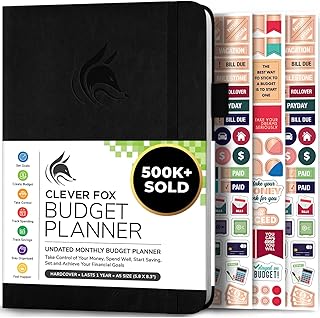
While apps are great, there is a psychological connection that happens when you write down your goals. This planner reinforces Habit 3 (Mastering the Gap). It forces you to track every expense, set monthly goals, and visualize your debt payoff journey. It is a tangible commitment to your financial future.
Check Price on Amazon
This might seem like a luxury, but it is actually a tool for Habit 2 (Value over Price). The “Latte Factor” is real—spending $6 a day on coffee adds up to over $2,000 a year. Investing in a high-quality machine brings the luxury experience home, paying for itself in just a few months and saving you thousands over its lifetime. It is the definition of strategic frugality.
Check Price on AmazonFinal Verdict: Money is a Mirror
Ultimately, money is a mirror that reflects your habits. If your habits are chaotic, your finances will be chaotic. If your habits are disciplined, automated, and intentional, your finances will grow.
You do not need to adopt all seven habits today. Pick one. Start by automating your savings or reading a single finance book. The compound interest of good habits is just as powerful as the compound interest of money.